


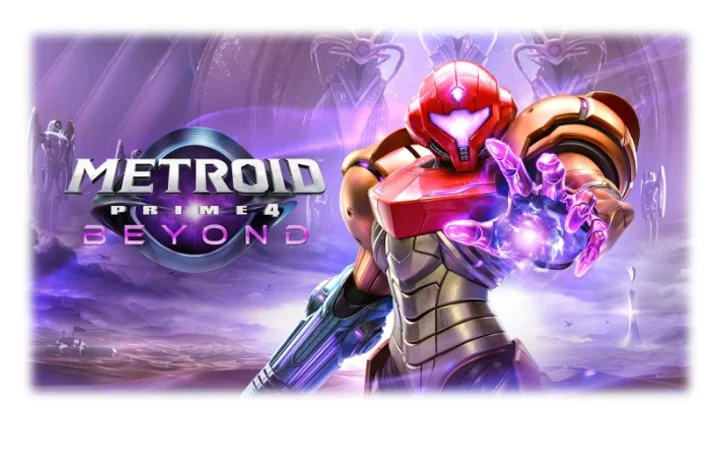
The road to Metroid Prime 4: Beyond, the project began with a request from Nintendo of America to create a core game in the Metroid Prime series hasn’t just been long; it’s been a public exercise in perfectionism. After the 2019 “reset” that saw Nintendo scrap years of work to bring Retro Studios back into the fold, fans wondered if the magic could be recaptured. The goal was to preserve the atmosphere of the original and create something new. The plot focuses on the connection between Samus Aran and the antagonist Sylux, an idea that had been in the studio for several years. Recent dispatches from the development floor suggest that Nintendo isn’t just trying to make a sequel—they are trying to redefine the “First-Person Adventure” for a new generation of hardware.
The Art of the Quiet Moment
While most modern AAA shooters are obsessed with “engagement loops” and constant explosions, Retro Studios is pivoting toward a concept they call “Ma.” The main problem was the change of developer, which required a restart with Retro Studios. It’s a Japanese philosophy centered on the space between things. In Beyond, the developers are leaning into the silence.
The goal is to make the player feel the weight of Samus Aran’s isolation which is pretty sad.
The interview also touched on fan expectations inspired by The Legend of Zelda: Breath of the Wild. The team acknowledged that Retro did not have a complete structure for developing Metroid Prime, which required restructuring processes and working with external partners. At the same time, the emphasis was placed on carefully crafting the gaming experience.
Resisting the Open-World Trap
Perhaps the most refreshing takeaway from the recent design reveals is Nintendo’s refusal to follow the “open-world” trend. Instead, a hub with limited freedom of movement and a vehicle were developed to improve the pace of the game. Producer Kensuke Tanabe was blunt about the decision: a Metroid game where you can go anywhere from minute one isn’t a Metroid game at all.
Instead of a sprawling, empty map, the team has crafted Interconnected Biomes. These aren’t just levels; they are dense, multi-layered puzzles. You’ll see a ledge you can’t reach or a door that won’t budge, and that “mental bookmark” becomes the engine of the game. The introduction of the Vi-O-La, a modular hover-bike, serves as a clever compromise—it gives you the speed of an open-world traversal tool without sacrificing the tight, “lock-and-key” level design that rewards backtracking and curiosity.
The “Beyond” Mechanic: Thinking in Four Dimensions
The “Beyond” in the title finally makes sense with the reveal of Interdimensional Phase-Shifting. The game takes place on Viewros, a planet physically caught between two overlapping realities.
This isn’t just a gimmick for cutscenes. Players will have to use Samus’s new Psychic Abilities to manipulate objects in one dimension to affect the other. Imagine freezing water in one “phase” to create a platform in the next. It’s a brain-bending layer of complexity that elevates the series’ classic puzzle-solving to something that feels genuinely fresh.
Read also
Precision Performance
Technically, Retro Studios is pushing a “Performance First” agenda. While many feared the aging Switch hardware would hold Beyond back, the team has prioritized a locked 60 FPS. For those moving toward Nintendo’s next-gen successor, the jump to 4K/60 (and even a rumored 120 FPS mode) ensures that Samus’s movements feel as fluid as the player’s reflexes.
