


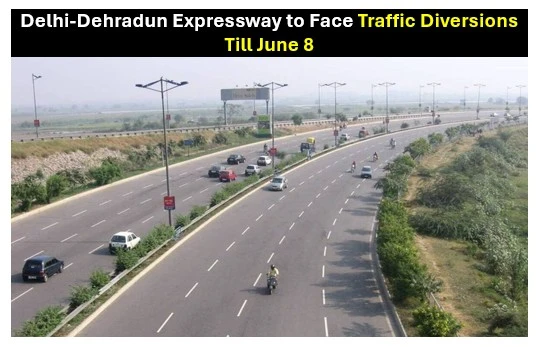
There will be traffic reroutes along the Delhi to Dehradun expressway until June 8 due to critical slope stabilization work being done by NHAI; These changes will impact all traffic between Ganeshpur and Dehradun and will especially affect the area around Datkali tunnel located in the state of Uttarakhand.
The announcement of reroutes comes weeks after the entire corridor was completed at high speed reducing travel time by 50%. The authority mentioned that although commuters will find themselves inconvenienced during this period, the importance of public safety is why they are taking these measures prior to the arrival of monsoonal rains.
Reasons for the Diversions
According to NHAI officials, the rearrangement of traffic flow is necessary to accommodate work necessary for slope stabilization on Phase 4 of the expressway project. The affected area is a hilly area of Dehradun that is prone to landslides; Therefore, the authority has employed precautionary engineering methods to mitigate any damages that will happen as a result of excessive amounts of precipitation falling during the upcoming monsoonal season.
Authorities have announced that approximately 1.25 kilometers (0.78 miles) of the expressway in the Datkali area will be subject to intensive safety treatments. This area has been classified as geologically sensitive, and professional recommendations have been made to reinforce the hills and surrounding terrain to protect against rockfalls or landslides and to mitigate the disruption that may occur when the monsoons come.
The National Highways Authority of India (NHAI) has stated that the purpose of these works is to prevent future disruption to the safe and uninterrupted movement of people.
also read: Why is summer heat so dangerous? Tips to protect yourself this season
What Will Change for Commuters?
As part of the temporary traffic arrangements, all vehicles traveling from Dehradun to Saharanpur will be redirected to the old highway routing, not on the expressway. However, for all vehicles traveling from Saharanpur to Dehradun, they will be required to continue traveling on the expressway, but they may be routed to the opposite side of the expressway for some sections.
The traffic police and highway authorities will have staff members present at key locations to assist drivers who are using the new routes and to provide directional signage. Congestion will be present on many of the routes, so travel times for many commuters may be extended due to increased volumes of traffic, particularly during peak hours and weekends.
Commuters have been encouraged to plan their trips prior to travel and to use safe speeds when using designated diversion areas.
also read: Dubai opens women-only beach zone
Expressway Has Been a Major Infrastructure Boost
The Delhi-Dehradun Expressway is a major highways project designed for improved connectivity from the national capital to the state of Uttarakhand. This new roadway will span approximately 210 km (130 miles), which would reduce travel time between these two cities from almost 6 hours to near 2.5.
The controlled-access expressway will pass through both Delhi and the states of Uttar Pradesh and Uttarakhand, connecting major areas including Baghpat, Shamli and Saharanpur. Additionally, this project will have many advanced elements such as elevated wildlife crossings, underpasses and several interchanges, which will help improve the efficiency of traffic flow on these roads while also being environmentally sustainable. The project has been constructed in phases, with the entire project now completed and open for use.
also read: Your Smooth Move Guide for Adjusting to Big City Living
Preparedness for the Monsoon Season is a Major Issue
According to experts, the diversion of funds to pay for this work indicates an increased emphasis on finding solutions to improve climate-resilient infrastructure and road traffic safety as part highway construction in India. Roadways built into the hillside and tunnelling in the region of Uttarakhand face multiple issues during monsoon season, including erosion, debris flow, and slope failures.
Authorities hope that by continuing to provide strengthening of these roadways before the onset of the monsoon season, it will help prevent emergency closures of these roadways and accidents later this season. In addition, these agencies have stated that after the rehabilitation, there will be ongoing monitoring of the identified areas throughout the remainder of the year.
Impact on Tourism and Local Travel
The expressway, which has quickly become a popular route for tourists heading to Dehradun and Mussoorie and other hill stations in the region, will experience an additional challenge in terms of traffic flow this summer due to the influx of travellers. As summer travel has now peaked, the diversions will affect the volume of weekend tourist traffic travelling from Delhi and its adjoining states.
Travel operators have advised that they will allow a buffer time when making travel arrangements to towns in Uttarakhand for travel through this area over the next two weeks. Local businesses believe that the temporary diversions will not adversely affect their businesses as traffic has not completely stopped and because of the temporary nature of these diversions.
According to the local authorities, the expressway continues to be in good working order, and safe for travel.
Authorities Urge Public Cooperation
Local authorities have called upon the public to be cooperative during the diversion period and follow all traffic signs outlining alternate routes.
The National Highways Authority of India (NHAI) and local traffic officials are working closely with emergency response teams and highway patrol units stationed along critical areas of the expressway to help resolve any potential traffic congestion or breakdowns.
In addition, local officials indicated that if weather conditions remain favourable, work to complete the hardening process would be completed as scheduled on or before June 8, 2026. After that date, traffic flow on the expressway will go back to normal.
