


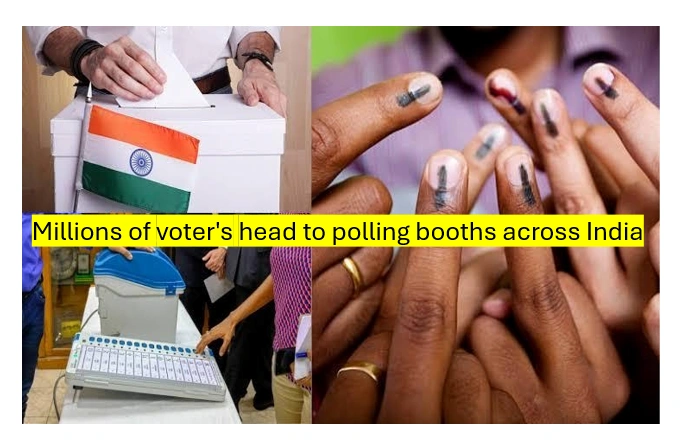
Officially, the state elections for 2026 started yesterday, which illustrates an important juncture within India’s democracy. Several million eligible voters are lining up at polling places throughout the different states to choose who will govern their respective regions. The atmosphere is rife with excitement, intense political competition and significant security presence — making these elections one of the most consequential events shaping the future of Indian politics.
Large Turnout During Early Voting Hours
Polling locations opened early this morning, and long lines could be found outside of each location prior to the polling beginning. Officials report that there has been an overwhelming turnout during the first hours of voting — most significantly in urban areas, but, to a degree, as well as in rural areas. There has been strong evidence of increased participation in democracy with first-time voters, seniors and women participating at a very high rate.
Officials have instructed residents of all states to vote responsibly, avoid spreading misinformation about the election process, and understand how critical each individual vote can be. Adequate provisions have been made by election authorities to assist elderly and disabled voters through the use of designated lines as well as transportation assistance in specific locations.
Tight Security Across Polling Stations
Due to the high stakes involved, security has been considerably tightened in the voting locations. Uniformed paramilitary, local police, and surveillance teams will ensure a safe and efficient voting process. Extra security has been put into effect at sensitive constituencies through the use of drone technology and live CCTV.
So far, officials report no significant incidents; thus, voting has gone according to schedule. Strict enforcement of the Model Code of Conduct continues with authorities taking prompt action for any violations.
Read also: Modi Lists 6 Guarantees to the People of West Bengal Ahead of Polls
Key Issues in Play for this election cycle
A blend of local and national issues. Voters care most about issues such as economic development, unemployment, infrastructure, healthcare, and education. Also in certain states, voters pay close attention to regional identity, and the performance of their government leaders in regards to these key issues.
In the months leading up to this election cycle, candidates of all political parties have campaigned heavily by way of rallies, road shows, and digital outreach. Promises contained within political party manifestos feature prominently and continuously in relation to welfare, job creation, and the provision of improved public services; attempts have been made by each political party to appeal to voters on both an emotional and practical basis.
High-Profile Candidates in the Fray
With many high profile and new leaders running in these elections, there will be more competition between rival candidates. Older leaders are out campaigning in their local constituencies while younger candidates are using social media to reach a larger number of voters.
Voter interest has increased due to the number of heavyweight candidates running, particularly in tight races. Analysts believe that the success of these candidates will have a major impact on the final outcomes of this election and the political alignment of parties afterwards.
Read also: Raghav Chadha removed by AAP as Deputy leader in Rajya Sabha
Technology’s Role in the Voting Process
Technology has played a vital role in allowing for both transparency and efficiency during this election cycle. Electronic Voting Machines (EVMs), Voter Verified Paper Audit Trail (VVPAT) systems are in use for all polling places, allowing for increased credibility to the overall voting process.
In addition, the use of digital platforms to improve voter awareness, track booths, and access real-time information during an election has been implemented by Election Authorities. Election Authorities are also working to reduce the impact of “fake news” and the spread of misinformation that happen in an election cycle.
Voter Sentiment and Public Mood
Voter’s Mood: There seems to be a general sense of optimistic yet cautious expectation among voters. Some voters are looking for continued and stable leadership while others are looking for change and a new direction. Voters who attended polling places appear to be looking at candidates differently based on previous performance history, their credibility level and what they promise to do in the future.
There has been significant youth participation in the voting process, with many young people indicating they want to help influence the development of policies and priorities for governance. Women voters are also making an impact, with deciding factors in their vote being issues such as safety, health care, and financial independence.
Read also: Congress Promises ₹2000/Month to Women ₹15000/Year to Farmers in West Bengal
The Polls Ahead
While voting continues throughout the day, officials anticipate that the turnout will steadily increase. Early results of exit polls will likely be released shortly after the polls close, and can provide an early indication of expected results, but final results will only be available after the official counting is complete in several days.
Political parties and candidates are keenly watching developments, as citizens anxiously await the results of these elections, which could have a significant impact on both the state’s administration and the national political landscape.
Currently, the election process is focused on being free, fair, and transparent. With high levels of participation and exceptional security, the working elections serve to validate the resiliency and vibrancy of India’s electoral process.
