


ACTING decisively to end the chronic anxiety and indecision that confronts thousands of patients, Gujarat government has undertaken a significant technological initiative: Building the registration and waiting list management for organ transplants onto a specialized software application. This digital platform will revolutionize the state’s organ donation and transplant ecosystem by shifting it away from an opaque, paper-intensive process to one that is transparent, with real-time tracking mechanisms accessible to all stakeholders and greater trust.
Gujarat, already a pioneer in ‘swap transplants’ — when donor-and-recipient pairs exchange organs with other non-matching pairs — is extending its technological edge to the broader realm of both cadaveric (from brain-dead donors) and living-donor organ transplantations. This solution aims to vital procedures for organs and tissues such as the liver, kidney, bone, skin and heart valve, driving the business of giving and receiving life-saving transplants towards equal accessibility to all patients in need closer relationship between doctors and donors fare search transparency.
Read more: Bharat Gaurav Trains 2026: Explore Gujarat and Rajasthan in Semi-Luxury Style
Alleviating the Waitlist Burden: Patients Need Real-Time Visibility
The greatest benefit to the new digital platform is likely to be its impact on patient’s state of mind. For years, waiting-list patients — who are usually extremely ill — have lived in a limbo that has paralyzed them, compelled to return again and again to hospitals just to ask how they stand on the list. This information void causes significant emotional uneasiness for the patients as well as their families.
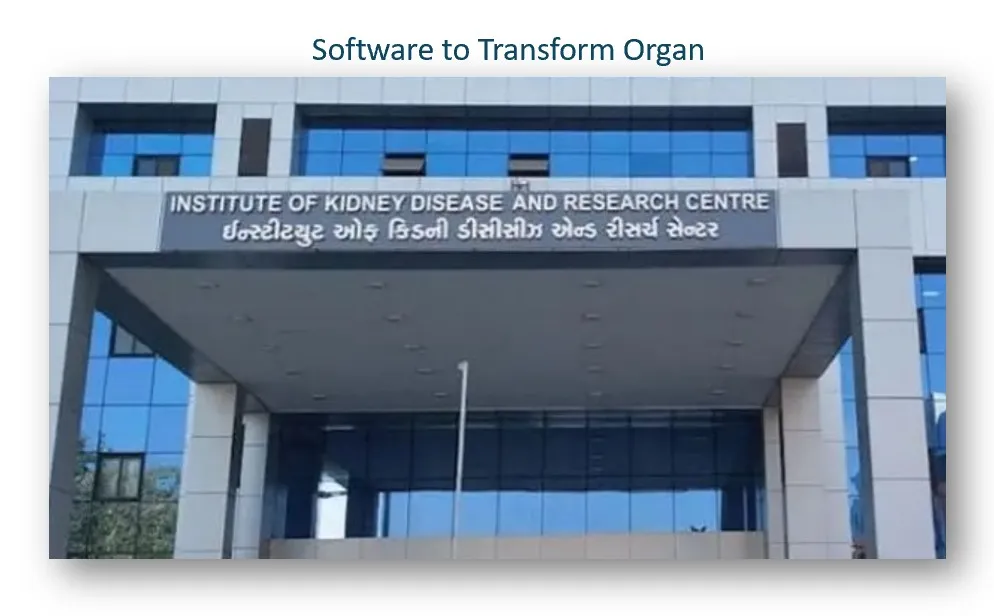
This will greatly change with the software to be developed. Once in the system, patients will have the opportunity to check on their status on the cadaver waiting list from the privacy of their homes. “This innovative idea, which was picked up by the highest office in the state will provide much needed clarity between systems and give appropriate information to the patient,” said Pranjal R. Modi, Director of Institute of Kidney Diseases and Research Centre (IKDRC) in Ahmedabad. The ability to monitor their number on the waiting list reduces anxiety and congregating, and also some of the unnecessary travel and physical stress to this already frail population.”
The Machinery Trust, Making Allocation and Enforcement Simpler and Streamlined
The software, which has been developed in partnership with authorities like State Organ and Tissue Transplant Organisation (SOTTO Gujarat) and National Informatics Centre (NIC), aims to control the complete lifecycle of transplant. It’s not just patient registration, but a number of very complex steps:
Hospital & Donor/Recipients Registration: Digitize initial registration, standardize data entry and avoid error or duplicity in registration.
Record and Retrieval Documentation: Enable real time, log record logging of Procurement information to keep the integrity and compliance.
Organ Allocation: This is the most important task. Instead, the software will optimize matches and allocations of donated organs through predefined, objective criteria — including blood type, tissue match, medical urgency and time spent on the waiting list—ensuring that the process is auditable and less influenced by human factors.
Medical Follow-up: The system will follow the medical care of recipients, helping support long term monitoring and research.
By computerizing this procedure, the state hopes to cut administrative lag times and human error to the bone — two of many silent time-stretchers in a process where every second more or less equals a dollar.
Model transplant system for the nation: Reinforcing India’s transplant laws
Gujarat’s decision to enhance its SOTTO (State Organ and Tissue Transplant Organisation) interface reflects a larger trend across the country for technology to play a role in health care, moving in sync with attempts like NOTTO (National Organ and Tissue Transplant Organisation). The best-practice example set by this new software could become a ray of hope for other Indian states besieged with long waitlists and nightmare-inducing organ allocation scenarios.
As India’s system for transplants evolves, transparency is the building block of public trust. A digital registry, real-time, vigorous was the good step for humanity. It changes the patient experience from one of desperation and hope to informed patience, setting down a foundation of trust that is critical for persuading more people to donate deceased organs – and ultimately, saving more human lives.
