


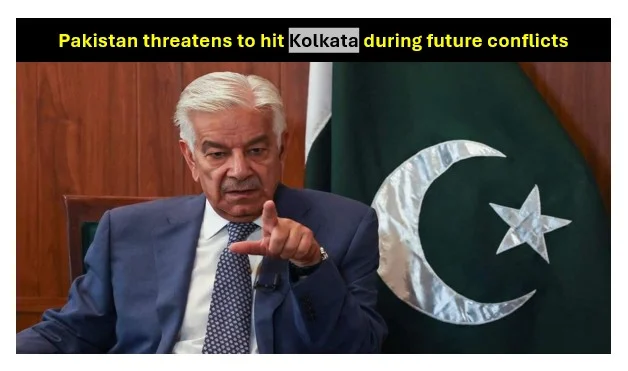
Tensions between Pakistan and India have significantly risen again after statements made about potential military targets in Eastern India, with Kolkata being named specifically as a major target in the event of a military conflict between both nations. Although these types of statements about Kolkata are often made by both Pakistan and India, the specific reference to Kolkata has caused an increase in fears amongst Indian residents of Kolkata due to the importance of the city for trade, its population size and its cultural significance.
Reasons For The Statements – Rising Tensions in the Region
The statements are probably in some ways connected to the increased geopolitical friction between both countries, including unresolved territorial disputes, military posturing and cross-border tensions. Some analysts believe that such statements are generally made at periods of increased diplomatic tension (or pressure) and/or pressure from inside each country as a deterrent to action or a way to signal domestic political support for increased military activity.
The city of Kolkata is one of the largest cities in India and has a great deal of strategic importance because of the distance to the Eastern Frontiers of India, its importance for commercial trade, and it being the second largest city in India in terms of population density. The use of the statements connecting Kolkata to the possibility of being targeted in a military conflict increases the likelihood that the general public will be concerned about the potential for military conflict.
also read: BJP leaders supported Raghav Chadha after AAP demotion
Strategic Implications
Military experts are concerned that threats involving civilian centers geographically at a distance from the primary area of conflict, represent an emotionally escalated level of engagement. Weapons or other types of conflict between two nuclear capable countries such as India and Pakistan could be caused by even verbal signaling between the two parties.
If a city such as Kolkata were to be attacked, the immediate humanitarian toll would be catastrophic, but if either party were to respond disproportionately, then this could lead into an international incident that expands beyond either of these countries. Historically, both India and Pakistan have restrained their use of military force in a crisis situation but this type of statement would be pushing the limits of that restraint.
also read: NDA to rename Tamil Nadu to Dakshina Pradesh
Diplomatic Reactions
The Indian Government has not taken these threats lightly and has continued to assert that they will protect their country as well as the rights of its citizens. Although there has not yet been an immediate military response, they are routinely communicating through diplomatic avenues in an attempt to de-escalate tensions between the two nations.
Global leaders and regional organizations have regularly urged both nations to communicate through means other than inflammatory rhetoric and to utilize communication over military engagement. Similarly, all countries of the international community are extremely concerned with anything that may contribute to the destabilization of South Asia as there are already many complex security issues in that region in recent years.
also read: Narendra Modi to inaugurate development projects
Public and Political Response
Kolkata’s references have stirred emotion by both politicians and civilians across India. The public discussion surrounding this has mostly criticized the alleged threat and advocated a strong but measured response. Local leaders in West Bengal have been respectful of the value of being prepared, while also calling for calm so that there is no unnecessary panic.
Media attention has been significant in broadcasting this issue, with national security, preparation for defence and diplomatic strategy being key areas of discussion. At the same time, fear can be heightened due to misinformation and sensationalism.
The Influence of Nuclear Deterrence
One of the great deterrents to a major war between India and Pakistan has been their nuclear capability. Both have the ability to inflict large amounts of destruction on each other. Thus, the relative cost of going to war is high for each nation.
However, experts indicate that continually making threats aimed at major cities can break down the stabilisation provided by the nuclear deterrent. The reality of miscalculation, misperception and the chance of an accidental escalation remain pressing concerns as long as aggressive rhetoric continues to be used.
Need for De-escalation
Due to the serious consequences of the current situation between the two countries, there is a rapid increase in interest in having both nations use confidence building measures. These can include reopening lines of communication, reaffirming their non-aggressive commitments, and avoiding making statements that can be considered provocative.
Additionally, track-two diplomacy, which involves working with non-governmental organisations and experts in the field, can also help lower tensions and build mutual understanding between two nations. Historically, this has been successful in alleviating crises when the official channels are under pressure.
Bottom line:
Based on the reported threat to the city of Kolkata, it is clear that the relationship between India and Pakistan is very fragile. While it is possible that the threat is based on strategic posturing, the stakes are too high to ignore. Therefore, both countries must keep peace and avoid escalation as they work through the current geopolitical complexities.
In a region where millions of people could be displaced due to a conflict, exercise of restraint, open dialogue, and responsible leadership are necessary for a peaceful resolution and to prevent an escalation.
