


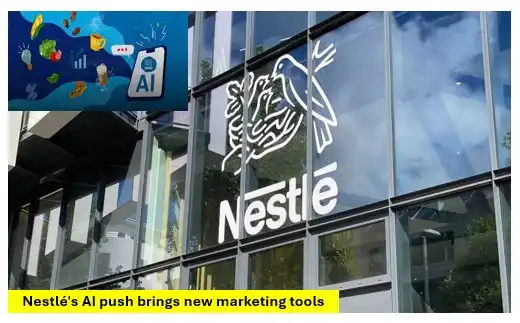
Within the confines of the halls of Nestle world headquarters, this now blends with the smell of brewing coffee and a strongly techno-gadgetic buzz. It is no longer experimenting with artificial intelligence, the largest food and beverage company in the world is weaving the technology into the very fabric of its daily operations.
By February 2026, Nestle has already passed the stage of digital transformation piloting. Since the marketing suites of London to the supply chain centers of Mexico, AI is no longer a buzzword at the boardroom but is an essential part of the toolkit of the average employee.
NesGPT: The 100,000 Employee Personal Assistant
NesGPT, the internal, secure variant of ChatGPT of Nestle is the focus of this cultural change. In contrast to the openAI models, NesGPT is a walled garden, which is trained on the Nestle own data and brand principles, meaning that the corporate secrets and consumer privacy are kept in safe hands.
The influence of such a push by the AI is real. According to Nestle, over a hundred thousand employees are regular users of AI, with an average of more than 40 prompts monthly. To the marketing department this translates to a tremendous saving in the amount of “drudge work” done.
Speed to Market: Speed to market- the time the company takes between the brainstorm and the viable concept- has dropped by half, six months now only six weeks.
In summary, the average NesGPT user will save approximately 45 minutes each week summarizing lengthy documents, writing cross-market emails, and analyzing complicated sales information using NesGPT.
Digital twins: the demise of the photo shoot?
The most attractive aspect of the Nestle AI push, perhaps, is the emergence of the so-called “Digital Twin.” These are hyper-realistic, three-dimension modeling of product packaging that exists in an online only space.
Previously, the idea of a seasonal campaign was to ship hardcopy products worldwide to have costly time-consuming photo shoots. Nestle currently has more than 4,000 digital twins in its library, and the company plans to achieve 10,000 by 2027.
Supply chain and Sustainability: Artificial Intelligence in Practice
The marketing tools are glitzy but the heavy lifting is being done in the supply chain. Nestle is in the process of a massive global upgrade to the SAP S/4HANA Cloud, which will provide one and universal piece of information as fueling machines of its AI.
Forecasting Accuracy: Incidentally, machine learning has minimized the mistakes in demand forecasting by 30%. The AI can forecast the number of jars of Maggi seasoning any given area will require by examining the weather patterns, social media trends, and economic indicators and thus cut food waste and stock out significantly.
Sustainable Packaging: Nestle is seeking new high-barrier packaging materials with the help of generative AI in partnership with IBM Research. The AI will examine millions of scientific patents and molecular structures to propose combinations of materials that are both functional and recyclable, and the transition towards virgin plastics will proceed much faster.
Predictive Maintenance: In more than 300 factories across the globe, predictive maintenance is enabled by simulations of whole production line, enabling engineers to simulate the so-called what-if scenarios and anticipate the failure of a machine before it occurs, preventing disruption of the production process, that is, keep the chocolate flowing.
The Human in the Loop: Responsibility vs. Automation
Even with such a forceful implementation, Nestle management is fast to give the transition a human face. The guiding principle of the company as of 2026 is the principle of People-Centric AI.
As a company statement in the TransformIT Europe 2026 summit said, AI is a tool, but the distinct view of our team members is what makes our brands iconic. We are working towards the human-in-the-loop model where AI makes suggestions, but the important decisions are left to a human, particularly when it is a brand-sensitive or creative task.
