


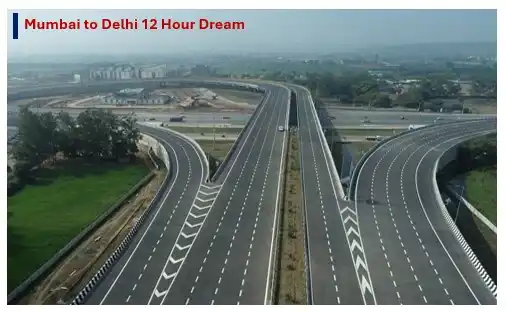
People have been dreaming for years of driving from Mumbai to Delhi in just over 3 hours. The Delhi–Mumbai Expressway, under construction, will turn one of India’s busiest roads into a high speed, modern highway. When it’s fully operating, officials say journey times will drop by a huge amount, putting the two biggest economic hubs closer together than ever.
A part of the highway is already open, and drivers who have used those sections have said they are easier and take less time. The ideal goal of a 12hour trip remains out of reach. One important missing link is to blame.
The slowdown in South Gujarat
The biggest problem has turned out to be a small but important stretch in South Gujarat. This part of the road links places between Vadodara and the edges that lead to Maharashtra. Expressways are like a chain, and if one link is missing, the whole network can move more slowly.
Things have moved more slowly than planned here. Early contracts had trouble with performance, and officials sometimes had to rethink or redistribute work. Problems with the land and planning further lengthened the delays. The rest of the highway moved smoothly ahead, but this section was struggling to keep up.
Transportation experts say this kind of gap has a significant impact. Vehicles have to go around or join with current roads, which takes away from the benefit of newly built high speed parts. So, the big plan to cut the drive from Mumbai to Delhi to about 12 hours still can’t come true.
Also read:
- Ganga Expressway to Be Completed by February 2026
- Maharashtra Government Clears Navi Mumbai Metro Route
- No cruise control on patchy DND Flyway
The government tries to make things better
Officials say they are working to speed up the building process and close the gap. More oversight has been added, and agencies are focused on better worker performance and making sure that things run more smoothly. The project is still a national priority because of how big it is and how much it will help the economy.
According to new information from the government, the highway will work the way it was meant to once the problem with the Gujarat section is fixed. The government has set wider finishing goals for the next few years, with phased openings continuing in all areas where work is finished.
For travellers and people who work in transportation, each new operating stretch still brings some comfort. It gets easier to drive long distances, travel speeds up, and the amount of gas used drops. But the dramatic effect won’t happen until cars can stay on the access-controlled road the whole way.
Why is this route important
The highway is one of India’s biggest projects for building infrastructure. It goes through several states and is more than a thousand kilometres long. It is expected to open up new business, trade, and tourist possibilities. Many new businesses, stores, and service industries could open up in towns close to interchanges.
Businesses think that moving goods between northern and western India will go faster. Less time spent in travel usually means lower costs and more reliable supply chains. For travellers, the project means safer roads, better services, and more reliable journey times.
Because of these advantages, the focus stays on the weak spots that are still there. The delay in South Gujarat has come to represent how complicated big projects can be when only a few parts are finished.
