


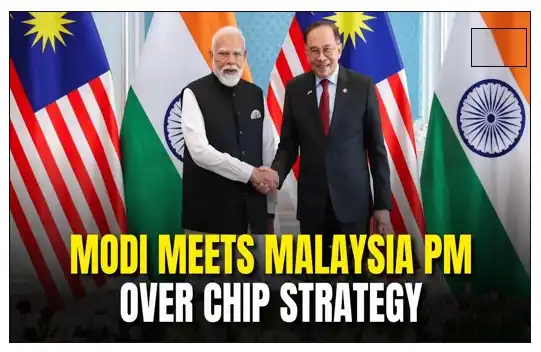
During a high profile trip to Malaysia, Prime Minister Narendra Modi met with top technology executives, including the CEO of the big electronics company Phison, to boost India’s global technology goals. A lot of the talk was about semiconductors and how India can become a hub for chip manufacturing and the development of new technologies.
Modi’s meetings with business leaders outside of the India-Malaysia CEO Forum showed how his government is trying to get more investment in the fast-growing semiconductor sector by improving technological supply chains and fostering stronger economic ties.
The semiconductor strategy is the main focus
During talks with the head of Phison Electronics, a semiconductor company based in Malaysia, Modi pushed India as a good place to do research, design, test, and make chips in the future. It was clear that the CEO of Phison strongly supported the vision. He praised India’s efforts to improve its economy and build a world-class semiconductor ecosystem that goes beyond just setting up factories.
The conversation made it clear that India wants to build partnerships based on advanced technology, not just assembly operations. This is part of New Delhi’s larger plan to increase production in India, create jobs, and become less reliant on global supply chains for key parts.
A bigger pitch for business and growth
The Prime Minister didn’t just talk about semiconductors. He also met with other top Malaysian business leaders to show them how India could be a good place to invest in many areas, such as healthcare, digital technologies, renewable energy, and infrastructure. The talks were meant to improve economic ties between the two countries and encourage Malaysian businesses to look into joint ventures and growth opportunities in India.
He made his point very clear: India is a safe place to do business with good growth prospects. Officials who were with Modi said that Malaysia’s strong semiconductor ecosystem, which is already one of the most developed in the world could help India’s growing design and manufacturing skills, creating opportunities for both countries.
Strategic Working Together Beyond Chips
Modi’s visit was also a sign of wider economic and political cooperation. India and Malaysia have promised to work together more on trade, technology, and security. They know how important it is to have strong supply chains in a world that is becoming more competitive. The partnership is still going strong and aims to combine Malaysia’s strong background in chip testing and assembly with India’s growing expertise in design and policy support.
This approach fits in with efforts to improve research, training, and new ideas in the technology and semiconductor fields. It is expected that both countries will keep formalizing frameworks that help build capacity, allow cross border investment, and encourage long-term cooperation in industries.
What This Means for India’s Tech Goals
India wants to be the leader in semiconductors as part of a bigger economic plan. New Delhi is trying to build a competitive technology sector that can compete with big global players. They are doing this by offering big incentives, changing policies, and building specific kinds of infrastructure. One important part of that strategy is promoting international partnerships, such as those held in Kuala Lumpur.
India’s semiconductor journey is still in its early stages compared to hubs that have been around for a long time, but these kinds of talks show that foreign business leaders are becoming more confident in the country’s direction. The government wants to speed up the country’s change from a major technology market to a major player in the global supply chain by promoting investment opportunities and setting up high level meetings.
Trade, technology, and regional cooperation talks are likely to stay at the top of Modi’s agenda during his visit. These talks will strengthen India’s position as a strategic partner in the Indo Pacific and beyond.
