


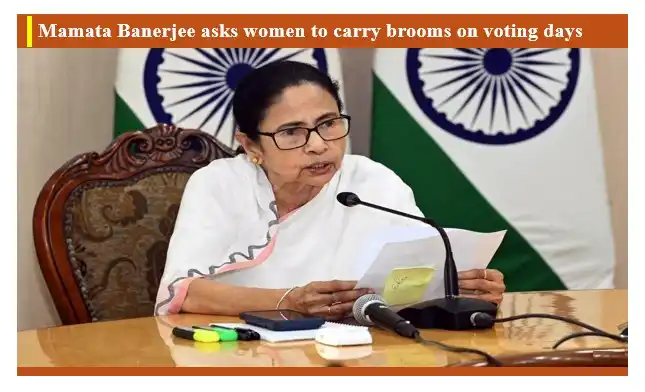
Mamata Banerjee, the Chief Minister of the western Indian state of West Bengal, ignited controversy this week when she publicly asked women voters to carry brooms with them to vote. The message, which was meant to encourage women to assist in overcoming fear and to show their strength as part of grassroots democracy, has caused many women in the state to speak out about it.
Banerjee commented that women in the state are often in the forefront of community mobilization and therefore must not feel intimidated and should exercise their democratic rights. She stated that having a broom with a woman when she votes will give her power, both at home and the ability to “clean” up the election process if any illicit activity occurs.
Call for Symbolic Resistance
Banerjee’s statements were made in response to increased political instability in West Bengal, including violence, voter suppression and altercations between rival political factions. Banerjee’s party, the TMC party, has claimed its opponents wish to impede the fair results of elections, particularly rural and semi-rural ones.
Using women and brooms as imagery, Banerjee has attempted to convey both safety and empowerment for women and to encourage women to exercise their right to participate in the electoral process and to stand up against efforts to interfere with those rights.
also read: Do parties have the authority to remove their Rajya Sabha MPs?
Political Messaging and Symbolism
Banerjee has been recognized for using pantry staples to symbolize her and other political movements through the history of India. This tradition includes brooms, which represent cleanliness, as both symbolism for many political movements (including the TMC party) and as instruments for organizing grassroots movements. Banerjee uses the broom to represent the empowerment of citizens rather than the party’s values.
According to political analysts, Banerjee’s goal was to appeal to women voters, who have had an enormous effect on the electoral success of the TMC, and, by doing so, the Chief Minister is creating a collective act that creates a sense of unity, creating a deterrent to any disruptions.
Opposition party leaders have condemned the comments made by Banerjee indicating that the comments were inflammatory and unnecessary. Opposition leaders, particularly those of the BJP, see Banerjee’s comments leading to increased tension rather than less tension. Some have questioned whether voters will want to carry anything with them to the polls, even an object which is purely symbolic.
Critics have claimed that Banerjee is attempting to use dramatic rhetoric to politicize women voters instead of focusing on administrative steps to provide for a free and fair election.
also read: Pakistan threatens to hit Kolkata during future conflicts
Support from Party Workers and Allies
TMC officials and supporters have supported the Chief Minister’s message and interpret it as a metaphor rather than direct order. According to party officials, what Banerjee intended to express to the women voters was to be vigilant and courageous, not to engage in confrontation.
Grassroots workers have stated that the women in many parts of the state are already engaged in activities in defence of their communities. As such, for many of these women, the broom symbolizes their willingness to join forces to confront those who intimidate them.
also read: BJP leaders supported Raghav Chadha after AAP demotion
Women Voters Are Central to Electoral Strategy
Women voters have become increasingly important, as evidenced by their recent electoral impact on political matters, due in large part to various welfare programs targeted towards them, e.g., finance and social welfare.
Banerjee’s processing of addressing women through this appeal constitutes a broader strategy designed to reinforce women’s existing level of support. Through a direct manner of addressing women and recognising their involvement in the continued maintenance of democracy, she is also attempting to increase their degree of political participation.
Election Commission Guidelines and Concerns
The declaration raises questions about the capability of the Election Commission of India to execute their duty to conduct elections safely and fairly without causing undue unrest for those individuals involved in the process. There is no specific provision against items such as brooms as they are a basic household item, but local authorities will advise against using items that may create fear or unrest among other participants.
Election officials may consider using these declarations as part of their procedures to monitor compliance with the Model Code of Conduct when administering elections.
Wider Consequences Related To The Ways That Political Messages Are Communicated
Banerjee describes the volatility of political communication in Bengal. Using images/symbols to engage voters is effective, however, the use of images/symbols to mobilize division among different groups should be questioned.
There are also many issues regarding how leaders will communicate with their constituents before, during, and after significant events such as elections. Although images/symbols may promote increased voter turnout; they may also be misinterpreted or exaggerated, which will create tension in an already tensely charged environment.
The effect that rhetoric will have on voting behavior and the overall environment at the polling place is not yet established, as we move closer to election day in West Bengal.
