


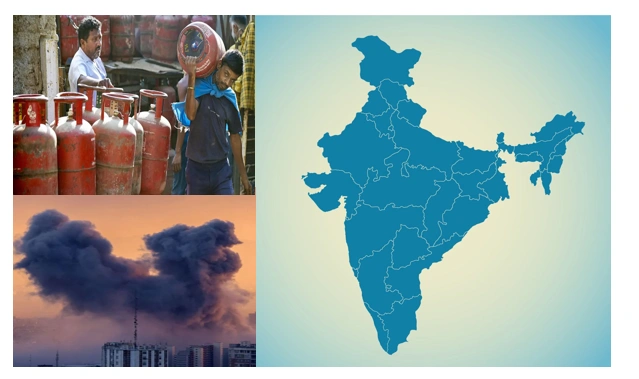
The tensions of the simmer of 2026 have finally erupted into a full-blown war between Iran and the United States spilling cold blood into the kitchens of India. The war is no longer a far-off newspaper headline to a country that is importing over 60 percent of its Liquefied Petroleum Gas (LPG) of which the large part of it is flowing through the currently volatile Strait of Hormuz. It is a build up domestic crisis.
Although the Indian government is quickly working to focus on households, the impact is already causing havoc to the business of the nation. In the crowded Darshinis of Bengaluru to the posh restaurants of South Mumbai, the blue fire of the gas stove is turning out to be a luxury a number of people can no longer afford to maintain.
The Choke Point: Why the Strait of Hormuz is important to Your Kitchen
Crisis revolves around the Strait of Hormuz which is a narrow passage that acts as the energy artery that is of great importance in the world. About 85 and 90 percent of the India LPG imports, which are mainly in Qatar, Saudi Arabia and UAE have to pass through this corridor. The supply chain has suffered a sudden heart attack with Tehran, with its control over the strait, and looming threat of maritime blockades.
Read also: Power transition in Iran amidst war and political turmoil
States Feeling the Heat: The Geography of the Shortage
As the entire nation is on alert, some of the states are receiving a disproportionate share of the burden caused by its high urban population density, use of commercial LPG, and the distance to the major bottling facilities.
Karnataka: The Bengaluru Shutdown
The Karnataka is the epicentre of the commercial gas crisis. In Bengaluru the Bangalore Hotels Association recorded that almost 70 percent of the establishments are not doing well. By mid March 2026, a number of traditional restaurants started showing no service signs when their supplies of commercial cylinders ran out. According to Deputy CM D.K. Shivakumar, the entire hospitality sector in the state is at stake whereby 10 percent of the hotels received their deliveries scheduled this week.
Mumbai, Maharashtra: 20% Reality, Mumbai
The state of things in Mumbai is no better. The Indian Hotel and Restaurant Association (AHAR) estimates that, twenty percent of the restaurants in Mumbai have already shut their doors. The industry giants warn that unless supply is restored in 48 hours, almost 5,000 other establishments in Mumbai, Pune, Nagpur will do the same. This scarcity has also spawned a black market that is predatory with ₹115-increased commercial cylinders being reportedly being sold at twice the legal price.
Tamil Nadu and Kerala: The South Supply Strain
The bottling plants in Chennai located down south have been reported to stop filling the commercial cylinders so that domestic supply is not interfered with. This has created tremors in Kerala where Kerala Hotel and Restaurant Association threatens that Kochi and Thiruvananthapuram are facing an imminent halting of food service. Recently, Chief Minister M.K. Stalin addressed the Prime Minister, requesting alternative options as MSMEs are starting to squeeze in Tamil Nadu.
The urban Crunch: West Bengal and the North
Mega confectioneries and central kitchens in Kolkata have already started to close down their operations. Meanwhile, in such states as Delhi and Uttar Pradesh in the north, gas lines have re-emerged before gas agencies. Although the government is making the promise that there is no cause to panic, the visual image of the empty delivery trucks is telling a different story to the average man.
Read also: Government Orders Oil Refineries to Boost LPG Production
Making the Crisis Human: The Price Beyond the Cylinder
The statistical numbers are accompanied by individuals such as Ramesh, a small catering proprietor in Bengaluru who has been sleeping outside a distribution center during the past three nights. The government says that houses are safe, but what about my family, how do I feed them when I cannot cook my clients? he asks. It is not an energy crisis to the millions of students, migrant workers, and patients who use small eateries to take their daily meals, but a food security crisis.
The political and social protection offered by the government of providing a household first strategy is needed, however, exposes the 6.6-lakh-crore ecosystem of restaurants to risks. According to experts, the strategic reserves available in India can be considered to last approximately 8 weeks but these reserves are crude oil and not processed LPG.
