



In the heat of the Wankhede Stadium outfield the sun was blazing yesterday, but a figure familiar to the stadium was standing close to his pitch, with his hands clasped and his eyes scrunched not on a tablet or a laptop but on the shadows of the afternoon. India in their head coach, Gautam Gambhir, was doing the one thing that is becoming more and more common in the hyper-analytical world of modern cricket; he was just watching.
In a time when T20 cricket has become all about so-called matchups, projected runs, and ticket prices determined by a queue of servers, the Indian camp at the T20 World Cup 2026 has made a silent revolution. It is what they refer to as Instinct Over Data.
The Anti-Moneyball Approach: Why Feel Trumps Filters
The Indian T20 cricket has been characterized by the era of Gambhir which has released the Moneyball philosophy of the format that has dominated the format over the last decade. When you have other teams such as England and Australia come with data scientists in their dugouts the tactical room of India is more of an old school war room.
The philosophy of Gambhir is on the assumption that data is a lagging indicator- it tells you what happened yesterday, not what will happen at the fourth ball of the 14 th over when the weather is damp and the bowlers hand is slipping.
Read also: T20 World Cup: How an Indian throwdown specialist is boosting West
Tactical Keys: The way India has refocused on the Knockouts
The move towards an instinct-led model to data-led has necessitated a number of radical reforms in the T20 blueprint in India. The team adopts the floating structure under the leadership of Suryakumar Yadav (SKY), which places greater emphasis on momentum more than positions.
Jasprit Bumrah: The Manager of Crisis
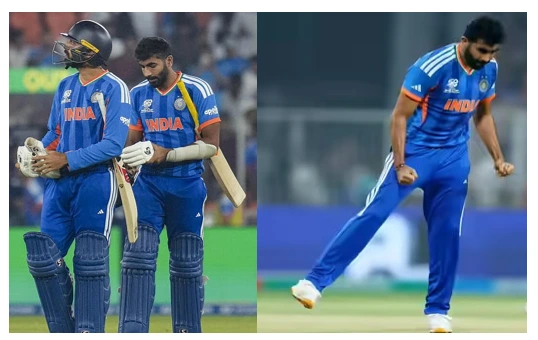
With conventional data-based T20, you would prefer to reserve your best death bowler to the final overs. India has flipped this. Jasprit Bumrah is a floating lever that SKY has employed in the Super 8s. In case an opposing batter such as Shimron Hetmyer or Rovman Powell threatens to steal the game in the 12th over, Bumrah is summoned as soon as possible to break the game.
The Spin Twin Gamble
The premature unleashing on the stages of Axar Patel and Varun Chakravarthy on those notes which as a rule benefit pace have startled opponents. It was a masterstroke on the part of Varun against the West Indies, and the object of the delayed entry was to strike the middle-order firepower, but not to waste his overs against openers who were yet to make up their minds how things went.
Read also: Curran says England ready for ‘perfect game’ in semis vs India
The Human factor: Sanju Samson and the Patience Dividend
The reemerging Sanju Samson is perhaps the most humanizing account of this change in tactics. Samson over the years was the almost man of Indian cricket who was constantly faulted because of his lack of consistency, even though he clearly had the flair.
Samson has not been viewed under the Gambhir-SKY regime as a statistical anomaly, which should be corrected, but as a match-winner, whom they can place their trust in. The selfish outburst of his joy at the victory in Kolkata, as he threw himself on his knees but looked at the heavens, had the air of a man at last getting the confidence of his dugout.
Good things come to those who wait, SKY said and he embraced Samson on the field. This emotional intelligence, or being aware of the mental condition of a player, not just his striking rate against off-spin, is the secret sauce of the 2026 campaign of India.
