


As of April 1, 2026, India’s income tax office will be fully digital. Tax officers will be able to legally access your bank accounts, emails, social media profiles, cloud storage, and online trade platforms if they think you are hiding income or not paying your taxes. This is what the proposed Income Tax Bill, 2025 says. In standard income tax searches, police officers look for things like cash, jewellery, and papers. The new law adds to these searches. Now, they will also be able to find and seize things in cyberspace.
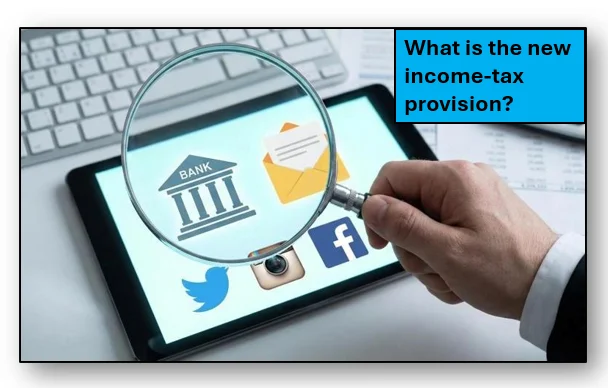
What is the new income-tax provision?
Section 132 of the Income Tax Act, 1961, controls tax research at the moment. If there is good evidence of hidden wealth, this part of the law lets police search a building and take things like cash, jewelry, papers, or property.
This framework is brought up to date for a digital-first economy by the new Income Tax Bill, 2025
Tax officers will be able to get to what the bill calls a “virtual digital space” if the law passes. There are many places online where financial or business data can be kept safe. These include email accounts, social media profiles, cloud storage, online banking, digital wallets, trade and investment platforms, and more.
In simple words, tax officials will not only be able to search closets and lockers. They will also be able to see what’s in digital screens, inboxes, and direct messages.
read also:
- IndusInd Bank Chairman Sunil Mehta to Step Down
- India’s Digital Economy to Reach $1.2 Trillion by 2030
What does the government want to do?
Digital searches make sense in a pretty simple way. Government officials say that most deals now take place online, where money has mostly moved. Because of this, tax regulation is also moving in that way.
Today, everything that has to do with money leaves a clear digital trail, from crypto assets and overseas trading accounts to digital wallets and online companies. Authorities say that old-fashioned search tools aren’t enough to catch clever tax dodging schemes that use online platforms and private contacts.
By letting people find and seize things in digital space as well, the government hopes to close the loopholes that let secret assets and income stay hidden.
This means that the government can get into your computer accounts whenever they want
No, and this is very important. The new law does not give anyone access to anyone else’s personal computer info. Digital searches will need a “reason to believe” that someone is hiding money or assets or is cheating on their taxes, just like physical searches.
This should mean that taxpayers will still be able to keep their privacy. Income tax officers will have to write down the reason they think someone is guilty before they can start a digital search. This is to make sure that their powers are in line with the law.
But, unlike real searches, digital access does bring up new questions about what is fair, what is covered, and who is responsible. A lot of people who are against the new rule also say that it affects people’s right to privacy because it affects their personal emails and social media accounts. And this could be abused if the protections for the process are not made clear.
How does the new legislation affect you as a taxpayer?
The new rules probably won’t change the daily lives of most honest people. To be safe, you will need to file returns correctly, report your income, and follow all tax rules.
But if a person is accused of tax fraud, tax officers can now look at emails, social media posts, online transaction logs, and digital asset records to find links to income that hasn’t been reported. The police could even read personal messages sent online if they thought they had anything to do with a tax case.
