


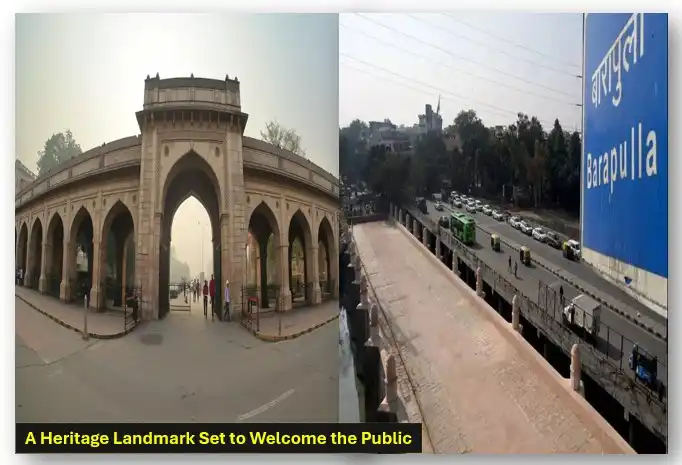
A Heritage Landmark Set to Welcome the Public
In February 2026, the famous Barapullah Bridge in Delhi will reopen to the public after years of neglect and limited access. The 17th-century building near Nizamuddin had been closed for decades due to safety concerns, damage, and people getting too close. Thanks to the Archaeological Survey of India (ASI), much of the bridge’s structure has been repaired. This means that people can now walk through a bit of Mughal history.
The reopening is a major step toward preserving history in the nation’s capital. Now, people can see an old building gem that was once an important part of connecting important historical lines.
Why cars and trucks will never be allowed again
The bridge will soon open, but there’s a big catch: no cars of any type will be able to use it again. Heritage experts and officials from ASI have stressed that wheeled traffic could damage the bridge’s original stonework and historic cloth, ruining years of careful repair.
The bridge will only be open to walkers from now on. This will make it a safe place for historical walks and cultural trips. At both ends, gates and iron bars have been put up to keep cars that aren’t supposed to be there from getting in. This pedestrian only model is part of a broader plan to keep the building standing while still allowing people to use it.
Decades of neglect and invasion were taken away
It took a long time and a lot of work to fix up the Barapullah Bridge. Over the years, illegal activities like trash dumps and private markets have crept up on the site, making it less important historically and hurting its structure. As part of a big sweep in 2024, the Lieutenant Governor of Delhi told the police to get rid of more than 120 illegal vendors who had set up shops along and on the bridge.
As soon as the encroachments were removed, ASI began the restoration work in earnest. This meant getting rid of layers of old asphalt and plaster that had built up over the years and covered up the bridge’s original surface. The bridge’s brickwork and arches were repaired by skilled workers using traditional tools and materials, while preserving as much of the original look as possible.
As part of the repair, the area around the bridge was cleaned up, and planting and draining work were coordinated with local government groups to make the historic spot even more appealing.
India Post Launches Speed Post 24 and Speed Post 48 Services
Heritage architecture and its historical importance
Barapullah Bridge is one of the few Mughal built bridges still standing in Delhi. It was built in 1621 and 1622 during the rule of Emperor Jahangir. It was an important route linking sites such as the Nizamuddin Dargah and Humayun’s Tomb as part of the Mughal road network.
The bridge is about 195 meters in length and 14 meters in width. Its name comes from the fact that it has 11 arches supported by 12 piers, which is a play on the words twelve pillars. Each of these piers used to hold up a two meter tall tower and the work shows how Mughal architects thought about power and balance.
Historians say that Mihr Banu Agha, a well known figure in Jahangir’s court, asked for the bridge to be built. As newer ones replaced older infrastructure, the bridge lost its usefulness over time and slowly fell into ruin until recent attempts to protect it brought it back into the spotlight.
What People Can Expect When It Reopens
Barapullah Bridge will be a special cultural and historical experience for walkers, tourists, students and history enthusiasts once it reopens. Since cars will never be able to get to the site, it should become a quiet place for people to walk in the middle of Delhi’s busy cityscape.
ASI has also put in place security measures to prevent unauthorized entry and protect the repaired building. Iron bars, security and regular checks will help keep the bridge in good shape and keep the environmental benefits from being lost.
The reopening is the result of years of work by historical advocates, environmentalists and public groups. The restored Barapullah Bridge will become a landmark for both people and visitors. It will link modern Delhi to its rich Mughal past and show people how history is still relevant today.
