


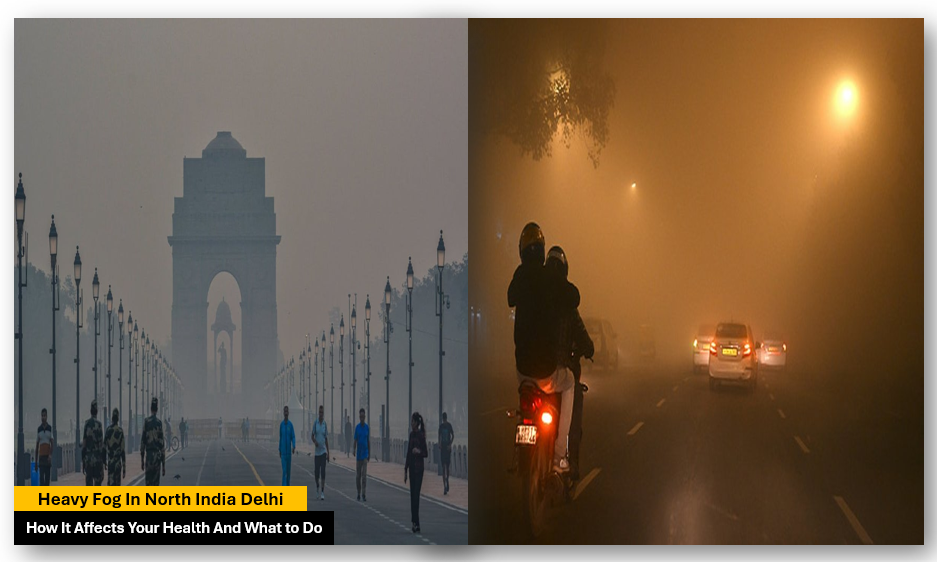
North India — Delhi especially — is cocooned at this time of the year under a ghostly, familiar shroud as December deepens. There is another, more subtle health calamity associated with heavy, dense fog in London – though the early winter images of the “Great Smog” generally get all the press. It’s not just water vapor; this fog, in the National Capital Region (NCR), here, acts as a physical trap for poisonous pollutants and makes for a polluted “gas chamber” that settles right down at lung level.
The key to staying safe this winter is knowing the difference between a postcard-perfect winter morning and a dangerous environmental event.
Why Delhi’s “Fog” Is Different
Fog is just humidity in a clean room. But in North India something called thermal inversion happens. That colder and therefore denser air remains stuck to the ground by warmer air lying just above. This “lid” prevents contaminants from emanating.
When this happens, PM2. 5 (particulate matter) and other pollutants cling to the moisture in the fog. You’re not just breathing mist; you are inhaling a liquid-chemical cocktail. This was why visibility often seemed to plummet to zero when wind speeds were very light — the air becomes so with gunk that it literally cannot move.
The Unseen Toll on Our Health
The medical effects of this heavy wintery fog are both acute and chronic. Because cold air is denser, heavier and harder to breathe, our bodies work overtime to try to keep their core temperature at around 98.6 degrees and replenish the oxygen that gets stripped with every icy inhalation.
Respiratory Distress
The thick fog is a nightmare for asthmatics and people with Chronic Obstructive Pulmonary Disease (COPD). Cold, damp air can also cause “bronchospasms,” the sudden narrowing of the airways. When you add PM2. 5 to that mix, the particles avoid the natural filters in the nose and are deposited deep inside lungs where they cause inflammation, wheezing and an ongoing “smog cough.”
The Cardiovascular Burden
Only few people know that cold fog also causes heart attacks. In cold weather, blood vessels tighten (constrict) to help conserve body heat. This raises blood pressure. When the heart has to pump against that pressure — compounded by systemic inflammation from the inhalation of pollutants — it increases the risk of a cardiac event.
Eye and Skin Irritations
The chemicals the fog snags — nitrogen dioxide solid and sulphur dioxide suspended in water vapor, for example — turn mildly acidic when they are mixed with moisture. This results in the “burning sensation” that a large number of Delhiites feel in their eyes. It can even lead to skin rashes and dryness, since as the toxic moisture sits on the skin’s surface.
Delhi air pollution India imposes new measures as AQI worsens
What the Fog? How to Make It Through Peak Fog
If the India Meteorological Department (IMD) has af ‘Orange’ or ‘Red’ fog alert, its time to change your routine. Here’s how to get through the “severe” days.
Rethink Your “Morning Walk”
The classic Indian morning walk does more harm than help in late December. Levels of fog and pollution are at their highest level early in the morning as between 4:00 AM -10:00 AM.
The Fix: Move your exercise sessions to the afternoon (between 1 p.m. and 3 p.m.) when the sun is higher up, the “lid” has lifted a bit and you can see better. If the AQI is higher than 300, opt for indoor yoga or light stretching.
Upgrade Your Protection
Cloth mask and surgical mask are next to useless for this micro-particle that is caught in North Indian fog.
The Fix: A certified N95 or N99 respirator. At home, in these times of day (which are generally calmer and cooler than the afternoon), make sure the windows are closed to keep out the heavy, polluted air.
Detox from the Inside Out
Yours needs the added resources to combat the oxidative stress triggered by smog-fog mix.
The Fix: Consume ample quantities of Vitamin C (Amla, oranges, lemons) and Vitamin E (almonds, sunflower seeds). Home remedies such as tulsi ginger tea or haldi doodh (turmeric milk) works well to reduce the inflammation of throat and also for increasing immunity.
Road Safety is Health Safety
Accidents due to fog are the leading cause of trauma in winters in Northern India.
The Fix: If you have to be on the road, keep your low beams on (high-beam lights reflect off the fog back into your face). Turn on your defogger early and maintain a “double-gap” space between you and the car in front of you. When visibility drops below 10 meters, pull over at a safe place (like next to a petrol pump) instead of on the road.
A Note on Vulnerable Populations
If you live with elderly parents or young children, they have the highest risk. Their lungs are either more sensitive, or younger and still developing. Keep them in air purified rooms they continue to experience symptoms and keep them hydrated. Dehydratio n increases the thickness of mucus in the lungs, so it is more difficult for them to clear out pollutants.
It is a seasonal challenge that one must learn to navigate, but it need be neither a health disaster nor a meteorological catastrophe if smart precautions are taken. Stay inside, mask up and wait for the sun to shine.
