


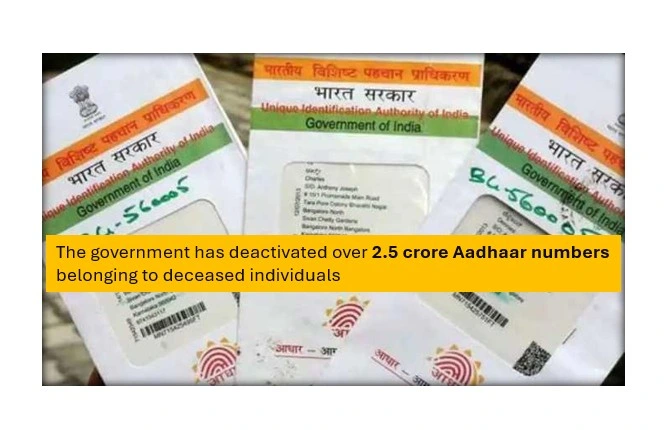
As part of a national clean-up effort to protect the security of India’s unique identity system, the government has turned off more than 2.5 crore Aadhaar cards. The purpose of deactivating these Aadhaar numbers is to prevent identity theft and other misuse that people might do with them after they die.
In Parliament, the government acknowledged the move, saying it is part of an ongoing effort to ensure Aadhaar data remains accurate and up to date. People use Aadhaar to access government aid programs, banks, and other legal services, so it’s essential that the information is accurate.
Why Aadhaar numbers are being turned off
The government says Aadhaar cards should be deactivated after a person dies to prevent unauthorised use. People with active Aadhaar numbers that are linked to dead people can illegally claim handouts, pensions or other government benefits that are supposed to go to real recipients.
Officials said that making this kind of information public undermines public trust and the banking system. The goal of the cleanup drive is to close any gaps and ensure that the right people receive the benefits. Deactivation also makes it easier for government systems that use Aadhaar to work together.
How UIDAI Finds Records of People Who Have Died
This is done by the Unique Identification Authority of India, which matches Aadhaar information with death records obtained from various sources. Some of these are state governments, national departments, and civil registration services. The authority also checks records against data from social programs and other government files.
Also, there is now a formal website where people can report the death of an Aadhaar user. After verification, the Aadhaar number is permanently deactivated. The government has made it clear that an Aadhaar number cannot be transferred to another person after it has been deleted.
Officials acknowledged that the state listed in Aadhaar records may not match the state where the death was reported, which can delay updates. To address this, states and federal agencies are working more effectively together.
Aadhaar–PAN Linking deadline ends today: How to Link, penalty and other details
Making trust stronger and stopping fraud
The government said that the large scale shutdown shows that it is serious about protecting the Aadhaar environment. With more than 130 crore active Aadhaar users, keeping information up to date and accurate is a daily responsibility.
The cleanup drive should also make aid operations more efficient by reducing waste and preventing false claims. Authorities made it clear that Aadhaar remains a safe and reliable system, and such tests are necessary to maintain that status.
The government wants to make it easier for organisations that keep death records to share data with the government in the future. This will enable faster, more accurate changes. People are also being told to report deaths right away so that there are no problems with welfare, banking, or government paperwork.
It is one of the largest database cleanup projects ever, with over 2.5 crore Aadhaar cards deactivated. Because Aadhaar remains critical to the government and service delivery, these steps are necessary to maintain public trust and system stability.
