


There was a time when gaming was viewed as a solitary pursuit—a quiet hobby for those tucked away in dimly lit basements. Fast forward to 2025, and that image has been shattered. Online gaming has transformed into a $200 billion+ global powerhouse, boasting over 3.3 billion players—nearly half the world’s population. It isn’t just a trend; it has become the primary social and cultural infrastructure for the digital age.
The “unstoppable” nature of this growth isn’t accidental. It is the result of a perfect storm where technology, social needs, and innovative business models collide. Here is why online gaming has moved from the fringes to the very center of modern life.
1. The Democratization of Play
The single greatest driver of gaming’s growth is accessibility. You no longer need a $500 console or a high-end PC to join the fray.
- The Smartphone Era: Mobile gaming accounts for nearly 50% of total industry revenue. With 5G becoming the global standard, high-fidelity experiences that were once restricted to the living room are now available on the bus, in the park, or during a lunch break.
- Cloud Gaming: Services like Xbox Cloud Gaming and NVIDIA GeForce Now are removing the hardware barrier entirely. By streaming games from powerful remote servers, the “entry fee” for gaming has dropped from hundreds of dollars to the price of a monthly subscription.
2. Gaming as the New Social Media
Perhaps the most profound shift is that games are no longer just about “winning”—they are about belonging. For Gen Z and Gen Alpha, titles like Roblox, Fortnite, and Minecraft act as virtual malls and town squares.
- Social Hubs: These platforms are places to hang out, attend virtual concerts, and express identity through digital avatars.
- Global Connectivity: Online gaming transcends geographical borders, allowing a player in Mumbai to strategize in real-time with a teammate in New York. This sense of community and collective storytelling creates a “stickiness” that traditional media like film or television simply cannot match.
3. The Professionalization of the Controller
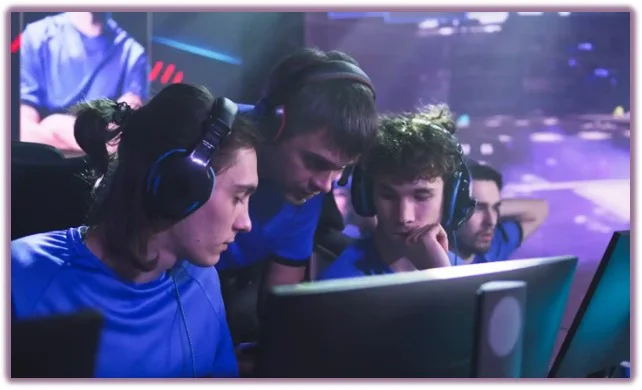
Esports has validated gaming as a legitimate career and a top-tier spectator sport. With professional leagues, multi-million dollar prize pools, and massive viewership numbers on platforms like Twitch and YouTube Gaming, the industry has gained “mainstream” prestige.
- Government Support: Nations like India and those in the EU are now officially recognizing esports as a sport, leading to better infrastructure, talent development, and investor confidence.
- The Spectator Economy: Even those who don’t play are watching. The rise of the “gaming influencer” has turned gameplay into a form of performance art, ensuring the industry stays relevant even for casual observers.
The Verdict: A Permanent Shift
We are witnessing a fundamental change in how humanity spends its leisure time. Online gaming is no longer a subculture; it is the predominant medium of the 21st century. By blending cutting-edge tech like AI and VR with our innate human desire for social connection, the industry has built a foundation that is not just resilient, but future-proof.
As we move toward a more digital-first existence, the virtual worlds we play in will only become more immersive, more social, and more essential. The game hasn’t just begun—it’s only getting started.Furthermore, as we head into 2026, the rise of Artificial Intelligence is set to personalize these digital worlds further. AI-driven NPCs will offer unique, branching narratives for every player, while blockchain integration ensures true ownership of digital assets. This shift from “renting” fun to “owning” a digital life ensures that online gaming remains a permanent, evolving pillar of human culture.
