


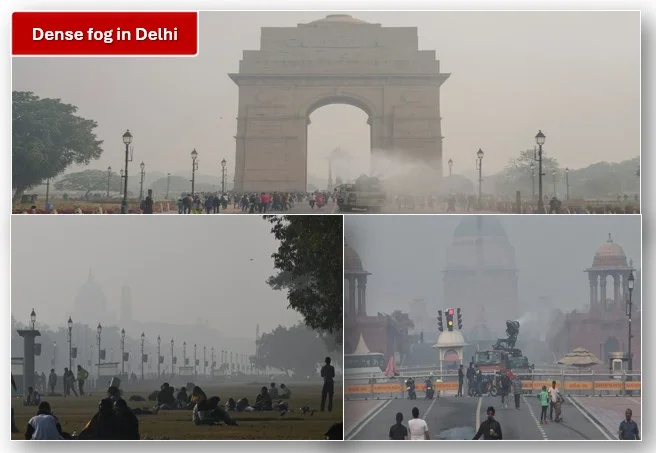
Delhi and the larger National Capital Region of NCR began both Friday and Saturday mornings shrouded in thick fog, visibility drastically reduced throughout the city and daily life interrupted. According to early reports from various authorities and air quality monitoring data, the AQI hovered near 376, placing the city well in the ‘very poor’ category with pockets reaching even high.
This is not just a problem of obscured visibility; the fog has mixed with toxic smog to produce a combination of atmospheric conditions that trap pollutants close to the ground, effectively transforming big parts of Delhi into a pollution hotspot.
Air Quality Index: What the Numbers Say?
The AQI is a composite measure of key pollutants such as PM2.5 and PM10, with values categorized as follows:
- 0–50: Good
- 51–100: Satisfactory
- 101–200: Moderate
- 201–300: Poor
- 301–400: Very Poor
- 401–500: Severe
Based on the latest tracking available, it can be noted that AQI values in certain regions of Delhi have been falling firmly into the very poor range (300-400) and even close to or surpassing the 400 level, which is the severe range.
For example:
- Anand Vihar: ~354
- Ashok Vihar: ~367
- ITO: ~362
- Wazirpur: ~374
- Chandni Chowk: ~370
- Ghaziabad (nearby NCR): ~376 (highlighting the regional spread of pollution)
These levels are way higher than the safety level as accepted by the WHO and Indian health authorities.
Meteorological Causes: Cold Wave Meets Fog
According to meteorologists, the city witnessed this weather pattern due to a cold wave that is gripping northern India, combined with calm winds and high humidity levels overnight. These conditions combine to create dense to very dense fog, which:
- Visibility is badly affected on highways and at airports.
- Traps particulate matter close to the surface.
- Prevents the dispersion of pollutants for hours altogether.
A slowdown in wind speeds means pollutants emitted from vehicles, trucks, industry, construction and residential heating linger over the city rather than being carried away.
Public Transport and Public Life: Disruption and Health Risks
Flight and Road Disruptions
The thick fog has disrupted travels on many fronts:
At IGI, flight operations are running significantly behind schedule, with many flights diverted or rescheduled as visibility has gone down to very low. Consequently, visibility on the roadways was significantly reduced due to early morning fogs, leading to slower traffic and increased risk of traffic accidents.
Health Concerns for Residents
Smog and fog create an immediate health hazard because:
- Respiratory irritation, cough, and sore throat.
- Asthma exacerbations and other chronic respiratory diseases
- Raised risk of cardiovascular strain on susceptible groups
Thus, health professionals often warn that excessive inhalation of air pollutants measured beyond 300 units on the AQI could exert severe health impacts, particularly on the health of the majority of the populace, including those belonging to the youthful demographic, the aged, and those suffering from other respiratory issues.
Government and Regulatory Response
To deal with the air pollution, the authorities are implementing the Graded Response Action Plan (GRAP) due to which the following steps would be taken:
- Restrictions on construction activity
- Limits or ban on older polluting vehicles
- Improved pollution monitoring and warning systems
Such measures are meant to reduce further degradation and maintain the well-being of the population. But weather remains the key driver of the present increase, making it less effective at this stage.
Looking Ahead: Forecast and Public Advisory
Meteorological forecasts bring to light that the prevailing cold wave and fog are expected to continue for the next few days. Due to lack of wind and lower night temperatures, air quality is anticipated to remain in the very poor range, with potential slippage into severe at times.
Authorities recommend:
- Reducing outdoor exposure, especially for kids and the elderly
- Wearing pollution masks outside
- Public Restroom Displays
- Checking current air quality levels before traveling or exercising outdoors
They emphasize that without prevailing wind and rainfall to flush out the atmosphere, the concentration of pollutants will remain high.
Conclusion: A Seasonal Challenge with Persistent Warnings
The present state of the environment in the city of Delhi brings to focus the seasonal character of its air quality emergency, where the climatic and geographical factors of the region come together with the emission of human activities to form a cycle of harmful concentrations of air smog and thick fog on a yearly basis.
“While there are some temporary solutions available, the problem is ultimately one of long-term emission reduction, transport, and, obviously, regional cooperation in North India.”
