


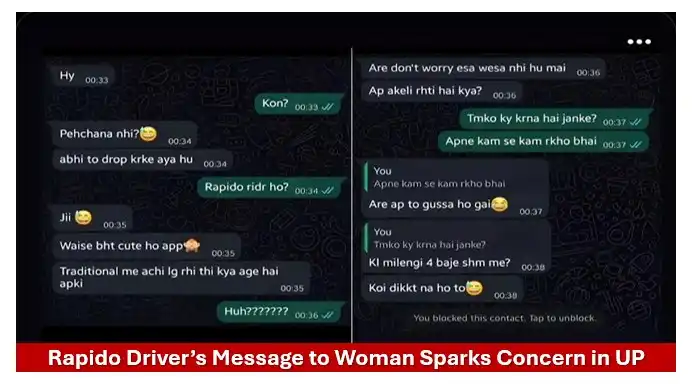
An ongoing controversy has arisen with the ride-hailing company Rapido after alleged chat messages circulated on social media between a Rapido driver and a female passenger. Screenshots have emerged alleging that this incident occurred in Uttar Pradesh where the driver reportedly sent a message to the woman asking “Do you live alone?” after completing an initial ride interaction or after the ride was completed.
The viral screenshots which began circulating on social media platforms have raised serious concerns regarding the safety of passengers while using the app based transport services and whether or not the data on these types of platforms are secure.
What Do The Viral Chat Screenshots Show?
The images that have gone viral demonstrate that based on the conversations between the passengers and drivers, inappropriate and unrelated inquiries on behalf of drivers appear to have taken place beyond that of simply providing riding services. The most controversial of those inquiries is the question “Do you live alone?” which has received a lot of attention due to possible aggressive and threatening nature of this question.
read more: Dating app scam revealed
Incident Reported from Uttar Pradesh Goes Viral
Currently, we cannot confirm whether the photos are authentic or accurately depict what actually happened; however, these images have been widely shared across multiple social media platforms which has prompted users to question what is appropriate communication between drivers and passengers after completing an Uber or similar service ride however some have raised concerns regarding the use of inappropriate language or messaging to communicate with passengers as a result of fear that it may make them feel uncomfortable or unsafe and there need to be improved privacy settings put into place.
read more: Pet Dog Attacks Mother and Daughter as Owners Refuse to Help
Concerns regarding Safety raised by Users
This incident has also brought to light safety protocol concerns in relation to ride sharing such as Rapido. Some users questioned how drivers are able to obtain their passengers information after every completed ride, as well as what the safeguards are in place to protect that information from being misused by drivers.
Women commuters have specifically requested better privacy measures and quicker resolutions to complaints. Several posts included suggestions of conducting more thorough background screening of drivers or better monitoring of driver conduct throughout their employment, in addition to automatically masking the passenger’s phone number after the ride was completed.
This incident has also initiated a larger dialogue regarding the current state of safety in the digital economy in India (as gig economy grows rapidly).
read more: Jharkhand Mechanic turns Maruti 800 into Lamborghini
Company Response Awaited or Under Scrutiny
Currently, there is no publicly available official response to the viral screenshots from Rapido, nor has there been a verified account by them on this matter. Numerous users on the web have called for the investigation of this matter, as well as taking appropriate action against the driver/or company if the chat is indeed real.
As seen with previous ride-hailing companies who experienced similar issues, many companies will suspend the driver while investigating and implement/reiterate community guidelines. Until the time comes for any future action to be taken by Rapido remains to be seen.
Social Media Public Response
This incident has attracted significant attention on social media, including X (Twitter), Instagram, and WhatsApp. Many have reacted with anger and concern, calling this incident an “unacceptable” and “dangerous” act.
Others have stated that isolated incidents should not lead to generalizations about all drivers; however, they agree that stricter oversight is necessary. The ongoing debate represents ongoing tension between convenience driven app-based transportation and safety expectations of passengers.
Increased Focus on Passenger Privacy
Experts and commentators believe that instances like this reveal the structural problem with ride-sharing ecosystems – the balancing act between connectivity of services and protection of user privacy.
Critics contend that while service providers like Rapido coordinate between drivers and riders, connecting with each other after the trip has concluded should be done with some sort of restriction and only if both parties agree to continue any form of contact.
This reinvigorated debate around proper usage of anonymize calling systems, time-limited chat functionality, and the application of severe sanctions for misuse of contact information illustrates how much work still needs to be done to ensure that consumers are safe from risks when using app-based transportation services.
Conclusion
The incident involving an alleged Rapido driver and a female passenger in India brought back into play the questions around whether people using ride-sharing apps have any sort of protection of their privacy and safety from the event a passenger or driver is harmed by a criminal act after they have completed their trip using an app based transportation service. Whether or not the images making the rounds across social media are real has generated discussion in the marketplace about the need for better guidelines and stricter enforcement around communication boundaries between riders and drivers.
As this story continues to unfold, many consumers are watching closely to see if there will be an official response from the company and what type of actions, if any, they will take to correct the situation.
