


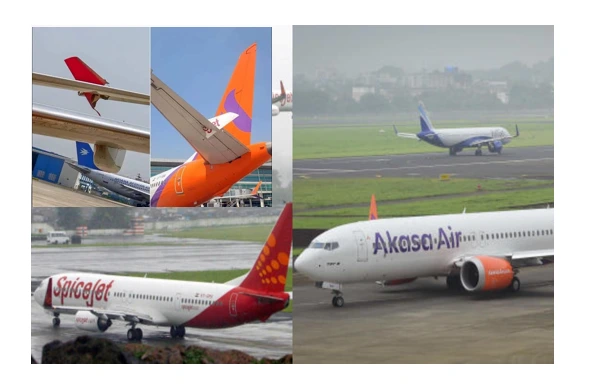
On April 16, 2026 at Indira Gandhi International Airport Terminal 1, a SpiceJet B737-900ER aircraft arriving from Leh collided with a parked Akasa Air aircraft that was preparing for departure to Hyderabad. The collision occurred as the SpiceJet aircraft was taxiing on the runway towards a parking bay and involved the wing sections of both aircraft. The initial report indicates the collision occurred just after 2:15 PM with the SpiceJet winglet colliding with the Akasa horizontal stabiliser, causing visible damage.
Extent of Damage
Although it was classified as a minor ground incident, both aircraft were damaged structurally; the right winglet of the SpiceJet was damaged and the Akasa aircraft was damaged in the tail section. Both aircraft will remain out of service for detailed inspections and maintenance and the assessment of aviation authorities will determine whether the damage affects flight safety and for how long the aircraft will be out of service.
Passengers Safe, No Injuries Reported
There were no reported injuries to any of the passengers or crew on either plane involved in the incident. Passengers on the Akasa Air flight had already boarded when the collision took place, and they all disembarked calmly.
Airlines have also arranged alternative travel plans for the impacted passengers with minimum disruption.
Read also: Air Canada plane crashes into a fire truck in the US airport
What Could Have Caused the Accident?
Preliminary investigation findings indicate that the cause of the accident was likely due to a taxi error by the SpiceJet Flight, which struck the stationary Akasa Flight when the SpiceJet plane was taxiing at an airport (i.e., moving about on the tarmac).
Experts note that although these events are rare, they can happen due to communication failure or poor visibility, or other errors in ground navigation; this area requires close coordination between pilots and air traffic controllers.
DGCA Investigation Begun
The Directorate General of Civil Aviation (DGCA; India’s aviation governing body) has officially commenced an investigation into this incident. As is standard procedure of investigation, both pilots involved and one controller from the Air Traffic Control have been placed on leave while this investigation proceeds.
The investigation will analyse flight deck operations, dispatching procedures, and compliance with prescribed safety protocols, as well as identify possible witnesses and events leading up to the event — all to assign accountability and to prevent recurrence.
Read also: Military plane with more than 100 soldiers onboard crashed
Impact on airport operations
Our analysis shows that while the SpiceJet-Akasa Air collision did not create significant disruptions to the overall operation of Delhi International Airport (DIR), it has once again demonstrated the continuing safety challenges associated with one of India’s busiest air travel hubs. With both aircrafts now being grounded, the suspension of these operations will also result in a ripple effect to airlines’ flight schedules and fleet availability through short-term disruption of both services and capacity.
Because DIR handles large volumes of passengers and baggage on a daily basis and is already operating under high levels of congestion, even isolated incidents of this nature can have a far-reaching negative impact on the airport’s operational efficiency and safety, particularly when viewed in the context of other recent air safety incidents at this airport.
Broader safety issues
This incident has now added to an escalating list of safety issues related to aviation and airline operations in India and has specifically highlighted ground handling and operating deficiencies. No one was injured as a result of this incident; however, air safety experts suggest that all incidents of this nature (even those involving aircraft that do not sustain damage) should be investigated with the same level of rigour as those incidents that do result in injuries.
This incident is expected to form the basis of increased oversight over ground operations and the training of employees to improve the effectiveness of these two areas of operation.
Read also: Passenger Plane Crashes Into Indian Ocean After Takeoff in Somalia
Conclusion
The SpiceJet-Akasa air collision at DIR illustrates the fundamental importance of precise and effective coordination among all elements of the aviation industry (including, but not limited to, ground operations). While no passengers were injured during this incident, the actions that were taken immediately following this incident are a testament to the importance of rigid adherence to operating protocols in order to mitigate the possibility of accidents or incidents occurring in the future.
