


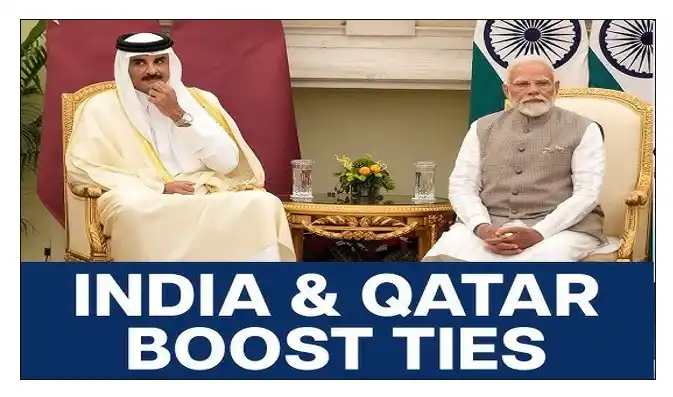
India has made another important move to improve its energy security by expanding its partnership with Qatar, one of the world´s largest liquefied natural gas (LNG) exporting countries. With ongoing geopolitical uncertainty and shifting supply chains causing instability in supply of energy sources globally, this is another example of India continuing to implement its long-term strategy to secure sustainable and affordable sources of energy.
For many years, Qatar has been a main supplier of LNG to India, but this new partnership shows that both will continue to develop their cooperative relationship in the energy sector. Under this strengthened relationship, stabilized LNG fuel supply for India’s expanding economy is expected to be improved while enhancing Qatar’s status as a reliable supplier of energy in Asia.
Long-Term Liquefied Natural Gas Contracts
One of the main aspects of the strengthened relationship is the development of extended long-term liquefied natural gas supply contracts. Indian companies are currently involved with negotiating LNG supply agreements with QatarEnergy in order to ensure that they will be able to import gas on a consistent basis for many years into the future.
These contracts are critical to India as it moves towards becoming increasingly dependent on natural gas to transition from using more traditional energy resources towards the use of newer sources of cleaner energy. Additionally, by locking in a specific price and volume for deliveries, India can mitigate the effects of sudden fluctuations in the world market costs of LNG.
Strategic Partnership in Energy Security
The growing energy needs of India reflect the country’s industrial expansion, population increase and urbanization. Coal remains a largely-used fuel in the Indian energy market; however, there is a significant amount of government policy favoring a transition to a more diversified fuel mix by increasing cleaner fuels like natural gas.
LNG imports from Qatar contribute to India’s environmental objectives, including meeting obligations of international climate treaties. Natural gas produces fewer GHG emissions than coal, making it a cleaner form of energy that can help transition away from fossil fuels. Additionally, the partnership may provide opportunities for investments in clean energy technologies, such as hydrogen and Carbon Capture, which would also advance both countries alignment with decarbonization trends on a global scale.
also read:Oracle hires CFO with Rs 32 Crore package
Expanding Bilateral Trade and Investment
While energy cooperation is central to the economic relationship between India and Qatar, there is an increasing diversity of activities occurring between the two nations. The growth of bilateral trade continues yearly, with an increasing proportion of total trade represented by Energy Imports.
India and Qatar are also investigating the option of increasing their investments in India’s infrastructure, petrochemical, and renewable energy industries. Qatar’s sovereign wealth fund has a keen interest in the Indian market due to confidence in India’s economic future.
India is also attempting to increase the amount of goods exported to Qatar in order to create a more balanced trade relationship between the two countries, including food products, engineering goods, and services.
also read: Indian Airlines to Cut Flights This Summer
Geopolitical and Regional Significance
The urgency for energy cooperation between both nations is magnified by the rapid transformation of global energy markets. War, interruptions in supply chains, and changing alliances have increased the importance of energy security worldwide.
For India, the diversification of energy sources and building strong partnerships with stable source countries, such as Qatar, is not just an interest, but a necessity. Located in the Gulf region and equipped with one of the world’s most extensive LNG infrastructures, Qatar is a perfect partner for India, especially given the uncertainties facing many of the countries of the world today.
Finally, India’s partnership with Qatar enhances India’s connection with the Gulf Coast Council (GCC) region of the Arabian Peninsula, which is home to millions of Indians who have emigrated there to seek a better life and work in many different professions; thus, increasing the connection between the two countries socioeconomically.
also read: Indian Railways Approves ₹1,200 Crore Projects to Upgrade
Future Outlook
The India-Qatar energy bilateral relationship is predicted to get much more advanced and have a vast diverse amount of methods in which the two countries can co-operate with each other. Renewable energies, new technology exchange and joint infrastructure products are all huge possibilities for the two nations.
The journey toward India’s $5 million Dollar Economy continues to take place, but being able to plan and provide for the Energy needs of India are very critical to the success of achieving India’s vision of a $5 million USD Economy. Qatar has an increasing role in this goal with Qatar’s increased ability to produce LNG over the next few years.
Thus, the continuing Partnership of India and Qatar in cooperation is an excellent opportunity for both players to enhance the partnership and provide both Nations with Economic Value added to their respective Economies, both will become partners in ensuring Energy Security for India and will, therefore, reinforce Qatar’s Energy Leadership Consumer viewpoint in the world. Together they will build upon their respective Economies’ strengths and ultimately further develop & grow the Region and the World.
