


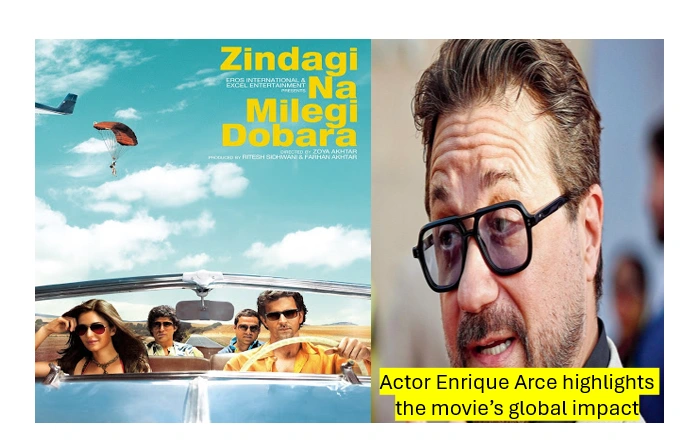
The film Zindagi Na Milegi Dobara (ZNMD) made an enormous contribution toward helping to boost Indian tourism to Spain following its initial release in 2011, and Spanish actor Enrique Arce—a well-known global icon due to his recent portrayal of Arturo Roman in the Netflix series Casa De Papel (Money Heist)—recently spoke about how the film played a major role in improving the cultural connection and tourism tie between Spain and India.
A Love Letter to Spain
Telling the story of three young men—played by Hrithik Roshan, Farhan Akhtar, and Abhay Deol—who take an unforgettable road trip through Spain, ZNMD provided viewers with a chance to experience Spain’s beautiful towns, rich cultural history, and amazing traditions like the La Tomatina festival in Buñol and the running of the bulls in San Fermín. Throughout the course of their adventure, the friends re-discover long-lost friendships, have fun together, and, importantly, discover who they really are! The film serves as a fantastic and inspiring source of adventure, friendship, self-discovery, and much more.
Enrique Arce’s perspectives
In recent interviews, Enrique Arce commented on how significant ZNMD has been in bringing Indian tourists to Spain. Arce stated that ZNMD has helped introduce or to shape the relationship Spanish tourists have with India by serving as an unofficial ambassador for the country of Spain.
Arce states that the film allowed Indian tourists to connect emotionally with Spain, making it feel familiar to them before their visit, something that tourism campaigns tend to struggle to build.
Increasing Indian Tourist Numbers
Since Zindagi Na Milegi Dobara was released, there has been an uptick in Indian tourist numbers to Spain, as evidenced by the emergence of such agencies as “ZNMD Tour” operators. These tour operators are offering tailored tours that will take tourists through some of the most filmed locations, including Barcelona and Costa Brava.
The film’s success allowed the Tourism Board of Spain to promote these routes and activities to the Indian audience. Activities previously considered niche (skydiving, scuba diving, participation in festivals) have quickly become mainstream to the Indian tourist market.
The timing of the film’s release was important because by the early 2010s, there was already an increase in Indian outbound tourists, and the film provided the ultimate boost to encourage Indian tourists to look at Spain instead of traditional destinations like Switzerland and the UK.
Read also: Check out the best 10 Places in Caribbean Islands for Yachting
Cinematography’s Influence on International Tourism
The success of Zindagi Na Milegi Dobara shows how cinema can affect tourism worldwide. The type of influence Bollywood films have had and continue to have on the travel habits of Indian audiences to the U.S. and New Zealand is similar to the type of influence that Hollywood films have had on tourism worldwide.
Through its film, Spain showcased traditions so that countries like India could visit Spain and see these traditions first-hand. Some events, like La Tomatina, were seen as odd and were often on people’s bucket lists, yet through this film, Spanish culture was turned into something that could be related to as opposed to being exotic.
As more Indian visitors come to Spain, there is a growing demand for Indian cuisine, Bollywood-themed events, and Hindi-speaking tour guides creating even stronger ties between the two countries.
Impact on Economy and Industry
The tourism sector contributes significantly to the economy of Spain, therefore, more Indians are visiting Spain which has increased revenue for the hospitality, transport, and local experience industries. There are many hotels and tour companies that have created many services or products specifically for Indian travelers like vegetarian meals and customized travel plans.
Also, the number of Indian weddings and film shoots in Spain has drastically increased causing Spain to be a premium destination for luxury travel. The ripple effect of tourism is felt in trade and cultural diplomacy as well.
Read also: India’s Gen Z is travelling for music with 62% planning trips
The Importance of Storytelling
The key differentiator of Zindagi Na Milegi Dobara was its storytelling. Instead of promoting Spain through traditional advertising methods, the film incorporated Spain as a meaningful component of a larger story about friendship, fear, and taking full advantage of life experiences. Therefore, the experience of traveling to Spain felt organic and meaningful from an emotional perspective.
Enrique Arce emphasized that such storytelling creates lasting impressions. Viewers don’t just remember places—they associate them with feelings and personal aspirations. This is what ultimately drives travel decisions.
A Lasting Legacy
More than a decade after its release, Zindagi Na Milegi Dobara continues to influence travel choices among Indians. Social media platforms are filled with travelers recreating scenes from the film, especially during La Tomatina.
The film has set a benchmark for how cinema can double as a tourism catalyst. For Spain, it opened a valuable market. For Indian travelers, it unlocked a new dream destination.
As Enrique Arce pointed out, the collaboration between cinema and tourism is a powerful tool—one that transcends language and geography, turning stories into journeys and audiences into explorers.
