


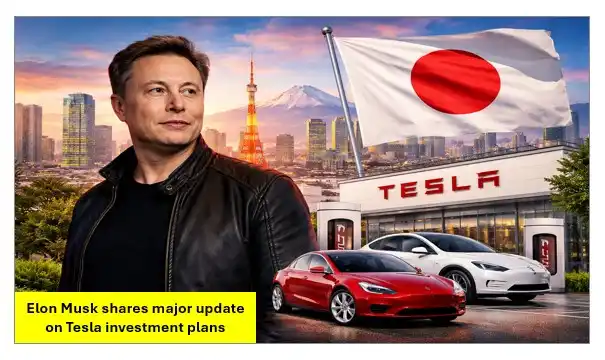
The Japanese market for cars has long been called a “fortress,” a realm dominated by native giants deeply rooted in Buy Japan and insulated from competition, with his consumers so loyal to heritage marks that they would never consider ditching an image. And Tesla CEO Elon Musk indicated that the cracks in that fortress are wide enough to be its open door.
Musk also took to X (formally Twitter) to say Tesla is doubling its commitment to Japan in a “big” update. This is more than just another marketing push, it’s a serious investment in that “unsexy” but necessary side of the business: service infrastructure, the Supercharger network and now an entrenched partnership with Japan’s industrial backbone.
Strengthening the ‘Japanese Connection’
While Tesla is usually considered the new school of industry in contrast to old, dirty industries, Musk turned this update into a reminder that there’s a lot of Japanese blood pumping through the heart of Tesla. “A lot of the components in Teslas come from Japan,” Musk said, specifically naming Panasonic as the automaker’s “biggest strategic supplier” for over 20 years.
This is not mere sentimentality; it’s a strategic acknowledgment of a partnership that has begun to evolve. Panasonic is now investing around ¥80 billion (about $705 million) to increase production of next-gen 4680 battery cells at its Wakayama factory. By invoking this 20-year connection, Musk is linking Tesla’s futuristic pursuits to the reliability and precision of Japanese manufacturing — a strategy intended to engender trust in a culture where corporate connections and longevity matter immensely.
read also: Never Bet Against Elon Musk
Hitting the Ground: The Service First! Revolution
At the heart of the new investment is a dramatic expansion of Tesla’s physical footprint. And for a company that once led the way in the “online only” sales model, moving to a “human-centric” physical presence in Japan is quite a change of philosophy.
read also: Elon Musk’s X Probes Grok Chatbot
Not only a Charging Station
Tesla is taking steps to more than double the number of service centers that it operates directly in Japan. By the end of 2026, that number is expected to increase from 14 to more than 30 locations. These are not merely storefronts: Each is a “turnkey” facility — typically retrofitted from old maintenance shops — that can accommodate everything from a routine battery health monitoring to sophisticated bodywork and the required “Shaken,” or rigorous Japanese vehicle inspection.
The Supercharger Surge: In tandem with service centers, the Supercharger network is experiencing a huge infusion of capital. Range anxiety has been one of the critical facets preventing large adoption of EVs in Japan’s populous cities and moutainous rural roads.
Accounting for All the Hype
Why is Musk moving now? It looks like the age of Japanese “Tesla-lite” is over, according to these data.
Soaring Sales: Tesla delivered nearly 10,600 vehicles last year, an astounding 90% increase in its Japanese footprint. That may sound small compared to numbers from the US, but it represents an enormous leap from 2022’s total of 5,900 units.
Up to ¥1.3 million: revenue in front of the first ships in the Japanese Ministry of Economy, Trade and Industry (METI) for EV subsidies Now however with the Model Y retailing for around 5.5 million yen, the “luxury” wall is crumbling and Tesla has become a middle-class option rather than just a chic accessory of Tokyo’s haute bourgeoisie.
