


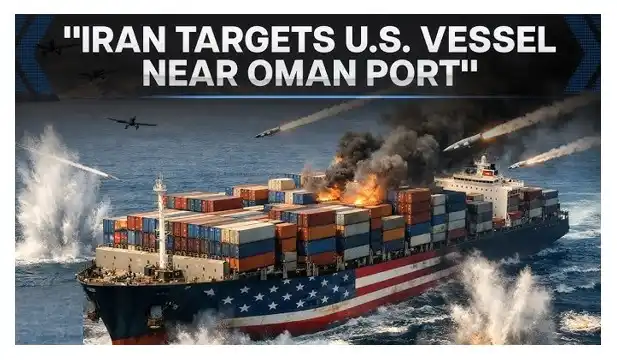
Iran’s confirmation of executing an aerial assault using unmanned aerial vehicles (UAVs) against an American supply ship in the vicinity of the Port of Salalah led to a dramatic intensification in the on-going fighting in the East.
Location Significance of Port of Salalah
Salalah, in addition to serving as a critical shipping location along some of the most used global commercial maritime lanes, has great strategic significance because it lies so close to the major international seaborne oil trade lanes from the Persian Gulf to the rest of the globe. Therefore, a disruption to Salalah’s ability to process maritime trade would have a negative impact not just on stability in that region, but also likely create disruption to worldwide trade and availability of energy.
Broader Nature of Iran–US Conflict
In addition to being indicative of a possible escalation in direct confrontation between the United States and Iran, it is also part of a larger and escalating conflict involving Iran, the United States, and Israel. In the past few weeks, Iran has been accused of targeting a large number of vessels in and around the Strait of Hormuz—one of the most strategic chokepoints for global oil transport. In addition, Iran has publicly stated that it has conducted drone and missile attacks on various naval or logistics targets associated with the United States and has begun to develop a strategy centered on asymmetric maritime warfare.
read also: Iranians form human chain around Hormuz Island
Rising Threat to Maritime Security
Experts in security are cautioning that these types of attacks will elevate risks for commercial and military shipping. Iran’s employment of drones, missiles, and potentially explosive sea platforms continue to add to the hazard associated with operational waters.
As a result of multiple attacks and disruptions on vessels transiting the Strait of Hormuz (a key transportation thoroughfare for a significant percentage of world oil), many shipping companies are examining the security implications associated with these waters, and along with their Vicarious damage coverage provided by insurers, will be evaluating new routes on a timely basis.
read also: Strait of Hormuz Tensions Rise as Iran Turns Back Ships
Economic & Energy Implications
The attack has raised new concerns in the global marketplace. The volatility in oil prices has caused concerns regarding potential supply chain disruptions, consequently causing insurance premiums on marine vessels operating in the region to increase.
If a prolonged escalation of this type of attack occurs, it could lead to an increase in fuel prices globally and will place additional stress upon the already tenuous global supply chain systems.
read also: Iran wrote Thank You India on some missiles
Potential for Further Escalation
Sheer numbers of military and paramilitary assets in theatre appear to make the action against an American vessel represent an increased threat level. Direct attacks against United States property create an even higher likelihood of reprisal actions and further risk of escalation through the introduction of more forceful actions into the existing conflict by Iran.
Given current levels of United States military presence in the region, and the ongoing offensive stance of Iran, analysts have warned that any miscalculation can quickly lead to a wider regional conflict.
Uncertain Path Ahead
Thus far, diplomatic attempts to ease tensions have made limited headway. There are several regional states trying to mediate the situation; however, with the attacks continuing, the conflict appears to have moved into a more dangerous level of escalation.
The current situation is precarious with much of the world’s attention on whether this situation will lead to a greater military response, or renewed negotiation efforts.
