


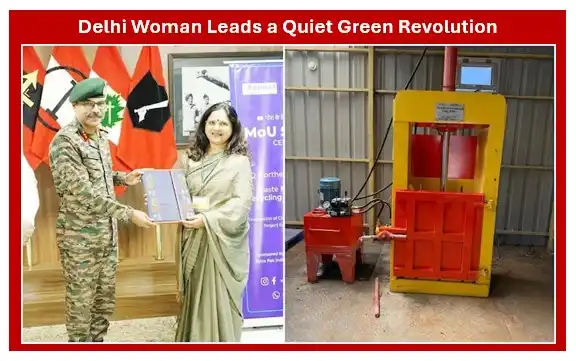
A woman from Delhi came up with a simple idea that is making a big difference in the fight against plastic waste. By changing trash cans into plastic banks, she started a movement that not only helps clean up the environment but also teaches kids how important it is to be responsible with their trash. Her project is slowly spreading to other schools and neighbourhoods, showing that little things can make a big difference.
A simple thought that caused things to change
The idea behind the project was clear- plastic shouldn’t be thrown away as trash. The plan was to collect it and reuse it in a planned way, rather than letting it pile up in trash cans or dumps. Schools now have plastic banks where kids are asked to bring their own plastic trash from home.
These plastic banks are places to collect trash instead of putting it away, as most people do. This is a simple but strong idea, as it can be used to teach daily actions.
Schools Turn into Places of Awareness. Her idea for Plastic Banks is easy to understand. Plastic trash that kids find at home is brought to school by them. The trash is then put away in special places so it doesn’t end up in dumps. Students learn early on that trash can be thrown away and used again in useful ways.
It’s already been done by Dipali in over 40 schools in Delhi-NCR. What began as a small project has grown into a group of kids who are reusing and caring for the environment.
read also: High Alert in Delhi Ahead of Eid
Getting the money does not end the work, though
The plastic that these schools save is sent to be processed and then made into things like furniture. This helps students understand the whole process, from trash to something useful. This makes the lesson more relevant and useful.
read also: Bhavitha Mandava to become Chanel’s 1st Indian ambassador
Giving Old Plastic a New Life
What happens with the plastic after it is gathered is one of the most important parts of this project. The trash is turned into something useful and then recycled instead of being dumped.
After being recycled, the plastic is used to make useful things like furniture. In this step, the recycling process is finished, and students learn how trash can be turned into something useful.
She tries to make people aware of the problem and help set up ways to deal with plastic trash properly so that it doesn’t pile up. Some of the towns she helps are right on the border with India and are hard to get to.
In Delhi schools and faraway border areas, Dipali Sinha’s work shows how a simple idea can change people’s habits and how kids can be the ones to clean up the world.
Getting to Army Camps and Remote Areas. The project isn’t just for schools. It has spread to remote border areas and even to army camps, making it hard to deal with plastic trash.
People in these areas often don’t know how to properly get rid of trash. The campaign’s main goal is to teach people in the area how to properly collect and handle plastic waste. People are trying to get this word out, even in places that are hard to reach.
Systems have been put in place in army camps to better deal with plastic waste. Plastic is squished together with special tools, making it easier to recycle and move. This step prevents trash from piling up in places it shouldn’t be.
read also: Why Many Indian Professionals Want to Stop Working at 50
Getting in the Habit of Being Alert
It changes people’s thoughts, which is the most important thing this project does. Not only the government, but everyone needs to get rid of trash, young people are learning.
It makes people think about plastic and how they use and throw it away in new ways.
Small changes in behavior can lead to main effects over time.
The project shows that steady work, even on a small scale, can help fix a big issue like plastic waste.
A movement for a cleaner future that is growing
It began as a simple idea in schools and is now growing into a bigger movement. More and more people are interested in the idea of plastic banks and want to take action.
This project’s success shows how new ideas and public knowledge can work together to solve environmental problems. The program is laying a strong foundation for a better, more sustainable future by focusing on education and getting people involved.
The effect will likely get bigger as more schools and towns join in. It’s a lesson that small, careful steps that get other people to follow can lead to big changes.
