


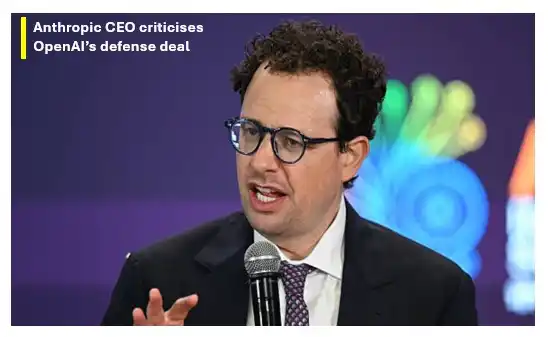
A divide has been created in the Silicon Valley that cannot be bridged by even the richest venture capital. In March, 2026, the long-running philosophical tension between the two largest AI laboratories in the world, Anthropic and OpenAI, has erupted into a verbal fight.
The storm revolves around a huge, secret contract in the U.S. Department of War. As the CEO of OpenAI, Sam Altman was drawing reporters to his deal to power the Pentagon networks, Anthropic CEO Dario Amodei was sending an incendiary internal memo to his employees. Amodei, who is not used to using such words among tech elites, accused his competitor of gaslighting the masses and playing nothing more than safety theater.
The “Safety Theater” Scandal
During years, Anthropic has positioned itself as the safety-first AI company, that was established by former OpenAI researchers who went rogue specifically to escape what they viewed as a care-free commercial race. The ultimate test of that brand came last week when the Pentagon was insisting on having unlimited access to the model, Claude, of Anthropics.
Amodei walked away. He would not enter into agreement that did not contain ironclad red lines to use AI to conduct mass domestic surveillance or totally autonomous lethal weapons. Factors Within hours of the departure of Anthropic, OpenAI swooped in, concluding an agreement that promised to honor these very red lines but used more general and vague terms such as all lawful purposes.
Amodei did not hold back in his memo, which was released by The Information. He termed OpenAI claims of higher security as pure lies to the public.
The key factor behind them taking the deal, and us not taking it, Amodei wrote, is that they were more concerned about appeasing the employees, and we are more concerned about avoiding abuses. The spinning is not good enough… the people are looking at the deal of the OpenAI as sketchy or suspicious.
also read:
- Sam Altman’s OpenAI Signs Deal With Pentagon
- OpenClaw founder Peter Steinberger is joining OpenAI
- ServiceNow signs multi-year deal with OpenAI
Red Lines vs. Lawful Use
The basis of the conflict is a semantic trap, which might be a matter of life or death. Anthropic argues that the present state of AI is far too prone to hallucination and unpredictability, and should not be entrusted to a group of drone swarm or a surveillance grid.
OpenAI has a different argument however, that since they are at the table they can better direct the military to ethical use. Sam Altman has referred to the timing of their transaction as opportunistic and sloppy but continues to point out that their deal has more guardrails than any other deal.
Critics however indicate that the phrase any legitimate use is a huge loophole. By existing definitions of the law of national security, significant portions of data collection, which citizens may deem as or constituting mass surveillance, are legally permissible. Accepting such conditions, Amodei suggests, OpenAI has given the Pentagon a blank check and informed the masses they still have the pen.
The Human Cost of Business Ethics
As the CEOs bury their own graves, the employees are collateral victims. Anthropic is characterized by a certain gloomy pride and fear. It is what one analyst referred to as the commercial equivalent of the death penalty to be considered by the Trump administration a so-called supply-chain risk. It prevents the major cloud providers and partners to conduct any business with them, which would deprive the company of the infrastructure it requires to survive.
Meanwhile, there is a mute uprising at OpenAI. Almost 100 workers have signed an open letter in collaboration with hundreds of Google employees who requested leadership to take side with the red lines of Anthropic.
The personal aspect in this is the very burden of responsibility that these young engineers have. They do not merely create chatbots to do their homework anymore; they create the brain of the so-called war machine. To most, the month of gratis ChatGPT Plus (a new retention strategy) resembles an empty miracle, considering the fact that their code might soon be choosing the target in a conflict zone.
