


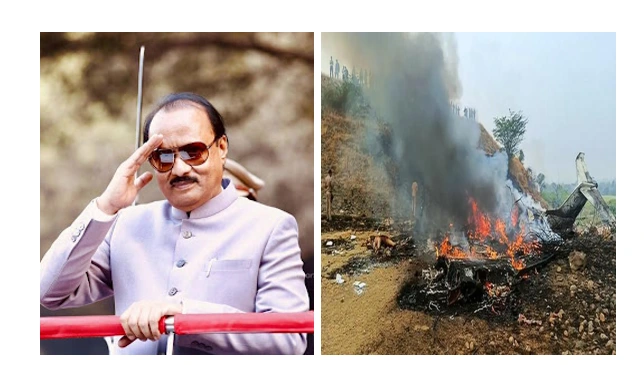
A preliminary probe into the terrible plane crash in Baramati that killed top Maharashtra leader Ajit Pawar and four others has found major safety issues, such as poor sight and large gaps at the airport. The Aircraft Accident Investigation Bureau (AAIB)’s early results suggest that bad weather and poor facilities may have both played a role in the fatal crash.
The crash has made people think again about the safety standards at smaller airports that handle VIP and private planes.
Not Visible Enough Below the Legal Minimum
The original report said the plane tried to land at Baramati airport when the visibility was not good enough.
At the time of arrival, it was possible to see about 3 km away. Visual Flight Rules (VFR) planes, on the other hand, need to be at least 5 miles away. Clear vision is very important for VFR flights because pilots can’t use advanced instrument landing systems. Instead, they have to rely on what they can see.
Even though the plane was told there was less visibility, it kept coming in. The study says that flying below the allowed limits makes it much harder for a pilot to see the airport, the rate of fall, and any objects in the area.
There were areas of thin fog and mist in the air, which could have made vision unstable and changeable, making landing even harder.
Read also: Passenger Plane Crashes Into Indian Ocean After Takeoff in Somalia
The airport didn’t have basic navigational help
One of the most worrying findings of the probe was that the Baramati airport did not have enough support for guidance and weather.
There are no advanced landing aids or approved weather observation equipment on the runway, so it is used as an open airfield. Reports say that visibility predictions were made without using official weather devices, but instead with makeshift tools.
The marks on the runway were also worn, and it was said that they had last been fixed several years ago. In some places, loose dirt was observed, which can be dangerous during landing or takeoff. Also, the wind direction signs were not all in the same place, and one flight direction was reported to have no windsock.
These holes show that the infrastructure as a whole isn’t very good, especially at smaller airports that handle private and unscheduled planes.
The risk was raised by the weather in the area
The study also looked at the region’s weather trends in a larger sense. Pune, which is only 80 miles away, had reported vision falling to almost 2,000 meters during the same time period.
Satellite images showed that there was mist and light fog in the area. Such conditions can change quickly and create sudden drops in visibility, which are particularly dangerous for aircraft relying solely on visual references.
Without approved weather reports or instrument landing systems, pilots arriving at these airfields may face additional stress in bad weather.
Read also: Air India Grounds Boeing Dreamliner After Report of Switch Defect
Black Box Data Being Looked At
The plane’s Solid State Flight Data Recorder has been found by investigators, and the data has been extracted. This data is currently being analysed to learn more about the plane’s final moments.
The crash, however, damaged the Cockpit Voice Recorder due to heat. The authorities are now trying to get information from it that can be used. In line with rules for foreign flights, the United States National Transportation Safety Board has sent an official to assist with the technical process.
We have also gathered statements from people who were involved in the running of the plane. As part of the current probe, the wreckage has been protected to allow it to be examined in great detail.
