


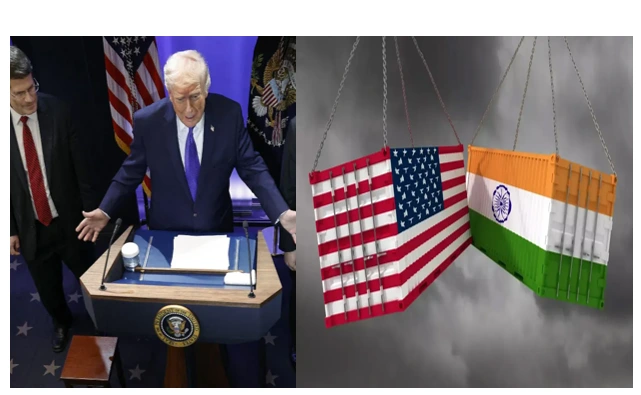
In a two-day whirlwind that has rocked the global trade community, the high-stakes game of international chess between Washington and New Delhi took an unexpected turn. In the wake of a landmark U.S. Supreme Court judgment which struck down as unconstitutional President Donald Trump’s broad “reciprocal” tariff authority (Read it Decoded here), the White House took a new approach, demanding that all imports across-the-board be subject to an import surcharge of 10% going forward from February 24, 2026.
This ”Plan B” to be implemented from the Oval Office is a paradox for India. On the other, that is far below the 18 percent duty negotiated in the February interim trade deal. On the other, it marks a time of great uncertainty as the world’s two biggest democracies negotiate a relationship grounded as much in personal chemistry as cold, hard protectionism.
The 150-Day Clock: A Fleeting Respite or an Impending Cliff
And it is the asterisk that has economists and policy experts in New Delhi nervous. The President could impose duties for up to 150 days under section 122 of the Act without needing Congressional approval.
The Expiry Date: These 10 percent tariffs are scheduled to end in July 2026, if they’re not extended by Congress or supplanted by a new bilateral agreement.
Strategic Energy: And then of course, exempting energy products — a particularly weighty development in the wake of India’s shift toward buying American liquified natural gas (LNG) to sweeten “oil-for-tariffs” pot.
While the lower rate is competitive against the rates of between 25% and 50% that applied to Indian labour-intensive sectors as late as 2025, being a “temporary” feature means it remains difficult to plan long-term.
‘Nothing Changes’: The Paradox of the Trump-Modi Dynamic
But notwithstanding the legal setback, President Trump insisted that the spirit of his agreement with Prime Minister Modi was alive and well. “No, it’s not under consideration,” he said at the White House hours after the court ruling, speaking of the prospect of lifting tariffs or serving as a mediator between India and Pakistan — even as he described his interactions with Mr. Modi as “a great relationship” but declared that he was veering toward his traditional “America First” position.
“Nothing’s easy, but I think we’ll have a deal,” Trump said, continuing with the “I think” just as he has about China for months because there was no such agreement signed during public ceremonies in Houston and New York that were wholly political in nature by both President Trump and Indian Prime Minister Narendra Modi.“Nothing changes… They’ll be paying tariffs, and we won’t,” Trump said in explaining the future of trade between India and the U.S., where India will gradually go to zero or near-zero duties on many American industrial and agricultural goods.
This rhetoric highlights the “little flip” that Trump likes to talk about. The one-sided trade with him in the past, for him that was the U.S. being “ripped off,” he believed. By striking a deal in which India is hit with a 10% entry fee as remote goods from America enter India virtually duty-free, the administration feels it has achieved one that is “fair.”
In New Delhi, the response is cooler. Opposition leaders have been deriding the deal as an “ordeal” of “desperation,” but India’s Ministry of External Affairs is playing the long game.
What Stays the Same?
And despite the new 10 percent surcharge, quite a few “legacy” tariffs are sticking around:
- Section 232: Tariffs on imported steel and aluminum for national security reasons.
- Section 301: Tariffs due to unfair trade or intellectual property practices.
- Digital Tax Concessions: India’s pledge to roll back some digital services taxes under the February framework remains a centerpiece of ongoing talks.
Looking Ahead: The July Deadline
When the 150-day clock begins ticking on Feb 24, it becomes all about the negotiation.” What New Delhi wants, however, is for that (supposedly) temporary 10% “surcharge” to become a permanent rate in the wider BTA: it’s an attempt to game the system.
For the American consumer, the 10 percent surcharge on non-exempted goods will probably mean relatively small price increases on everyday items; but the administration is betting that a flood of even cheaper Indian energy and tech components could help take some of the sting out.
