


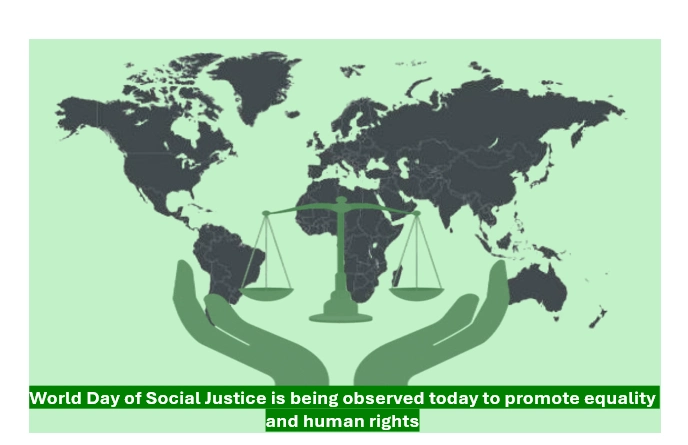
As the sun rises over majestic glass edifice of United Nations office today, it will be witnessing a break from worldwide celebration of World Day of Social Justice 2026. It’s not just a date on the bureaucratic calendar; it is a day of global reflection around a simple, if fundamental question: Is our world fair to everyone?
This day has been celebrated annually on February 20, but this year’s observance comes at an opportune time. It falls under the slogan “Renewed Commitment to Social Development and Social Justice” and signifies a move from lofty political promises to the grubby business of implementation. After the historic Second World Summit for Social Development in Doha, today’s world emphasizes the “human” in human rights—rather than remaining confined to numbers, it is concerned with individual dignity.
“Social justice is the glue that keeps our communities together,” the U.N. Secretary-General, António Guterres, said in a morning address. “In a world break up by inequality, it is the only way to ensure that peace is stable and long-lasting.”
The Human Face of Inequity: Looking Beyond the Figures
Even as the halls of power in New York and Geneva hum with policy talk, the real heft of this day lies instead in the stories of those so often relegated to the margins. In the crowded garment districts of Tirana, Albania or on the small-scale farms of Bangladesh, social justice is not a theory — it’s the difference between a life of subsistence and a life with dignity.
The International Labour Organization (ILO) has highlighted of entrepreneur Gjergj Leqejza, who chose not to become a part of the “brain drain” during the 1990s and remained in Albania. Instead, he created a textile company based on the idea of decent work — paying living wages and investing in the community. Today on This is Social Justice, his story is a reminder that economic growth can only be sustained if it is shared.
Read also: Celebrating the Silver Jubilee of International Mother Language Day
Nonetheless, the worldwide data are a sobering backdrop
- The ‘Working Poor’ Crisis: Despite the global unemployment rate hovering around 5%, there is a crisis of ‘informality.’ Millions of full-time workers still cannot escape poverty because they have no safety nets or access to decent wages.
- The Youth Divide: Young people are now confronting a “triple threat” of high unemployment (now steady at 12.6%), climate anxiety and a digital divide that leaves them out of the emerging economy of new technologies.
Digital Transformation What the expansion of AI and remote work means for labor rights. The conversations today center much more on making sure that old biases are not baked into new hiring algorithms.
The Doha Legacy: From ‘Doha to Today’
The theme for 2026 follows directly on the Doha Political Declaration. For the first time there has been a co-ordinated global attempt to connect macro-economic policy and social welfare. Governments are now called upon not just to measure GDP but also “Social Cohesion”.
Among the most notable changes debated at commemorative meetings today is the transition toward a “Human Rights Economy.” This model also challenges the notion that environmental degradation and social inequities are “inevitable byproducts” of growth. No, it favours the Social and Solidarity Economy (SSE)– a sector of cooperatives and mutual organisations that put people before profit.
“We are emerging from a time when upholding these social justice commitments was considered a luxury that rich countries could afford after their economies had grown”. “We now know that justice is the muscle of human progress, not just its byproduct.”
