


The internet that you came of age with is dying. For 30 years, the World Wide Web was a library — a huge, sprawling, virtual territory of pages that allowed you to be the librarian and where you found what you were looking for by way of specific titles. But in 2026, the indomitable library will give way to an architect. The internet is no longer just a network of computers with aggregated content; it’s creating the content, filtering and serving it to you in ways that are affecting your thinking, shopping (even if you buy offline), and how you exist online.
And we’re not just talking about a few new bells and whistles on Google. We are discussing a systemic transformation of the digital world. This “remaking” of the internet for A.I. is a move from discovery to synthesis, and changes every single click you make.
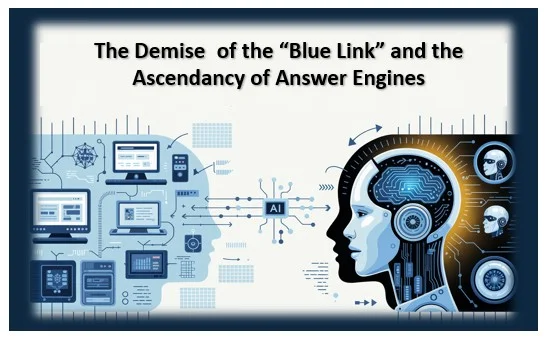
The Demise of the “Blue Link” and the Ascendancy of Answer Engines
For years, the search bar served as the “entry point” to the internet. You typed in “how to fix a leaky faucet,” and you got back 10 blue links. You had to click, then read, then screen out the ads and figure out the answer.
Platforms such as Perplexity, Gemini and OpenAI’s SearchGPT aren’t trying to get you to visit other websites; they want to read those websites for you and tell you the summary.
The Benefit: Incredible speed. You are spared from twenty minutes of looking, and given a polished three-paragraph answer.
The Bill: The “Death of the Small Creator.” But if no one clicks on the original article, the author of the plumbing guide isn’t paid. As the internet is rebuilt for AI, we can expect to see a consolidation of the diverse, independent web as creators realize they will never be paid when AI can “borrow” from their content without sending them traffic.
Agentic Browsing: A Shift from “Doing” to “Delegating”
The new trend in 2026 is the evolution of AI Agents. Until now, AI has been a chatbot you chat to. Now, it is a worker who will act for you.
Rather than you going to a travel site, comparing five flights, looking at three hotels and typing in our credit card number instead the internet is being re-designed so that business can happen on top of it via AI agents negotiating these sites for us automatically.
What this means for you:
You’re going to “get hands off” with websites. After all, you’re not going to be concerned with a website’s UI (User Interface) since you won’t even see it – your AI will. This is pushing companies to re-imagine their back-ends for machine, rather than human, reading. The evolution is towards a “Headless Internet,” where the visual layer is sugared over by default.
- The Reality of the “Dead Internet” – Sailing Through a Sea of Synthetic Content
- A scary truth about this new internet is that, by 2025, more than half of all internet traffic is no longer human. Much of that work is AI bots scraping data or churning out “filler” content.
- This remaking of the internet for AI is accompanied by a deluge of synthetic media.
- The Personalization Trap: You and your neighbor would watch the same news back in the day. Today, your social feed, your news digest and even the “reviews” you read are being customized more and more by A.I. algorithms to match your specific biases.
- The Crisis of Authenticity: How do you know if a product review was written by someone who touched the product, or a bot cooked up to inflate a rating? The remade internet demands a different form of “Digital Literacy.” You cannot trust your eyes [any] longer, instead you have to trust in the verification tools.
The Bottom Line
The internet is turning into a living, breathing organism that knows what you need. It is the single greatest productivity increase in our lifetimes — you have access to so much information and so many tools, all from a plastic rectangle that fits into your pocket. But it comes at the price of a serene, simple digital life. You are no longer just a “user” of the internet; you’re a “co-pilot” in a system that is learning from you as much as you are from it.
