


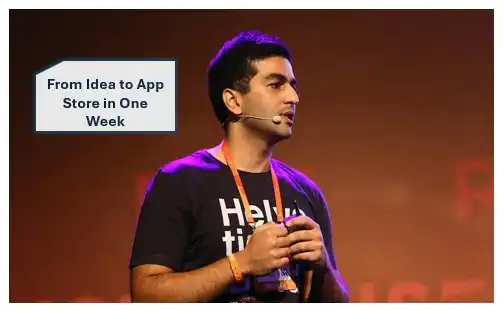
In a stunning example of how quickly AI is changing the way software is made, Kavin Bharti Mittal said that he made several apps that work and AI assistants that can work on their own in just one week. The businessman said that OpenClaw and Claude were key to the project because they let him go from thought to action much more quickly than is usually possible in Development.
Many people in the business and tech communities have heard about the story. Usually, it takes months of effort, testing, and a lot of money to make and release market goods. Based on Mittal’s story, AI may now be able to shorten that trip to just a few days.
From Idea to App Store in One Week
Mittal said that during the seven-day rush, he made a number of real, usable goods instead of small demos. One of them was Simple Notes, a note-taking app that works well on multiple platforms. Another one, Lumenote, was more about knowledge management and using AI to better organize and understand personal data.
Besides that, he showed off CleoAI, a chatbot that works inside message apps. The helper doesn’t ask users to download a new app; instead, it meets them where they already talk.
The story stands out because of both how fast it moves and how much it costs. Mittal said that the whole build cost only a few hundred dollars for the computers and models that were used. In the past, getting the same results might have taken a group of engineers, product managers, and artists working together for at least six months.
Get to know the digital team
Mittal talked about making AI bots that act like workers and have clear roles and responsibilities.
Sam is one of them and acts like a chief of staff. The agent can keep track of schedules, answer emails, make reservations, and help with development work. It even has its own ways to get in touch with people, connecting the founder to day-to-day activities.
Midas is another agent who works with crypto markets. It can access trade systems and set strict risk limits, so it can watch how prices move and make choices without constant human guidance.
Ritam is the third person who wants to study. It looks into deep topics, reads difficult writing, and then tries to put ideas to use. The goal is not just to gather knowledge, but to find out what can be made from it.
These bots show how AI might work in the future, when it might not work like software but more like a well-oiled machine.
A Look at a New Era in Building
Mittal’s seven-day test shows that technology is changing in a bigger way. AI systems can do more than just answer questions or write words. They are planning jobs, writing code, fixing mistakes, and making results better in loops that used to need teams of people.
This could make it a lot easier for owners and writers to get started. Companies that used to have big benefits in money and people could be challenged by small groups or even individuals.
At the same time, this kind of speed brings up new arguments. There are concerns about safety, dependability, and control if AI can act on its own. What is the person or thing that is responsible when an independent system fails? What kind of limits should there be? As the tools get better, these talks are becoming more important.
More tests are coming up
Mittal gave the impression that he was just getting started. He plans to see how far automation can go in areas like growth, marketing, and sales, where more workers are already being trained.
We still don’t know if every claim will hold up in the real world. Still, the message is clear: there is not much time left to make tech goods. Things that used to take three quarters of a second could soon take weeks or even days.
That chance changes everything for the industry, from plans to hire people to make investments. And if Mittal’s experience is any indication, the time of AI-powered creation is coming sooner than many people thought.
