


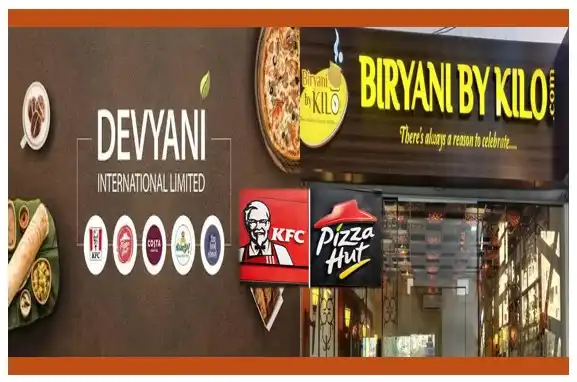
Devyani Operation Private Limited (DIL), an Indian franchisee known most popularly as the operator of such international quick service restaurants (QSR) as KFC, Pizza Hut, & Costa Coffee has announced that it has acquired the rest of the equity stake of Sky Gate Hospitality. This brings Sky Gate under the complete ownership of Devyani. In addition to Biryani By Kilo, Sky Gate also owns and operates such brands as Goila Butter Chicken and The Bhojan.The acquisition is worth approximately ₹57.5 crore and was approved by the Board of Directors of Devyani in early February 2026.
Devyani will pay approximately ₹27.5 crore in cash to the Promoters/Founders of Sky Gate and will discharge the remainder of the purchase price of the acquisition through the issuance of non-convertible redeemable preference shares (which will have a nominal dividend and will be redeemable after a specified period).
Once the acquisition is completed — expected by 31 March 2026 — Devyani will have 100% control of the Biryani By Kilo brand.
This acquisition completes the remaining component of Devyani’s earlier announced acquisition of a controlling stake in Sky Gate in 2025 and represents a continuation of the company’s strategic focus on entering the organized segment of the Indian food market beyond the traditional fast food segment.
Why Biriyani Matters: Strategic Rationale
Devyani had previously concentrated on global QSR brands, but the increase of competition in the QSR Market has caused them to look elsewhere for new sources of revenue. The company has turned towards an emerging segment of Indian food – Traditional Indian meals like Biryani.
There is tremendous demand in Urban and Semi-Urban markets for traditional meals like biryani, and according to Industry statistics, millions of biryani meals are ordered by Indians via various online food delivery services. This makes Biryani by Kilo an attractive opportunity for larger players trying to capture a larger share of the market in these markets.
By acquiring Biryani By Kilo, Devyani opens itself up to:
- 1) Authentic (and Traditional) Indian food products which balances western fast-food brands with regionally based or ethnic food ideas.
- 2) Creates cross-selling opportunities using existing Delivery Logistics and existing locations.
- 3) Establishes an additional source of revenue to augment the KFC and Pizza Hut restaurants, particularly since Biryani restaurants are becoming increasingly more appealing to Urban customers due to their growing popularity.
In conclusion, this acquisition supports Devyani’s overall House of Brands Strategy, which is focused on diversifying away from traditional QSR Formats into a wider range of Food Products and Services beyond just western QSR’s.
Company Performance: Growth Amid Challenges
The purchase occurs amid a backdrop of mixed financial performance at Devyani International.
The Company reported revenue growth of 11.3% year on year to ₹1,440.9 crore (Q3 FY2026) during Q3 (December quarter). However, net loss for FY2026 was over ₹100 crore, an increase compared to last year, and was attributed to a one-time charge for labour law changes. The underlying business made a profit when excluding this one-off charge.
Within a mixed performance environment, certain segments (e.g., Devyani’s Biryani by Kilo) demonstrated resilience, and have achieved breakeven ahead of schedule due to operational traction at the unit now fully being acquired.
Furthermore, although there have been higher same-store sales declines in India than KFC for Pizza Hut, the company is executing a turnaround plan to reposition Pizza Hut using a revamped leadership team and new strategies, including appointing the CFO, Manish Dawar, as the new CEO beginning April 2026.
Market Context: QSR Tough, Traditional Cuisine Rising
The Indian quick service restaurant (QSR) industry now has to face numerous obstacles globally such as slowing consumer demand as a result of ever-increasing costs and very competitive competition from other local types of food/ways to deliver their food). In combination with other significant global players such as McDonald’s and Domino’s Pizza who have all suffered through a slowing same-store sales, flat growth for some of their stores.
Furthermore, many of these Indian food segments (e.g., Biryani and regional specific meals) are experiencing very positive affinity by consumers, while enjoying huge amounts of food that is being delivered through online ordering. With companies like Biryani By Kilo now offering additional scalability and margin potential; which coupled together with the QSR model has created strong growth arithmetically.
Analysts are expecting that the acquisition of Devyani will be a position to have expanded consumer access while at the same time enhancing any type of synergies with their current digital delivery of food, but not only relying on traditional fast food dine-in style restaurants. Moreover, Devyani has already begun its merger with their competitor, Sapphire Foods (a franchisor of Yum Brands in India) in order to further streamline operations so as to gain more efficiency through the entire supply chain of their 3,000 + restaurants throughout these regions.
How a Message to Marc Benioff Changed an Entrepreneur’s Life
What This Means Going Forward?
With Biryani By Kilo now fully inside its portfolio, Devyani:
- Developing a culturally resonant domestic brand in terms of delivery economics.
- Reducing dependency on KFC and Pizza Hut, thereby reducing dependence on global QSR industry.
- Establishing a foundation for multiple brands/cuisines which may have greater appeal to diverse palates across India.
For investors and analysts, this will further signify an increasingly dynamic Indian food service marketplace — particularly for those keen to blend Western styles with traditional Indian foods as potential long-term growth drivers.
