


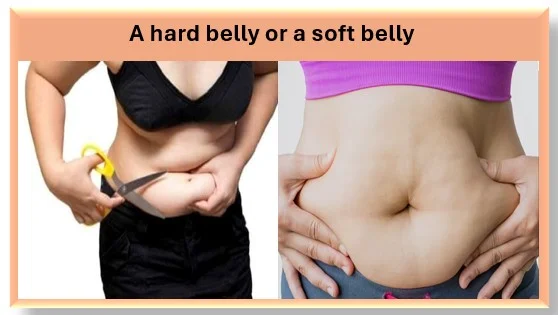
Doctors say that while popping up a “belly” is common for people, they can also give clues as to what might be happening internally depending on how your stomach feels: hard or soft. The changes in how your tummy feels from one day to the next should not go unnoticed by health care providers.
What Is the Meaning of a Hard Stomach?
Hardness (or tightness) of the abdomen, especially when it happens quickly, is usually a more worrisome sign.
A hard, taut abdomen is regarded by physicians as an indication of:
1) A condition that requires immediate medical assistance
2) A condition that may require emergent medical attention
- Bowel obstruction
- Internal bleeding
- Severe infection (peritonitis)
- Appendicitis
- Pancreatitis
- Abdominal trauma
A rigid abdomen that feels very sore and that has symptoms such as fever/vomiting, and/or inability to have bowel movements or passing of gas generally indicates inflammation or an increase in the amount of pressure within the abdominal cavity. In emergent medicine, a ‘board-like’ abdomen should be treated as a pathological condition.
When a Soft Belly Is Usually Less Dangerous?
A soft or squishy belly, even if enlarged, is generally less alarming.
Common causes include:
- Gas and bloating
- Constipation
- Weight gain
- Mild fluid retention
- Digestive issues like irritable bowel syndrome (IBS)
A soft, uncomfortable (but painless) stomach usually resolves through dietary adjustments; increasing fluid intake; and/or time.
Soft, however, can indicate something more sinister and may be the result of gradual accumulation of fluid due to liver, heart or kidney failure caused by underlying medical issues that require medical intervention to evaluate.
Physicians emphasize that pain, along with any accompanying symptoms, is far more critical than texture alone.
If you have a hard or soft stomach and experience any of the following associated symptoms, you should obtain immediate medical assistance:
- Severe or worsening pain
- Fever
- Persistent vomiting
- Blood in stool or vomit
- Sudden swelling
- Difficulty breathing
A painless but progressively enlarging abdomen should also be checked, especially if it develops over weeks.
Sudden Change Is the Biggest Warning Sign
Health experts agree that a sudden onset of a hard belly is much more dangerous than being continuously bloated for years. A belly that has suddenly become hard within hours of being normal is a cause for concern because rapid swelling normally means there is a serious problem internally that your body cannot compensate for.
The Following Are True:
- Hard bellies (and also painful or sudden) are usually more emergency-like situations than soft ones.
- Soft bellies do carry risks but usually not too high.
- Signs of Sudden Change, Pain, or other Symptoms are the biggest risks.
Your doctor encourages you to listen to your body and take abdominal changes more serious than saying it was just gas. An earlier examination may keep you from dying from a condition you may not have known was there.
