


The paradoxes abound in the world of modern biology. On the one hand, we’re living in the golden age of data: We can sequence a genome overnight and simulate protein folds with shocking accuracy. Meanwhile, the routine work life of a scientist spend a lot of time in digitally simulating manual labor. Before a biologist can even begin to test a hypothesis, they are submerged beneath an avalanche of what could be called “data janitorial” work: reformatting CSV files, debugging Python scripts that refuse to execute because of some missing dependency, and trying to remember which dozen incompatible browser tabs contain the necessary metadata for her experiments.
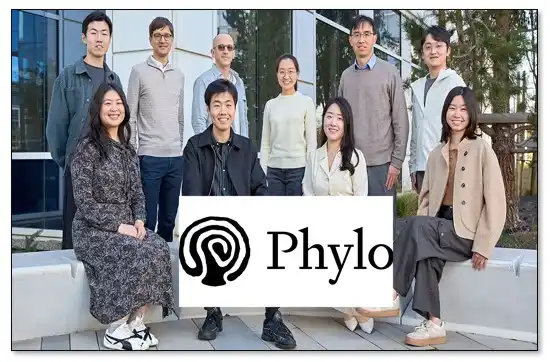
That friction is exactly what Phylo, a buzzy AI startup founded by Stanford researchers, hopes to remove. On February 3, 2026 the company declared that it had raised $13.5 million in seed funding to construct what it calls the world’s first “Integrated Biology Environment” (IBE). Led by Andreessen Horowitz (a16z) and Anthology Fund (which is a joint investment vehicle from Menlo Ventures and Anthropic), the round indicates a sea change in how the technology industry sees the ‘wet lab’ of the future.
What do you mean by an ”Integrated Biology Environment”?
In order to get what Phylo tries to do, you need to understand (a little at least) the IDE that software engineers use. Through tools like VS code, or IntelliJ, Developers can write, test and debug or deploy the code all within a single environment. Without an IDE, a coder would need to open one program for writing code, another for identifying errors and a third to execute the software: highly inefficient, error-prone and exhausting.
There has never before been a dedicated IDE for modern biology. One database might contain the sequence of a protein, while another AI model predicts its shape; then there’s another tool to simulate how it interacts with a drug, followed by yet another piece of software to orchestrate the lab robots that conduct the experiment.
Enter Biomni Lab – Phylo’s marquee offering which resolves this dis-integration. It is a “connective tissue” that integrates >300 data sets, 80+ scientific tools and services, and 100+ software applications in a single, chat-like interface. It’s more than a dashboard; it’s an agentic AI system, with the ability to understand the context of biological research.
Bridging the Two-Code-and-Cell Worlds
Born of personal frustration, Phylo was created by two Stanford AI and biology lab alumni Dr. Kexin Huang and Dr. Yuanhao (Jerry) Qu. “Switching tools, and managing handoffs — constantly fighting them — is a massive cognitive overhead that prevents scientific thinking,” said Matt Kraning, a partner at Menlo Ventures in an interview.
Phylo’s central technology is Biomni Lab AI agent. Unlike a broad-based chatbot such as ChatGPT, Biomni is trained to understand the intricacies of biomedical data. For example, if a scientist wants to model how a particular protein responds to a new chemical compound, they don’t have to write code or shuffle data from one database into another tool for simulations. They can simply type:
“Fetch the chemical structure of Protein X, compute its binding affinity with Molecule Y and visualize the 3D interaction.
Biomni knows how to speak to the database, what the data should look like for the sim model, and what it needs to professional produce as an output. It’s really nothing more than a 24/7 virtual research assistant that just happens have professional basketball skills and never gets tired of “cleaning” clean data.
Solving the “Hallucination” Problem
One of the significant barriers for AI in science is accuracy. In creative writing, an A.I. “hallucination” is a wrinkle; in drug discovery it’s a million-dollar mistake. Phylo has solved this problem by constructing a strictly verified layer. Re: Quand Biomni Lab arrive à une réponse –surtout si c’est en écrivant un script sous-jacent pour l’atteindre– la plateforme Biomni Lab :
Real-World Implications: Weeks or Hours
The buzz around Phylo isn’t merely speculative. The open-source ancestor of the startup has already been adopted by more than 4,300 organizations, including 18 of the world’s 20 largest pharmaceutical companies.
A Case Study: GINKGO BioWorks, A Cell Programming Pioneer Together with a global leader in cell programming, Ginkgo Bioworks (7), Phylo Technologies integrated its platform to specifically automate complex cellular tasks. Workflows that normally would have taken a bioinformatics expert and weeks of data crunching were finished in several hours.
Conclusion: Where Labs Go Now
The funding of Phylo is more than just a success seed round – it’s the birth of the AI-biology age. We are exiting a world in which AI is a “parlor trick” and entering one where it becomes the underlying infrastructure for human health.
Phylo is eliminating that digital friction which has hobbled labs for decades, and unleashing the world’s smartest people to do what they do best: think, experiment and cure. Most likely, in a few years we’ll look back at the emergence of the “Integrated Biology Environment” as the moment biology finally caught up to the rest of the digital world.
