


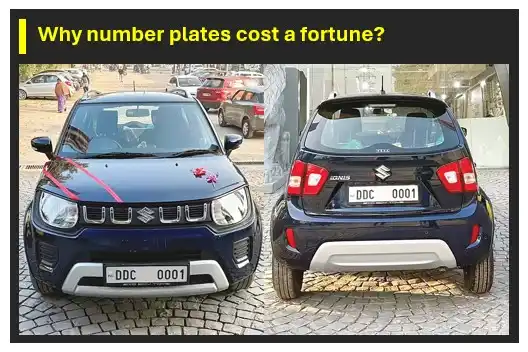
In a vivid demonstration of how appealing “status” symbols and their association to prestige can result in exorbitantly priced goods, a buyer has paid Rs 2.08 crores (approximately $312,000) for a premium automobile registration number. This was a record-breaking sale as it represents one of the most expensive vehicle registration numbers ever recorded in India through official government-led transport department auctions.
Why number plates cost a fortune?
Unique/fancy automobile registration numbers (such as those made up of single digit numbers, repeated digits, or digits that carry meaning in a cultural sense) are regarded by many potential buyers as symbols of prestige, and for those buyers will represent power, good fortune, exclusivity or personal branding. Numbers such as “0001”, “0007”, “9999”, and combinations of numbers representing business-related identities or a person’s beliefs have historically had a tremendous amount of competition at auction and command equally high levels of price that are indicative of their desirability.
The official representatives indicated that multiple bidders provided spirited competition at the time of sale, with the winning bidder being required to pay a final price that was substantially beyond the amount of the preset auction price range. In general, these auctions will begin with a very small base price; however, demand for these registration numbers from high net worth individuals will push the prices of these registration numbers into crores rapidly.
Legal and Transparent Process
Transport authorities from various state’s auctions have taken place using approved internet platforms as a way of offering transparency and compliance by conducting all transactional activity in accordance to state regulations, enabling bidders to place bids securely on line at any given time, free from incurring any additional cost due to using electronic bidding systems.
Once the winning bidder has completed their registration application and submitted their full payment amount to the appropriate transport agency’s treasury, they will receive their new plate(s).
Jeep Compass gets discounts of up to Rs 2.55 lakh in January 2026
Where Does The Money Go?
Revenue that is generated from auctions of fancy plates will go directly to the state’s treasury. As a general rule, the state will again return any commission that they would have received had that auction been conducted via traditional means, and will use the money as directed by law, such as for road improvement and safety initiatives, as well as for public health and welfare projects.
The Emerging Class of Buyers – The Wealthy
The amount paid is indicative of a growing trend among wealthy individuals, who are willing to spend large amounts of money in pursuit of having a personal identity. In particular, business leaders, and high and low end collector car owners, have begun to want both luxury brands of vehicles, along with extremely rare and hard-to-get license plates, to serve as both a sign of their affluence and combine with luxury branded vehicles to make a statement of status.
Social Media Response
News of this extravagant purchase made its way quickly throughout the social networks of many users, and resulted in both mixed reaction and much interest due to the various reasons people commented on, ranging from astonishment, and admiration to critical views on the act of spending that level of money on a single registration number.
More Than Just a Number
In the end, the sale will illustrate how everyday items get special value through being limited (scarcity), having a personal connection (emotion) and attaching status (prestige). For the purchaser, the license plate goes beyond being just a number required by law; it’s a statement worth over Rs 2.08 crore.
