


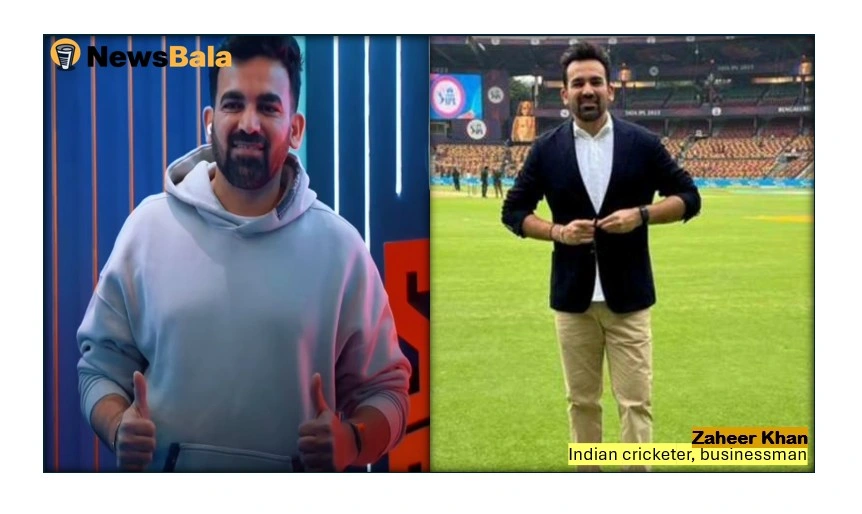
In a small-town Maharashtrian home on a Sunday afternoon, there is a certain kind of quiet. As the sound plays, a ceiling fan spins, and a dad looks over his son’s report card. In 1996, someone gave some advice in a house in Shrirampur that broke the hush. It changed the history of Indian cricket.
Getting on the Indian team
The ICC KnockOut Trophy in 2000 was his first international tournament, and somewhere in that tournament, he threw a ball that really made him known: Steve Waugh’s stumps were all over the place, and the delivery was so beautiful that it almost seemed like it was a pity.
It wasn’t long before he became a habit. Then it was necessary. Soon, he was in charge of India’s fast attack in all types of games, moving the ball like it was his job, not a promise.
India was riding a rare wave by 2003. Zaheer was a key player in India’s long, exhausting run to the World Cup final. He finished the tournament with 18 wickets, which was the most in the competition for India. After a few months, he upset them again in Australia, taking five wickets at the Gabba in the first Test of the 2003–04 Border–Gavaskar Trophy.
The English lab where he changed into a new person
It was bad from 2004 to 2005. Many people got hurt. Speed slowed down. BCCI changed his job from Grade B to Grade C.
The Indian setup was getting loud, demanding, and a bit harsh. Since Zaheer had joined late, he didn’t have the protection of long training, and the churn was constant. He picked silence over noise. He moved up to English county cricket in 2006.
Worcestershire needed a seamer with a new ball. Vikram Solanki backed him because he knew Zaheer beyond the scorecards. India wasn’t picking him at the time, but Worcestershire saw something useful in him: an experienced bowler with skill, hunger, and a desire to learn his craft all over again.
It was cold in the morning, but he bowled so many overs that his fingers hurt. He went from being a fast bowler to a crazy-good medium-fast spinner. He learned that you should learn how to pick the lock if you can’t break the door down. He learned crafts from the very best artists.
The hardball was brought back by him. He didn’t come up with it, but he made it better. He worked on it in the nets for a year without telling anyone. His product wasn’t going to come out until the right time.
It wasn’t luck that he finally bowled it to Michael Hussey in the 2011 World Cup. It was a well-planned move. He had been testing it alone for months. That’s how a brand gets started.
Why did he open a restaurant when he was 27
Bowlers who are fast know that their jobs don’t last long. Zaheer was the only one who really knew this. So, while still playing for India in 2005, Zaheer opened Dine Fine in Pune.
There was a lot of good food in Pune, which is why he picked it. He didn’t open a fancy French cafe. He opened a restaurant that offered biryani and good Mughlai food.
Bharat’s deep-tech startup ecosystem is expanding, says Union Minister Ashwini
Banquets in the foyer
They all solve different issues. Dine Fine for meals with the family. Toss for young cricket fans who want to feel like they’re in a game. Hall for weddings and other parties.
He knew who he was talking to. In India, people want good food that doesn’t cost a lot and tastes like home. He didn’t want to be a cook with a Michelin star. He was putting money away for heaven.
Making a business out of pain
The time Zaheer spent on a physio table was longer than the time most people spend at work. He knew all the bones and muscles that could break. He knew that Indian exercise wasn’t working right.
He started ProSport Fitness in 2014. That wasn’t his goal when he made it. He turned it into a place to heal. He was ready to fix the things that had hurt him.
He got Andrew Leipus to come in. This person had helped Zaheer’s business for many years. He was the heart of the business because Zaheer made him the boss.
It was easy to see. Indian men in their 40s and 50s all have bad backs. Every child who plays cricket has a sore shoulder. ProSport was there to help them. He turned his biggest flaw into his best business idea.
This is Zaheer’s plan. Just think of his biggest weakness. Make a service out of it. His weak body turned into a business moat.
Putting tech pieces together
The new things Zaheer is doing are even more interesting. He put money into Machaxi. With the help of technology, this company takes private areas and makes them smart.
Take a look. He runs a business that gets people to walk. He runs a business that fixes their hurt bodies. He now has a business that lets them play.
He’s making a run. From a morning walk to a cricket game on the weekend, it’s all part of the environment. He’s not just putting money into any company. He’s putting money into a way of life.
Crypto and independent banking were even things he looked into. Zaheer was reading about the Solana blockchain while other former stars were on reality TV shows. He was looking for another way to look at it.
Not a lot of the time when he talks about these things. He’d rather let the balance sheets spell things out. He has always had a lot of ideas but not many words.
A man who works for many
Corporate records show that he has worked for a number of exercise, media, and marketing firms. Some of them have been struck off. It didn’t work with Z34 Energy. There was no more Spella Sports. He gave up quietly. Done with it. That’s the part no one sees. That which went out of business so that others could thrive.
They really show what’s going on. StepSetGo is run by Pepkit Media. ProSport is strong. Biryani is still being served at Dine Fine. He knows what works. Tech, health, and community. He knows what works and what doesn’t.
The Money: What the Reports Say
Let’s get this straight. The numbers for net worth are just guesses. There are various sources that state various facts. Most people think it’s between ₹209 crore and ₹241 crore. Twenty-five to thirty-three million dollars. The numbers come from info that is open to the public. IPL money made. Files from companies. Record of property.
He made more than ₹30 crore in the IPL over ten seasons. He was the coach of the Lucknow Super Giants. The pay isn’t made public, but IPL mentorships pay well. He also helps the Mumbai Indians improve their bowling. Nike, Pepsi, and Star Sports have all given their support. He is married to Sagarika Ghatge, who is an actor. They work together on ads for high-end brands.
He got a two-story house on Senapati Bapat Marg for ₹11.5 crore in 2021. Smart real estate in a place where prices never go down. Both German and Japanese cars belong to him. The BMW 5 Series. An S-Class Mercedes. The Audi A8. The Toyota Fortuner. The Honda Accord. He doesn’t show them off. They’re not doing anything.
How to lead a silent builder
There are old videos of Zaheer where he talks to young bowlers. He never yelled. He would just walk up to them, wrap his arm around them, and show them how to hold the ball.
He helped Ishant Sharma out with this. To help Munaf Patel, he did it. Before he became a coach, he played. He liked it when other people did well. That is something that not many superstars have.
In his job as a guide, he brings the same vibe. His role is to be the person in the background, whether he is with the Mumbai Indians or the Lucknow Super Giants. He is studying the information and the reports from the scouts.
He thinks in systems. The way he does things makes him believe that the end result will happen anyway. He doesn’t think magic exists. He thinks that you should work hard and plan ahead.
He is now 47 years old. He has a little less hair, but his eyes are still very sharp. He’s not a former cricket player trying to stay in the game. It just so happens that he knows how to bowl.
That’s how much Zaheer Khan is really worth. A mind that works on angles all the time. The angles are still being worked on. In Shrirampur, he is still known as the calculator.
