


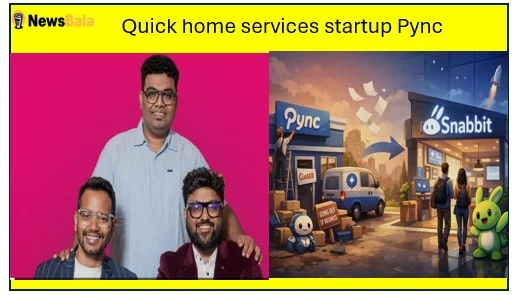
The high-stakes game to dominate India’s “ultra-fast” home services business is down a player in the new year. Pync, the Accel-backed startup which claimed to have found a way to transform household chores in Bengaluru, has officially shut operations. The start-up’s co-founders, Harsh Prateek, Mayank Sahu and Dev Priyam have reportedly joined its primary competitor Snabbit in a strategic ‘acquihire’.
This shift represents a major inflection point for the hyperlocal service sector, proving that as we sprint toward 10-minute domestic assistance, scale and deep pockets are emerging as the only viable routes to survival.
The Rise and Pivot of Pync
Pync – Founded in 2023, Pync began with a niche focus on car-cleaning subscriptions. But as the convenience economy expanded from groceries to household chores, the startup pivoted to “quick home services,” connecting cleaners and handymen at the tap of a button.
With presence limited to only Bengaluru, Pync was able set up a lean and mean machine that has been catering to 25,000+ homes with its focused fleet of 1000 service professionals. Despite receiving about $2 million in early funding from respected companies like Accel and General Catalyst, the startup was getting pinched between increasing operating costs and an arms race with larger rivals.
Indian-Origin Startup Co-Founder Says ‘Hard Work’ Was Worst Advice She Got
Why Pync Surrendered: Truth About the Burn Rate
The closing of Pync underscores the harsh economics of the 10-minute-service business. As with the “Quick Commerce” battles that have upended grocery delivery, the home help industry is characterized right now by:
Aggressive Discounting: Startups are burning serious cash to go after users and upend old-school offline hiring habits.
Supply Constraints: It’s expensive and a bit like playing the lottery to get good quality service partners in a market with high labor outmigration.
Fierce Competition: Urban Company along with well backed competitors like Snabbit, Pronto are fighting for the same micro-markets and getting to unit profitable will be an uphill task for smaller players.
As of late 2025, monthly burn rates across the industry apparently had tripled, rising from $2 million to as much as $8 million with leading players. Uniting with a bigger entity seemed the most sensible way for Pync’s and Bednarski’s vision of the category to survive.
Snabbit’s Strategic Talent Grab
Only ability Snabbit can absorb Pync’s leadership and around 20–25 of its staff is a big win. Snabbit co founder Aayush Agarwal (who was previously the Chief of Staff at Zepto) said Pync’s team’s “obsession over category excellence,” along with their experience running a “lean, tight ship” will be particularly key as Snabbit expands to ten additional city launches this year.
Snabbit has been on a fundraising tear, most recently closing a $30 million Series C led by Bertelsmann India Investments. In doing so, Snabbit strengthens its “full-stack” model — a structure where the platform controls all aspects from training workers to scheduling them in order to create a standardized, “predictable” experience — by bringing Pync’s founders on board to steer operations and business functions.
Implications for the Consumer
And for the folks of Bengaluru, the Pync-Snabbit union presumably translates into a more stable service experience if not without further consolidation. The Pync name will dissolve, but its “lean multi-category expertise” will now drive Snabbit’s expansion into new categories such as elderly care, child care and professional cooking.
But consolidation also closes off “the deep discounts” at these platforms’ advents. Winners shift from user war to operational sustainability and good service as market moves toward ‘duopoly’ or ‘triopoly’ structure.
Conclusion
‘Pync’ The tale of Pync is a classic case of “right idea, tough timing.” Though they demonstrated that urban India is willing to book house help through an app, the sheer financial muscle needed to establish category leadership played more favorably for those with larger war chests.
Now, as Harsh Prateek and his team embark upon their new journey at Snabbit, the aim is not to just survive as a stand-alone brand, but create what they term ‘the category of the decade. In the 10-minute service world, it appears that if you can’t beat the giant, your next best play is to be its brain.
