


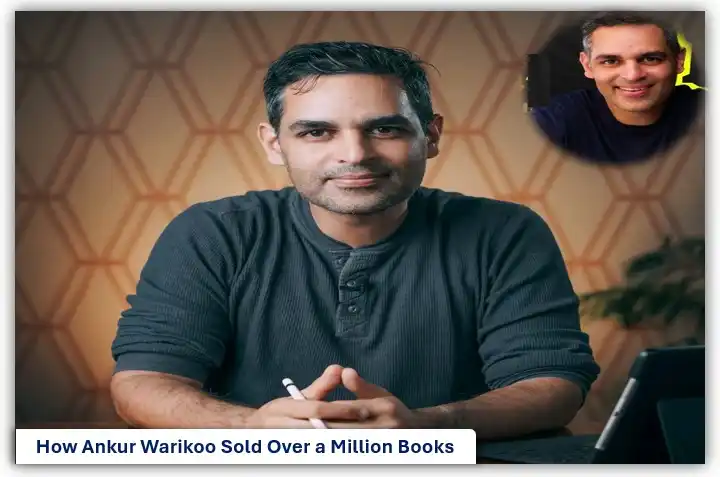
Over a million copies without a traditional manuscript
Selling more than a million copies is a goal for most writers. Ankur Warikoo, a marketer and content creator, met this goal by avoiding the usual ways of writing a book. With millions of copies sold and profits thought to be in the hundreds of crores, Warikoo has made it clear that he did not write his books in the traditional way, by writing every part himself. Instead, his success shows how modern publishing is becoming, with a focus on information.
Creating Thoughts Before the Books
There was no book idea at the start of Warikoo’s road to publishing. The process began years ago with regular posting of material on blogs, social media sites, emails, and videos. He wrote down a lot of ideas about jobs, money, getting things done, habits, and growing as a person over time. Millions of people who read and responded to his daily content had already tried, tested, and approved these ideas.
The ideas for his books were already there when he started to write them. The hard part wasn’t coming up with ideas, but putting them all together and presenting them. Warikoo didn’t rewrite ideas he had already shared. Instead, he worked on turning current material into an organised, understandable style that could be printed.
The Model for Group Writing
Collaboration was a key part of this method. There were editors and skilled writers who worked closely with Warikoo and read copies of his films, social media posts, and long-form pieces. These people worked together to find repeating themes, pick out the most important ideas, and organise them into parts that make sense.
Through this process, Warikoo was able to stay in charge of the ideas, tone, and theory of the work, while others wrote, structured, and polished it. He has been open about this method, making it clear that he is the one who comes up with the ideas, not a standard word-for-word author.
India Post Launches Speed Post 24 and Speed Post 48 Services
From digital content to best-selling books
The books that came out of this process are mostly about job advice, personal discipline, and how to improve yourself. People who read his books already knew what the titles of his books meant: Do Epic Shit, Get Epic Shit Done, Make Epic Money, and Build an Epic Career. The books didn’t come up with completely new ideas. Instead, they gathered, improved, and grouped existing ideas in a way that made them easy for readers to find again and again.
This plan worked out well. People who read Warikoo online were ready to buy both real and digital books that put all of his tips in one place. For people who had never read his other work before, the books were a way to start.
Personal Brand to Back Up Marketing
Warikoo’s personal brand was also a big reason for the high sales rates. Before his books came out, he already had a following of people who trusted his advice. Direct contact through social media, email newsletters, and speaking events helped book launches, so they didn’t have to rely on the usual marketing processes of publishers.
They didn’t promote the books as creative works; instead, they did so as useful guides for life skills, money choices, and job advancement. This positioning was very close to what the audience wanted, and it helped drive long-term sales rather than short-term jumps.
Authorship in the Digital Age: A New Look
The success of Warikoo shows a bigger change in publishing. Today, being an author means more than just writing every phrase. It means owning the thoughts behind the words. For content makers who regularly share useful content, books can be more like collections of content than new works.
There are still arguments about ghostwriting and genuineness, but Warikoo’s case shows that readers care more about clarity, value, and importance than the writing process itself. Collaborative writing and believability can live together as long as the ideas are real and the author is clear.
A fresh plan for publishing today
Ankur Warikoo’s million-copy success shows how digital impact, smart cooperation, and reusing material can change the way traditional publishing works. His journey shows that current authors don’t need to start with fresh pages to make a book; instead, they can use years of experience and knowledge to write a book.
