


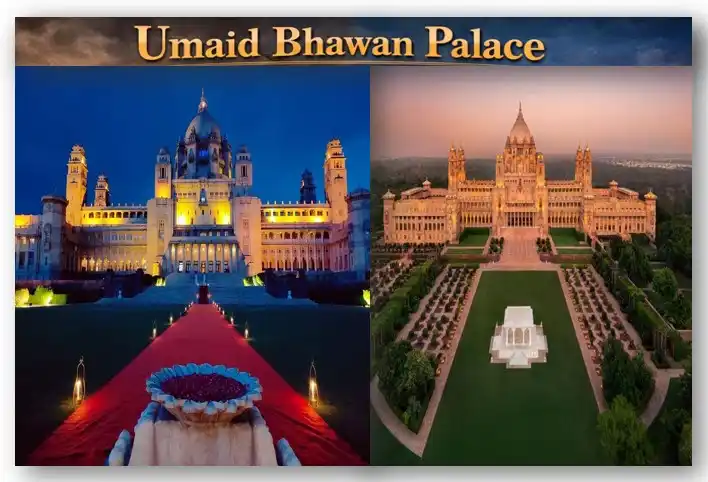
The Umaid Bhawan Palace in Jodhpur, Rajasthan, is one of India’s most famous royal buildings. It sits tall on Chittar Hill. It is now worth about ₹22,400 crore, making it one of the world’s most expensive and largest private homes. But this beautiful building wasn’t just built to look grand. At the start of the story, there was trouble, hope, and an eager leader who wanted to help his people through a tough time.
A Palace Built During Hard Times
In the 1920s, Jodhpur, then in the Marwar area, suffered a terrible drought and famine. Farmers and farmers were having a hard time staying alive because they had lost their crops and ways to make a living. The people in the area didn’t give charity; instead, they asked their master for work and pay so they could take care of their families. In response to this plea, Maharaja Umaid Singh made a brave choice: he would build a vast castle that would serve as the royal residence and provide employment for thousands of people.
Building began in 1929 on the rocky Chittar Hill, which wasn’t near any water and wasn’t easy to get to. A small train line had to be built first so that dirt and rocks could be moved to the spot. For more than 14 years, between 2,000 and 3,000 people shaped, cut, moved, and put in place the golden sandstone blocks that now shine in the desert sun.
A British builder named Henry Vaughan Lanchester blended Indian and Western styles to create what is now known as a gem of Indo Deco architecture. When it was finally finished, the palace was in 1943, just before India got its freedom.
List of super-hot Singapore destinations to visit this season
Large Plans and Building Elements
The grounds around Umaid Bhawan Palace cover about 26 acres, and the palace is almost entirely made of yellow rock that was dug in the area. Its interior is made of expensive materials like Burmese teak wood and Makrana marble, which give it a royal but elegant look.
The main roof stands tall above the palace and dominates the skyline of Jodhpur. It has hundreds of rooms, and each one was carefully planned out. Craftsmanship that shows both local and global effects can be seen in marble stairs, grand rooms, and intricately carved pillars.
Later, a part of the palace was turned into a high end hotel, which kept the original grandeur while giving guests a taste of royal life. In another part, there is a museum that shows off the royal family’s history through antiques and old cars.
The most popular luxury places Millionaires in India swear by
From a royal home to a modern heritage site
While the house was still being built, Maharaja Umaid Singh died. He had only lived there for a few years. India abolished royal titles in 1971, so Umaid Bhawan’s grandson, Gaj Singh II, had to work hard to keep the building’s history alive. He didn’t let the house fall apart, he turned part of it into a museum and high end hotel.
This method helped get money for saving and repair. These days, the palace is a living cultural space, not just a home, where history comes to life. People from all over the world can stay in fancy hotel rooms, eat under crystal chandeliers, and walk down marble hallways that were once only for royalty.
Kashmiri Man Detained After Attempting Namaz at Ayodhya Ram Mandir
A Sign of History, Culture and Survival
Maharaja Gaj Singh II and his family still live in Umaid Bhawan Palace and do things the way their ancestors did. People can visit some parts of the palace, but the royal family lives in the private parts, which is what the building was built for in the first place.
The palace is now one of the most important places in India because it has been the site of many famous weddings and big events over the years. It’s a beautiful and expensive landmark and it also serves as a lesson of how well-planned building projects can improve neighbourhoods and keep culture alive.
Umaid Bhawan Palace is a royal home and a global cultural icon. It was built to help people who were suffering from famine and shows how history, art and duty can come together to make something timeless.
