


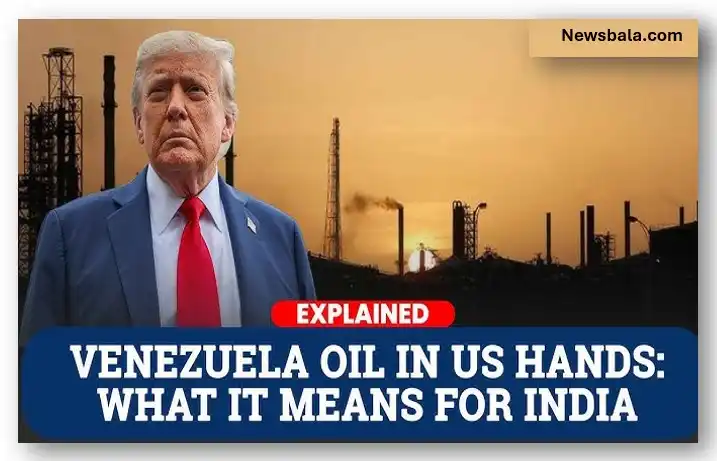
President Donald Trump has made one thing abundantly clear in a series of recent, high-stakes announcements that have rocked the global geopolitical landscape: Venezuela is not just a diplomatic challenge any longer — it is an anchor of American energy strategy. After the spectacular military action on Caracas and detention of Nicolás Maduro in early 2026, the government has since shifted to a “maximum intervention” strategy with focus on its enormous crude reserves.
And the story emanating from the White House has moved from humanitarian concerns to frank discussions of resources. Trump has been nothing but Trumpian in recent days when it comes to whetting his nation’s appetite for Venezuelan oil through similar call-to-arms (“Make Socialism History”) gestures, and ominously underlining the role of Venezuela’s pipes and holes above what remain our planetary realm’s largest-known reserves.
“WE WANT OUR OIL BACK”: The Economic Incentive
At the core of Trump’s position is a deep-seated grudge against nationalized oil assets that belonged to the previous socialist governments of Hugo Chávez and Nicolás Maduro. Trump has often referred to the taking of American energy infrastructure as “one of the biggest thefts of property in the history of our country.”
His proposal is to bring back U.S. oil and gas giants in force — companies like Chevron, ExxonMobil and ConocoPhillips, among others — to “fix” the “rotted” and “badly broken” infrastructure, as he put it. The vision is straightforward: American know-how and tens of billions of dollars in private investment will flow into the Orinoco Oil Belt, rejuvenating a petroleum industry that has never recovered from decades under government control and a precipitous decline in oil prices.
(The administration has been designating cronies connected with Mr. Maduro the same way.) By pitching the intervention as a recovery of plundered booty, the administration is sending a message that it expects to be “repaid” for its efforts, and by taking control and sale of Venezuelan crude in part payment. This is beyond regime change; it’s about the re-articulation of the global hierarchy of energy, with Washington at the top over South American production.
Global Energy Markets: A Coming Supply Shift
The ripples of that policy are already being felt in trading hubs as far apart as Houston and Singapore. Although the initial rise in oil prices was somewhat restrained, which is understandable given the global oversupply plus the reality that Venezuela at present accounts for less than 1% of world output, over the long run this news is hard to contrive as anything other than grim.
The Return of Heavy Crude: Venezuela is known for its heavy, sour crude that Gulf Coast refineries process nicely. A revitalized Venezuelan sector could reduce costs for these refineries a great deal, which in turn might lead to lower diesel and gasoline prices for American consumers down the road.
The OPEC+ Wildcard: As a founding member of OPEC, a U.S.-managed Venezuela might even end up being a “spoiler” for the cartel’s price-fixing schemes. But if production over time picks up to historical levels of 3 million barrels a day, it would be an enormous cushion in the world market and strip Middle Eastern and Russian exporters of much of their leverage.
The “Risk Premium” vs. The “Glut”: In the immediate term, additional military conflict in Venezuela places a “geopolitical risk premium” on Brent and WTI crude. But if the transition adds up to a stable, U.S.-backed energy partner, with plenty of reason to keep Russian ambitions in check over the longer term, then the sheer size of those untapped reserves (a 303 billion-barrel estimate) could keep global prices flat for a generation.
Trump Warns of Thorny Issues After Peace Deal Talks With Zelensky
Conclusion: A High-Stakes Energy Gamble
Donald Trump’s policy towards Venezuela represents a return to transactional foreign policy, where national security is synonymous with energy security and economic “reimbursement.” If it works out, that plan would cut global energy costs, diminish the grip of hostile cartels and turbocharge the American energy industry.
But its way ahead is perilous, from within Venezuela where it might face “guerrilla style resistance,” to the enormous challenge of steering through a collapsed economy. One thing is for sure: the “Oil Business” is now the key to understanding the crisis in Caracas.
