


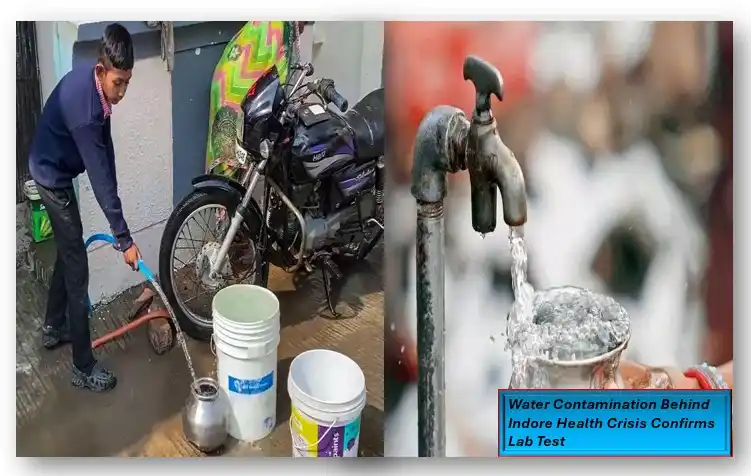
Indore has long held the title of India’s cleanest city as a point of pride. But the new year of 2026 has also ushered in something of a reality check. What started with a brace of stomachaches in the Bhagirathpura neighborhood has blown into a full-fledged public health crisis.
After days of speculation and increasing death tolls, laboratory results from Mahatma Gandhi Memorial (MGM) Medical College have at last confirmed the community’s worst fear: The municipal water supply was heavily contaminated with raw sewage, leading to an outbreak of lethal waterborne disease.
The Lab Results: A Toxic Cocktail Blood and urine drawn from patients soon after they were admitted to the hospital showed high levels of dangerous substances like arsenic, methanol, ethylene glycol (used in antifreeze), as well as cyanide-like compounds used in gadolinium-based contrast agents.
The report handed over to the Indore Municipal Corporation (IMC) is not flattering at all. One third of the dozens of samples gathered at household taps were severely bacterially contaminated.
Such pathogens were present in human waste, including these commonly found in the water, said Chief Medical and Health Officer (CMHO) Dr Madhav Prasad Hasani.
E. coli and Faecal Coliform: They are direct indicators of sewage contamination.
Klebsiella: A bacteria that can cause severe pneumonia and gastrointestinal problems.
Pathogoenic Strains: Initial test also indicate bacteria known to cause cholera, however the detailed culture reports are awaited.
The “clean” Narmada water on which citizens were dependent had, in effect, turned into a conduit for various toxic potions of biological insobriety.
Anatomy of a Tragedy: When the System Fails.DropDownItemsSite Index Contents Site Index Site Information Navigation.
Perhaps the saddest part of what has become known as the Indore tragedy is that it could well have been avoided. The inquiries into the infrastructure disclosed a scandalous failure to plan or maintain from an urban point of view.
The Fatal Leakage
The break in the main Narmada water pipeline was serious, officials found. Adding to the irony is the fact that this particular leak was situated directly below a swanky new loo at a police check post. Since the toilet’s waste was being fed through a simple pit rather than into a sealed septic tank or directly to the main sewage line, raw effluent had been slowly leaking back into the loose joint of the drinking water pipe.
Ignored Warnings
People in Bhagirathpura had been raising the alarm for at least several weeks. Dozens of people said water flowing from their taps was yellow and gave off a stinking, “rotten” odour as early as December 25. But in spite these early warnings, there was no decisive action until people began dying.
Administrative Stagnation
A quote to replace the old rusty pipes in this area had been requested since August 2025. But bureaucratic red tape and administrative inertia kept the job on hold for over four months — a delay that has now had lethal consequences.
4 Foods You Should Avoid At All Cost To Have A Healthy Heart
The Human Toll: More Than Just the Numbers
The numbers are staggering, but they can’t tell the full story of grieving. As of January 2, 2026, the official figures of death toll were somewhere between nine and fifteen (the local residents know it to be more). One of those affected is a six-month-old whose parents fell ill after feeding her formula mixed with the poisoned tap water.
Hospitalised: Over 270 infected people are undergoing treatment at various 27 hospitals in Indore.
Critical Cases: At least 32 patients are in critical condition on being admitted to Intensive Care Units (ICUs).
Outbreak ‘n’ about: More than 2,800 cases of severe gastroenteritis with vomiting and high fevers have been detected in door-to-door surveys.
Accountability and the Road Ahead
The ripple effects from the crisis have been sudden. The chief minister Mohan Yadav has directed for suspension of one ‘zone officer’, as assistant engineer and dismissals of sub-engineer on the spot. The state government has also declared an ex-gratia compensation of ₹2 lakh for the kin of deceased.
But for the residents of Bhagirathpura, financial assistance is a small consolation. The National Human Right Commission (NHRC) intervened in the matter by issuing a notice to Madhya Pradesh’s Chief Secretary and sought why the complaints of residents were not heard all these years.
Immediate Safety Measures
The Indore Municipality is currently undertaking citywide flushing of its pipeline network and has over 70 water tankers distributing potable water. Health authorities have repeated a standing alert: Do not drink tap water without boiling it for at least 20 minutes.
A Wake-Up Call for Urban India The sight of distant migrants spotting their first meal in weeks, a few grains of rice, on a hungry street within minutes of arrival into their own cities will scar our national conscience forever.
This disaster is a harsh reminder that ‘‘cleanliness’’ is not defined by swept streets and painted walls alone; it also includes the integrity of invisible infrastructure below our feet. With the high court to hear a PIL on Friday over the issue, it could soon veer towards a mandatory state-wide audit of all drinking water pipelines that run adjacent or parallel to sewage lines.
“Cleanest City” comes with a heavy burden. If Indore is really going to lead again, it must show that even its most vulnerable citizens can access that most fundamental need of safe water for consumption.
