


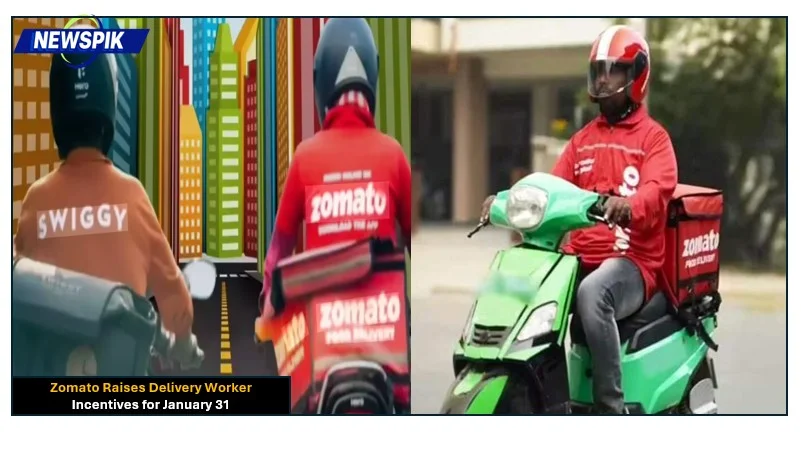
Zomato, one of India’s biggest food delivery services, has announced that its delivery partners will get bigger bonuses on January 31. This is because the company is getting ready for a lot of orders to come in on New Year’s Eve. The change is meant to get more delivery people to stay on the job during one of the busiest buying times of the year and keep service running smoothly across the country.
People who deliver packages, who are sometimes called “gig partners,” can make more per order and more each day during the evening, when demand is usually highest.
Higher daily earnings and payouts per order
Zomato told its delivery partners that they can make between ₹120 and ₹150 per order on December 31 during busy hours, from 6 pm to 12 am on New Year’s Eve. This is to help them deal with the extra demand. The site also said that service partners could make up to ₹3,000 in a day, but this would depend on how many orders they get and how many people are available.
In addition to these higher rates per order, Zomato has briefly waived the fees that transport partners usually have to pay when they refuse or cancel orders. Workers who are having trouble with uneven order flows or other operating issues will not have to worry about losing money today because they don’t have to.
The higher rewards are part of the company’s plan to make sure there are enough riders during the busy time of year when millions of people place orders to enjoy the end of the year.
Also read :
Every year, not just in response to a strike
Zomato says that offering bigger discounts during busy holiday times like New Year’s Eve is something they do every year. Food delivery and quick shopping platforms usually pay their delivery partners more on holidays and days with a lot of demand. This is done to keep services going smoothly and keep riders available across cities.
By temporarily increasing earnings, platforms like Zomato try to balance the number of riders with the number of customers who want to order during times when order amounts usually go up.
Calls for Gig Workers to Go on Strike and Demand Pressures
Gig and platform worker groups across the country, such as the Telangana Gig and Platform Workers’ Union and the Indian Federation of App-Based Transport Workers, have called for a strike. These groups have been fighting for delivery and gig workers to get better pay, better working conditions, and more benefits through social security.
Unions say that a lot of riders across India may go on strike on December 31 to protest the way they are paid and the stress that comes with their jobs. Zomato says that the incentive boost happens every year, but this year it happened at the same time as the call for a strike and as platforms tried to keep service from going down for a lot of people on New Year’s Eve.
People who follow the industry have noticed that around this time, food delivery and quick shopping apps like Swiggy, Blinkit, Instamart, and Zepto have also increased rewards for their riders to make sure business keeps running smoothly.
Work is being done to keep riders online during busy times
Some platforms offer even bigger daily earning bonuses and other benefits based on order volume and hours worked, in addition to higher payouts per order. Industry sources say that delivery workers on some platforms could make up to ₹10,000 between December 31 and January 1 if they stay busy and finish orders during busy times.
To keep up with the huge demand during holidays, when people in cities place more food and quick-commerce orders than normal, these rewards are meant to get enough people to ride.
Why is this important for workers and users
Customers benefit from higher rewards for delivery workers because they make sure packages happen faster and service stays the same during times when demand is higher than capacity. The extra payments are a chance for delivery partners to make more money at a time when many job workers say they are struggling to make ends meet and their incomes aren’t always stable.
But worker groups say that short-term raises like these don’t replace the need for long-term changes to gig economy workers’ pay systems, Social Security coverage, and job rights.
