


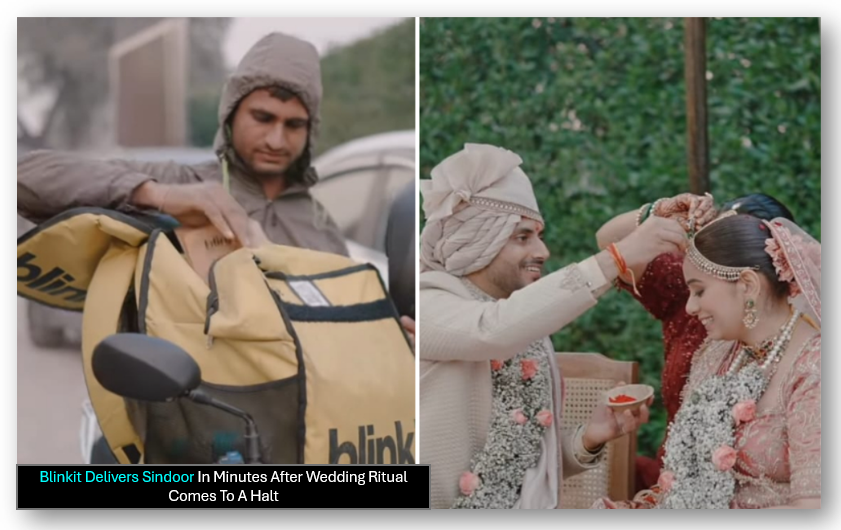
In the midst of the grand pandemonium and whirligiggying emotions of an Indian wedding, no one expects a single, small element to stop it cold. Except that is what happened last week when panic gripped a wedding party here in Delhi, and they discovered they had forgotten the Sindoor (vermilion).
In a scrap that could have been plucked from the pages of a Bollywood script — gasping relatives and “auspicious time” (Mahurat) looming in the background — it wasn’t that manly relative on a motorcycle who delivered the day, but an app promising delivery within 10 minutes. The account has now gone viral, with the internet dubbing it the most “filmy” use of quick-commerce that we have seen yet.
The Moment the Music Stopped
The Pheras were about to end. The priest was murmuring the last of the mantras, and bride and groom were poised for the climax: The Sindoor Daan. This is when the groom presses red powder on the bride’s forehead, marking her official status.
It was at this moment that the priest noticed something missing on the ceremonial tray, a small container of sindoor. In a regular scenario, it would cause for a wild 30-minute race to the nearest market with either the Mahurat passing or losing touch of emotionally charged ceremony.
Not thrown into a panic, my tech-savvy cousin drew out their phone. Before the elders could even discuss who would have to go running to a shop, the order had been placed on Blinkit.
“As Filmy As It Can Get”
The customer’s tweet captured the company’s attention, and Albinder Dhindsa, the CEO of Blinkit, wrote about the episode on social media. Completely oblivious to the fact that he literally had a “honor” bound wedding, the delivery driver made it there in 7 minutes flat.
The bride’s brother greeted the delivery executive at the gate, snatched up the small brown paper bag and dashed back to the Mandap. The priest had no sooner completed his latest prayer than the sindoor was thrust into the groom’s hand.
The customer, who posted elsewhere about the experience, said:
“It was as filmy as it gets. It left the priest stunned, while the groom was laughing and there’s a delivery guy out there who probably has no idea that he just performed a wedding ritual.”
The Emergence of the “Emergency Economy”
This incident draws attention to a huge transformation in how urban Indians are living. It’s no longer just milk and bread we need delivered; it is quick-commerce for the “sacred” as well as the “unforeseen.”
Why Quick-Commerce Is Winning in India:
- The General Store That ‘Vanishes’: In crowded urban areas, it can take longer to find parking or walk to a neighbourhood store than it does for the service to deliver something.
- Logistical Precision: Being able to track your partner on a delivery during intense situations would eliminate the stress of panicking over where an “item” went.
- Curated Catalogues: Apps are launching curated catalogues of specific ritualistic products, and recognising that their highest spikes come during wedding season and festive periods.
The Internet Reacts: Memes and Mastery
Unsurprisingly, the X former Twitter and Instagram lit up with reactions to the story. While many lauded the delivery partner for his efficiency, some could not resist poking fun at the “new age” of Indian weddings.
“Imagine the delivery guy receiving a ‘Kanyadaan’ tip,” jested one. (Blinkit is basically 90s movie hero’s best friend if it was the ‘Door-to-Door’ version.)”
And yet, there is real thoughtfulness here, a recognition of the drivers who weave through traffic and endure extreme weather to make good on these “micro-emergencies.” Where in this wedding, the delivery partner became an accidental participant in family history, a silent character on one of couple’s most significant days.
Swiggy, Zepto, Blinkit Deliveries Hit As Union Calls Strike On Christmas, New Year’s Eve
A New Era for Indian Weddings
The “Blinkit Wedding” is the latest sign of technology becoming a part of the fabric of Indian culture. For generations an actual army of relatives managed the logistics of weddings, and had their duties to attend. Today, that “army” has some powerful digital reinforcements.
Sure, purists will say that the “charm,” such as it was, of a wild edibles market-run is gone, but tell that to busy families in 2015. Anything that lessens the anxiety of a 500-person celebration is an invited guest. “If I can get a missing garland or a box of matches within minutes, then I can concentrate on how to make the bride happy — not how close the nearest kirana store is,” added one wedding planner.
And so, as the New Delhi couple begin their life together, they will always have a one-of-a-kind tale to share with their children: It’s the story of how their marriage had to wait for a G.P.S. signal — and a mere seven-minute delivery window.
