


The serene backwaters of Kerala, typically bustling with holiday cheer this time of year, are instead draped in an air of unease. Another round of Avian Influenza (H5N1) was reported in poultry hubs Alappuzha and Kottayam. The outbreak has come at the peak of Christmas and New Year season, when people consume pork and as a result it is not only local farmers but also neighbouring Tamil Nadu over the border that are hit by its effects.
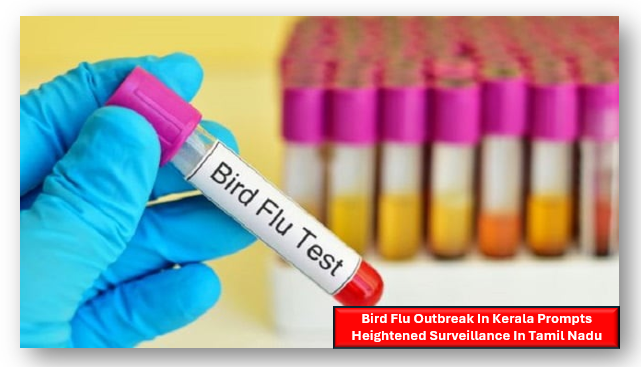
In a quick reaction to what happened in Kerala, Tamil Nadu has issued a high alert. To protect its multi-billion rupee poultry industry, which is concentrated in districts like Namakkal, the state has stepped up surveillance and tightened biosecurity at all entry points.
The Epicenter: What’s Going On in Kerala?
Earlier this week, the outbreak was officially confirmed after ducks and chickens began dropping dead in large numbers in Kuttanad area of Alappuzha and few villages in Kottayam. The samples send to National Institute of High-Security Animal Diseases (NIHSAD), Bhopal was positive for the Highly Pathogenic Avian Influenza (HPAI) H5N1 strain.
Culling Activities: Kerala has started culling of nearly 30,000 birds within one km area from the infected places as part of the National Action Plan.
The Migratory Link: The virus is thought to have been carried by migratory birds which visit waterlogged terrains in Kerala during the winter. As duck-rearing in places such as Nedumudi and Purakkad is predominantly open-air, local populations are more at risk of getting infected from wild carriers.
Economic Blow: The timing could hardly be worse for Kerala’s farmers. Christmas and New Year are the peak sales period for Poultry and Eggs. The present restriction on the movement of birds within a 10km surveillance zone has almost completely closed down local trading.
A Wall of Defence for Tamil Nadu: Surveillance and Check-Posts
One of Asia’s densest poultry clusters is in Tamil Nadu, and if the virus were to spill over there, it could well be an economic disaster. So, the States’ Public Health and Animal Husbandry Departments are in a state of “war approach”.
Border Vigilance
The Tamil Nadu government has set up 24/7 check-posts on 26 major entry points between the two states. Border areas are in particular being targeted including:
- Coimbatore and The Nilgiris
- Theni and Tenkasi
- Kanyakumari
All vehicles, especially those carrying poultry and feed–cum—manure that are entering the State from Kerala are being sprayed with germicidal agents at check-posts, the memorandum said.
The Namakkal Factor
The Namakkal is sometimes known as the “Egg City” and produces about 3.30 crores eggs per day which accounts for 80 per cent of Tamil Nadu’s total egg production. In this belt, the authorities have directed poultry farmers to strictly follow “bio-bubbles.” This involves limiting entry of non residents, ensuring workers wear PPE and all equipment is disinfected. Random sampling of local flocks is also currently being carried out by vet teams to aid early detection.
Monitoring During Sabarimala Season
The outbreak has occurred at a time when devotees in hundreds of thousands travel between the two states for the Sabarimala pilgrimage. The Tamil Nadu Health Department has also issued a advisory for the returning pilgrims.
Public Health Poultry Is Safe to Eat, Authorities Tell a Worried Public What do you need to know about coronavirus?
Although the phrase “Bird Flu” has in the past aroused panic, health officials in both states have called for calm. H5N1 mainly spreads in birds, with human-to-human transmission rare, likely only after close or long exposure to infected or dead birds.
Cooking Safety: Pros remind that the virus is heat labsentive. It is safe to eat chickens eggs and meat, as long as they are well-cooked. The World Health Organization (WHO) advises cooking meat to a minimum internal temperature of 70°C.
Consumer Advice: Do not eat raw or half-cooked eggs during the onset of an outbreak. Make sure raw meat is kept at a safe distance from clean hands and surfaces for prep.
Conclusion: A “One Health” Approach
The current crisis makes it very clear why we need the One Health approach, which is a way of working that links the health of people, animals and the environment together. Although culling and movement restriction to prevent spread of the disease are Underway in Kerala, the aggressive surveillance in Tamil Nadu is serving as another barrier of protection.
Another immediate concern is to contain the disease and compensate the farmers affected in Kerala, while the entire region is on high-alert to make sure that festive spirit does not face a larger biological threat.
