


The holiday season in India, which includes the busy, kitchen-centered ritual of sending last-minute grocery orders flying into the night at lightning-fast speeds, has hit a big snag. In a sector-wide system shut-down of services, hundreds of thousands of gig workers stopped work on the Christmas Day with riders across several cities reporting to remain offline across in protest against gigs providers — including Swiggy, Ceroo (earlier Zomato), Zepto and Blinkit.
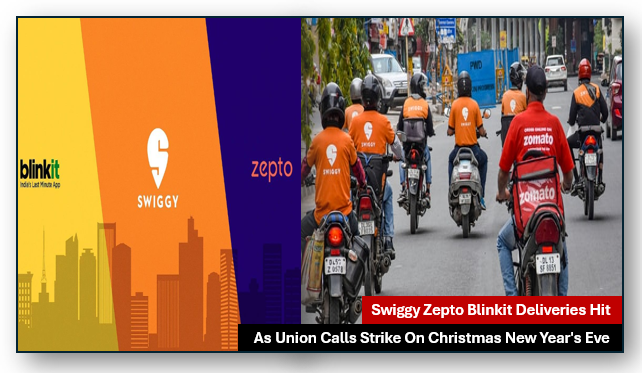
Jointly called by Indian Federation of App-Based Transport Workers (IFATW) and Telangana Gig and Platform Workers Union (TGPWU), the protest plans to capitalise on one of the busiest periods of the year to push forward working terms. With a second, possibly more disruptive round of strikes planned for New Year’s Eve (Dec. 31), the dream of “quick commerce” is now being put to its sternest test yet.
Why the Christmas Deliveries Stopped?
Christmas lunch was delayed, or maybe even cancelled, for many who had ordered swanky seafood spreads in the National Capital Region (NCR), Mumbai and Bengaluru. The apps stayed on, accepting orders, but the shortage of riders made for long waits and lots of cancellations.
The strike isn’t just about one holiday. It’s a tipping point after months of brewing conflict. About 40,000 delivery partners staged flash strikes and bike rallies on December 25. In places such as Gurugram, the decline in orders at some cloud kitchens was close to 60%, not because people weren’t hungry but because there was nobody to ferry the food from the kitchen to their doorsteps.
The Core Demands: Safety Before Speed
The contentious 10-minute delivery model is the biggest reason for such nationwide action. Fast-commerce giants like Zepto and Blinkit are built on the promise of speed, but to the riders, it feels like a “death trap.”
The End of Ultra-Fast Targets
“Unions are calling for an end to the 10 minute delivery promise. They say that these tight delivery windows force riders to flout road rules, speed along congested roads, and risk their lives in order to prevent them from being fined for “late” deliveries.
Fair Pay and Transparent Algorithms
Even as demand for delivery services has surged, many workers report that their “real earnings” are falling.
Falling Payouts: Union leaders noted that though fuel and living costs have increased, per-order payouts have stayed flat or even declined.
Opaque Incentives: Riders demand a clearer pay structure where they’re not “blackmailed” by algorithms whipped into punishing them for signals beyond their control, like slow restaurants or heavy rain.
Social Security and Dignity
The strike comes at a turning point in Indian labour law. Recently, government launched the Code on Social Security (effective since end of 2024/ beginning of 2025), but workers suggest that a 1-2% contribution in a welfare fund is not being seen as on the ground. They are seeking:
- Guaranteed accident and health insurance.
- Break Required when working long hours.
- Ending “arbitrary ID blocking” — in which a worker can be cut off from their entire livelihood overnight, without any formal process of grievance.
Here’s What to Expect on New Year’s Eve
If the Christmas strike was a “warning shot,” a planned action on Dec. 31 could amount to an all-out shutdown. New Year’s Eve is routinely the day food delivery and quick-commerce apps record their single biggest revenue.
The Impact on Consumers
Whether you are plotting a house party or a serene night in, that much we know from industry insiders: It pays to be prepared.
Pre-order groceries: With so much of the good stuff running out by Jan. 31, you don’t want to think an app with a ten-minute delivery window is saving your butt at 11 p.m.
Support Local: Think about getting food directly from neighbourhood restaurants, or opt for “takeaway” in order to avoid delivery bottleneck.
The Corporate Response
Most of the major platforms have so far said little about the specific demands, though a few offered supplemental “festive incentives” for drivers who would work during that period. But the unions hold fast: It is going to take more than extra one-day bonuses to fix systemic problems of safety and job security.
Conclusion: The Price of Ease
The strike also points to an increasing tension between consumers’ demand for “instant” everything, from next-day shipping of packages to immediate delivery of meals and rides, and the human toll exacted in order to make those deliveries so quickly. As gig workers in India demand to be treated as essential partners instead of “invisible cogs” in an algorithm, the industry is at a crossroads.
It’s unclear whether the platforms will give an inch from their 10-minute pledges, but for now, yuletide cheer is giving way to serious chat about labour rights in the digital age.
