


In a move that signals a seismic shift in the Asian gaming landscape, Epic Games and Nexon Korea have officially entered into a landmark 10-year technology partnership. Announced on December 23, 2025, this agreement establishes Unreal Engine as the foundational architecture for Nexon’s global development roadmap for the next decade.
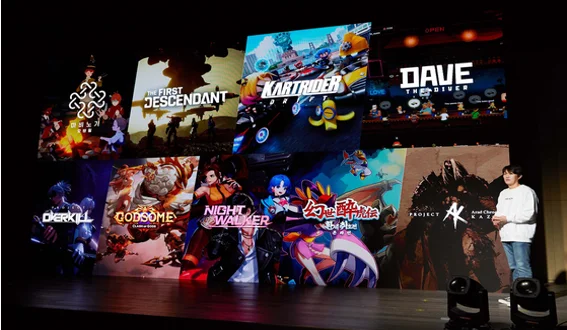
This isn’t just a simple software license; it is a strategic consolidation that will define the technical quality and release velocity of some of the world’s most popular gaming franchises.
The Strategy: Standardizing a Giant
Nexon, the titan behind hits like MapleStory, Dungeon & Fighter, and The First Descendant, has historically utilized a mix of proprietary engines and third-party tools. This new agreement marks a pivot toward company-wide engine adoption.
By standardizing on Unreal Engine, Nexon aims to solve several “big-publisher” problems:
- Talent Portability: Developers can move between projects (e.g., from Project DX to Vindictus: Defying Fate) without needing to relearn a new codebase.
- Global Benchmarking: Unreal Engine 5’s Nanite (virtualized geometry) and Lumen (dynamic lighting) will become the standard quality bar for all upcoming Nexon AAA titles.
- Predictable Costs: A 10-year horizon provides Nexon with stable licensing fees, insulating them from the fluctuating “per-seat” pricing models that have recently caused friction in the engine market.
“Epic Pro Support”: The Secret Weapon
Under the terms of the deal, Nexon will receive Epic Pro Support, a direct line to Epic’s most senior engineers. This ensures that when Nexon pushes the boundaries of massive multiplayer environments—a hallmark of Korean gaming—they have the architectural backing to optimize performance across PC, mobile, and console simultaneously.
“Nexon will adopt Unreal Engine as its integrated development engine to more aggressively target the global market,” said Park Yong-hyun, Nexon Executive Vice President. “This strengthens our technical stability and expands our multi-platform capabilities.”
Industry Implications (2025–2035)
| Area of Impact | Primary Change | Long-term Result |
| Development Speed | Unified pipelines | Faster “simultaneous global launches” for all platforms. |
| Visual Quality | UE5/UE6 as standard | Photorealistic graphics in MMOs and mobile RPGs. |
| Market Power | Epic-Nexon lock-in | Unreal Engine becomes the “default” for Korean AAA studios. |
| Hiring | Skill-set alignment | Korean CS universities likely to pivot heavily toward Unreal curricula. |
The “Lock-In” Risk vs. Reward
While the partnership promises efficiency, a 10-year commitment does create a “technical lock-in.” If a competitor (like Unity 7 or a new open-source engine) develops a breakthrough feature in 2028, Nexon may find it difficult to pivot. However, given the recent Epic-Unity interoperability agreement (November 2025), which allows Unity games to be published within the Fortnite ecosystem, the risk of isolation is lower than in previous decades.
For Epic Games, this is a massive win in the “Engine Wars.” By securing a decade of royalties and data from one of the world’s most successful live-service publishers, they solidify Unreal Engine’s position as the backbone of the “Open Metaverse.”
What’s Next for Gamers?
The first fruits of this partnership are already visible. Upcoming heavy-hitters like Project DX (the Durango reboot) and The First Berserker: Khazan are leveraging the latest Unreal builds to deliver visuals that were previously impossible in the free-to-play space. As Nexon shifts its focus from “Korea-first” to “Global-simultaneous,” this partnership ensures that their games will look and play just as well in New York or London as they do in Seoul.
