


Google is about to put the future of hands-free computing right before your eyes with AI smart glasses. It was unveiled with a tentative 2026 release date, and this is more than just revival of the thrice-doomed Google Glass; it’s a complete reimagination, built on radical AI and an underlying belief in frictionless, tailored help. By working alongside labels like Warby Parker, Gentle Monster and Samsung, Google is betting on style and everyday usability as a strategy to shift AI more quietly into the background of our lives.
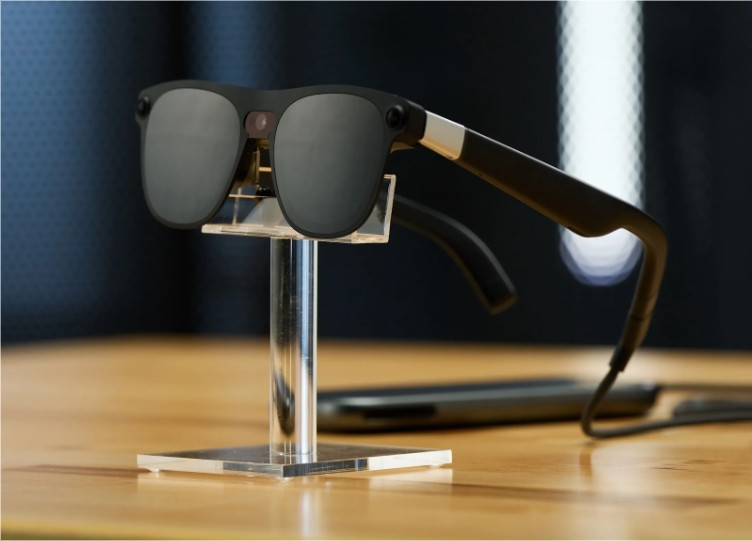
The brains of those devices, however, will be Google’s potent Gemini AI; it puts its brainpower, transforming what was previously on a smartphone display onto the user’s field of view. That’s a big step toward “ambient computing” —technology that helps without demanding attention. Rather than yanking a phone out of a pocket over and over again, the digital world can be spoken to—or even gazed upon—while staring at the real one.
Two Paths to Augmented Intelligence
Google is addressing the market with a two-prong strategy: it’s created separate products for different use case scenarios, all based on the new platform Android XR:
AI Morning Smart Glasses (Screen-Free Assistance): Lightweight Audio-First Spectacles that Resemble Prescription Frames. They come with cameras, speakers and microphones, making it possible for users to talk with Gemini in a normal way. Use cases include snapping photos, asking questions or seeking information about one’s surroundings (“What is that landmark?”), and receiving audio prompts in real-time and context-aware without the need to look at a distracting visual display. Petal also serves as the lowest-friction point of entry for on-device generative AI.
Display AI Glasses: These models follow the screen-less version and add a small, in-lens display. This small screen privately displays useful visual information in the user’s field of vision — like turn-by-turn navigation arrows that appear as if they are parked on each intersection, live translation captions among speakers talking to one another or timely notifications. This amalgamation of sound and image gives a more expansive, heads-up computing experience.
Repeating the mistakes of history: privacy and integration
The original Google Glass was routinely mocked for its unwelcome camera and the guffaws of anyone wearing it (rebranded as a “Glasshole”). Certainly in the new design, Google seems to have learned at least those lessons. Prototypes include a visible status light which signals when the camera or recording capabilities are on, providing an additional level of assurance to others that their privacy is respected.
The partnership strategy is also vital in keeping its past retail failures at bay. By partnering with the likes of Warby Parker, an established prescription eyewear brand, Google gets instant access to a respected retail pipeline and can encase its technology in familiar, fashionable frames that consumers are already used to wearing all day.
Crucially, the new glasses are also engineered to work nicely with both Android and, smartly, iOS phones. Although the processing is frequently dumped onto the paired phone to make sure they are low-weight glasses, this cross-compatibility right off the bat broadens the prospective market: a step certainly against several of its rivals’ walled-garden approach.
What makes the Google AI-powered glasses so powerful is its seamless integration with Gemini. The AI is not simply reactive to commands; it is capable of engaging what are known as “multi-models” so that the device can essentially “see” around a wearer, perceiving visual context in order to offer assistance before it’s needed. This turns the wearble from a gadget into a sensory digital buddy, instantly offering to translate that menu or give you direction without being prompted.
This launch is Google’s biggest effort yet to recommit to wearable computing, which now means redesigning the OS and redesigning a watch for it. The AI-driven glasses are poised not only to rival currently available offerings, such as the Meta Ray-Bans, but to lay a claim on what many in tech see as the real legacy of smartphones.
