


OpenAI, the company responsible for sparking a worldwide generative AI revolution with ChatGPT, has now solidified its ambitious move toward long-term financial stability with the announcement of its first-ever Chief Revenue Officer (CRO). The choice of Denise Dresser, a seasoned enterprise leader and former CEO of Slack, is a clear signal to investors and the market: The company is evolving from breakthroughs reached in pure research to an established, commercially driven enterprise. It’s an answer to the massive ongoing financial challenge for the AI friend — building a business from viral adoption and aggressive developer demand that creates repeat, high-margin enterprise revenue and supports its mind-bendingly expensive research and compute bills.
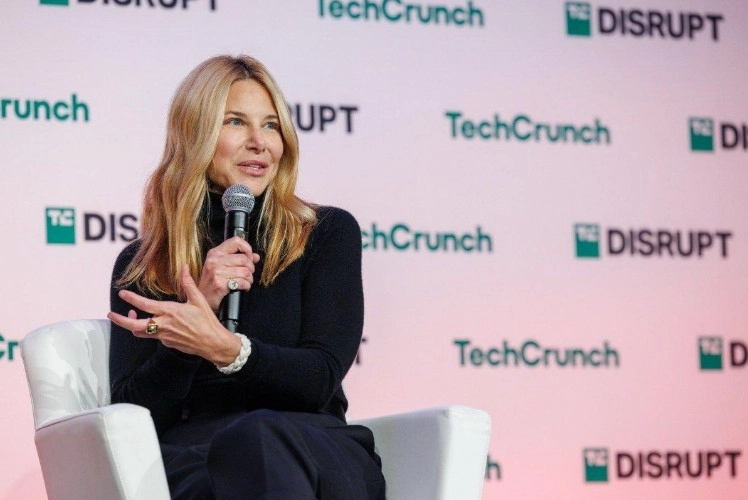
And while OpenAI’s annual recurring revenue (ARR) has allegedly skyrocketed to north of $12 billion, an unprecedented pace of growth in software history, both the expense of building and operating its frontier models like Gemini 3.0 Pro is equally astronomical. The company is focused on securing predictable streams of revenue to justify its $500 billion valuation and fuel ambitious, trillion-dollar-scale future projects. Dresser’s marching orders are simple to construct a global sales and customer success machine that can help get OpenAI’s tools into the center of companies’ workflows around the world.
The Enterprise Imperative: OpenAI Needs a CRO Now
The recruitment of an operator like Dresser — who reports directly to COO Brad Lightcap — is a loud and clear signal that the company has shifted from being a research-first lab to becoming a customer-centric platform.
Cost of Compute vs. Revenue Stability
Frontier AI has brutal economics. It takes fortresses of computing to train and run big language models, which drives huge capital expense and operational overhead. It seems the burn rate of AI development is speeding up. In order to relieve that financial pressure and realize the long-term profitability it promises (which some analysts estimate will happen ca. 2029), OpenAI needs to ink fat, multi-year deals with reliable, thick revenue streams. You need a CRO to push for normalized pricing and product packaging (API access, seat based subscriptions, custom implementations), to make sure growing revenue fast more than counteracts computational cost inflation.
Scaling Enterprise Adoption
OpenAI’s business sales efforts right now are targeting companies that are progressing beyond experimental pilots and want to take their AI work mainstream across entire enterprises. Dresser’s experience — more than a decade scaling global sales organizations at Salesforce and leading Slack through integration after its $27.7 billion acquisition — is also tailor-fit to this requirement. Her success will hinge on:
Shorten Sales Processes: She may have to tackle enterprise barriers involving security, compliance, legal scrutiny and connecting into the IT stack.
Increase Adoption: The aim is to get companies from using point solutions (such as a simple ChatGPT) all the way up to installing Agentic AI — independent agents that can autonomously plan and execute complex, multistep workflows throughout sales, service, engineering.
If it is so, how are you planning to build Partner Ecosystem: Enterprise Sales usually involve partners or channel (for example OpenAI has partnership with PwC). Dresser will play an important role in advancing these partnerships and tailoring industry-specific bundles to attract Chief Information Officers (CIOs).
Professionalizing the Go-to-Market Strategy
While OpenAI has enjoyed product-led growth (individual employees using its tools and driving demand from within) the next wave will be powered by a complex, top-down sales strategy. Dresser will be responsible for global revenue and is in charge of enterprise sales as well as customer success. Her job is to bring discipline and predictability to the revenue engine, emphasizing essential metrics such as Net Revenue Retention (NRR) and driving long-term contracts.
The Denise Dresser appointment is the most concrete sign yet that OpenAI has decided to transmute its far unparalleled technological edge into a lasting multi-trillion dollar business platform, transitioning how the world sees itself, from a pioneering research lab to an ever starving for profit technology leviathan.
