


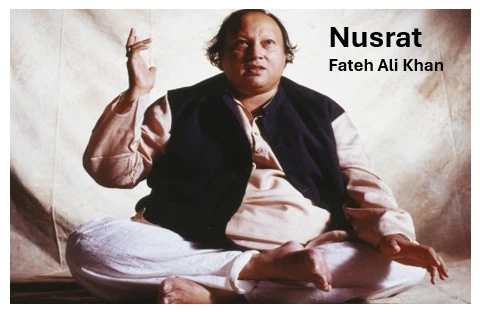
Regarded as one of today’s great sufi musicians, nusrat fateh ali khan is said to be the “shahenshah-e-qawwali” (king of qawwali), known for bringing Islamic devotional music to an international stage, taking Qawwali from a regional art form to a global phenomenon with his phenomenal voice and creativity in performance and compilations with other artists.
Early Life
Nusrat Fateh Ali Khan was born on 13th October, 1948, in Faisalabad, Pakistan to a Family of 6 generations of Qawwali musicians. His father, Fateh Ali Khan, was also a very established and respected Qawwali performer.
As a child, Nusrat was not raised with the expectation that he would become a professional singer, and his family wanted him to pursue a career outside the arts. But he displayed great interest in music from a very young age, and often listened to his father and other family members perform, gradually developing the desire to sing.
While Nusrat received a traditional formal education, more importantly, he studied and learned traditional Indian music and qawwali music. His family’s atmosphere of spirituality and the influence of Sufi culture on Nusrat’s life, had a significant impact on him and his future career.
Personal Challenges
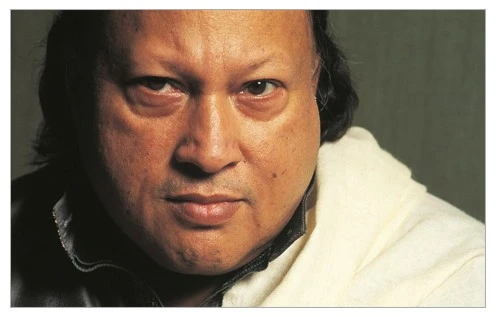
Perhaps the greatest challenge that Nusrat experienced was losing his father in 1964. After this tragic loss, he would continue to follow the path of music by receiving musical instruction from members of his family, while carrying on the responsibility of preserving a musical tradition that had existed for centuries.
Nusrat also had a significant challenge when it came time to share qawwali music with people who did not know the South Asian languages and cultures. The majority of people in the music industry wanted to produce commercially successful music, which made it more difficult for people to accept traditional devotional music into their culture.
Later in life Nusrat faced health challenges such as being overweight, diabetic, and having kidney problems. Despite these struggles, he continued to play and make music around the globe.
You may also like:
- Dennis Ritchie Creator of the C programming language
- Nelson Mandela Story of resilience and reconciliation
- Aubrey Beardsley Produced revolutionary artwork before dying at 25
Career
Beginning of the Journey
After receiving many years of rigorous training in classical music and qawwali music, Nusrat began performing with his family’s qawwali group. In 1971, following the death of his uncle, Nusrat became the leader of the qawwali ensemble.
Major Breakthrough
The period of the 1970s and the 1980s saw the emergence of Nusrat Fateh Ali Khan as a performer with extraordinary talent, who transformed the world of qawwali singing into something completely new and original, due to the unique delivery style and improvisation techniques that he brought to the Qawwali music genre.
International Breakthrough
In the 1980’s, after performing at international music festivals, Nusrat gained worldwide fame after captivating audiences with his voice and deep spiritual connection to the music. His collaborations with artists such as Peter Gabriel brought Qawwali music to new and larger global audiences. He was involved in many film soundtracks and world music projects, which also contributed to his global notoriety.
Nusrat’s Legacy
Nusrat Fateh Ali Khan’s body of work consists of hundreds of recorded albums and thousands of concerts. He was able to put a modern touch to the Qawwali genre and style but effectively retained the spiritual integrity of the qawwali music form. His work has inspired many other musicians from diverse genres, such as pop, rock and electronic music.
Major Achievements
- Receiving the Pride of Performance Award from the Government of Pakistan in 1987.
- Performing at prestigious international music festivals worldwide.
- Recording over 100 albums and countless live performances.
- Contributing to international film soundtracks.
- Popularizing qawwali on a global scale.
- Being nominated for a Grammy Award for his contributions to world music.
- Earning recognition as one of the greatest vocalists of the twentieth century.
His achievements helped establish South Asian devotional music as an important part of global culture.
Personality & Character
Nusrat Fateh Ali Khan was admired by his followers for his humble approach to music and daily life, as well as the importance he placed on spirituality. He maintained a strong connection to both his cultural and religious roots, despite becoming an internationally recognized artist.
Social Influence
His thematic content — love, peace, spirituality, and unity — is still echoed in contemporary music by many artists who cite Nusrat as one of their major sources of inspiration. His recordings continue to inspire listeners from all walks of life and backgrounds throughout the world, even today.
Lesser-Known Facts
Nusrat Fateh Ali Khan, who was actively on tour around the world throughout most of the 1990s even though he was suffering from declining health, reached a level of success higher than he had previously known and was hailed as one of the most influential musicians of all time by both his peers and music enthusiasts due, in part, to his work with many other international musicians as well as acting in movies.
Final years/Death
On August 16, 1997, at age 48, while in London, he passed away from complications related to both heart and kidney failure. His passing shocked people all around the world; many people—including musicians, critics, and fans, have been inspired by him.
Legacy
His legacy has been documented through numerous films, books, memorial concerts and musical works that celebrate his influence and his contribution to the world of music. His nephew Rahat Fateh Ali Khan has continued the family tradition and worked to keep Nusrat’s legacy alive.
Indeed, Nusrat’s body of work is a testament that cultural exchange and artistic excellence inspire spiritual expression and connect people all over the world.
