


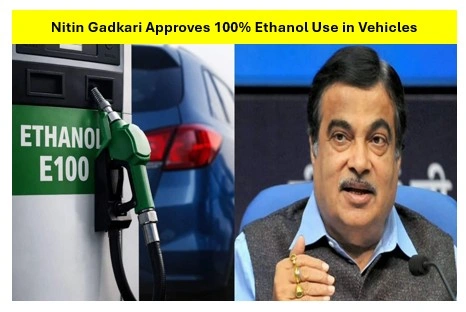
As part of efforts to support new sources of fuel and lower dependence on crude oil imports, the Union Minister for Road Transport and Highways Nitin Gadkari announced final regulations that will permit use of 100% ethanol fuel in the operation of vehicles. Gadkari made the announcement December 9 in Nagpur, stating that he had granted legal recognition to E100 fuels, meaning that fully ethanol-powered vehicles can now to be used commercially in India.
Signals Major Shift in India’s Fuel Policy
The decision marks a milestone in the shift towards cleaner fuels made from renewable sources with domestic production. Ethanol is a biofuel made mostly from corn or sugarcane as well as agricultural waste. The government of India has also been advocating for increased use of ethanol as a long-term sustainable energy source to replace gasoline.
Seeing vision develop into reality: Landmark Approval for 100% Ethanol Vehicles
According to Gadkari, having received this approval represents a culmination of several years of the minister’s vision. He pointed out that when he originally had the idea to implement fully ethanol-powered vehicles, there were a large number of individuals that said it would not happen due to a lack of advanced technology and manufacturer support. Due to recent technological and manufacturer developments, the idea has transitioned from being an experiment to an implemented policy.
With the continuing use of ethanol, Gadkari emphasized that this could lead to the elimination of traditional fuels and potentially could be the reason for change within the way in which the transportation industry operates within India. The minister highlighted that many months were spent in discussing the development of regulations.
Read more: Piramal Finance MD Says Everything Worked Fine Without Me
Automobile Industry Ready to Adopt the Fuel
Several vehicle companies that were working on developing flex-fuel technology were encouraged by the government’s recent announcement. For example, Gadkari stated that an ethanol-compatible version of the WagonR has already been produced and given to the public; several other manufacturers are also at various stages of developing vehicles capable of running on 100% ethanol.
As an example, Toyota, Suzuki, Hyundai and MG are all expected to produce fuel-flexible vehicles within the next few weeks; Hero MotoCorp has already released fuel-flexible motorcycles that are designed to run on 100% ethanol.
With large auto manufacturers now producing flex-fuel vehicles, ethanol has been recognised by many in the auto industry as a viable motor vehicle fuel for the future.
Read more: India restricts bulk sale of petrol and diesel at retail outlets for 90 days
Reducing India’s Massive Oil Import Bill
Ethanol development is only one way in which India can reduce its reliance on imported fossil fuels. India continues to be one of the world’s largest importers of crude oil, spending billions of dollars each year on petroleum-related imports. Gadkari has pointed out that using alternative fuels could save country billions of dollars by reducing China’s monthly bill and creating a strong basis for energy independence.
Read more: Is China driving Japan’s growing investment in India?
An Ethanol-Powered Vehicle Program Will Help Lower India’s Dependence on Oil Imports
According to the federal minister, increasing the use of ethanol in cars has the potential to greatly reduce the amount of money spent by India on importing fuels from other countries. In addition, using ethanol as a fuel source would allow for the production of the fuel to be done domestically using agricultural resources, which will reduce India’s dependence on oil imports and reduce exposure to fluctuations in the global price of oil and to geopolitical risks.
Economic Benefits to Farmers and the Rural Economy
In addition to energy security, ethanol production will create jobs and generate additional income opportunities for farmers. For example, there will be an increase in demand for agricultural crops such as sugarcane, corn, and by-products of agricultural raw materials in the production of ethanol. This increased production will provide an additional source of income to farmers and offer an opportunity for the establishment of new biofuel processing plants within rural communities.
Gadkari has consistently stated that the production of biofuels can provide a double benefit to society in that they can help with improving the environment as well as providing additional economic income and benefits to rural communities. In addition, the government is researching the production of biofuels and related products using agricultural waste that will reduce the practice of burning agricultural waste and provide a marketable by-product.
Environmental Gains and Future Obstacles to Moving Toward Ethanol-Powered Vehicles
Transitioning to ethanol-powered vehicles is consistent with India’s commitment to climate sustainability. Ethanol generates fewer emissions during combustion compared to traditional fuels, and therefore would provide a greater reduction of carbon emissions from the transportation sector. As India moves to reduce the total amount of pollution in the country and fulfil its environmental obligations, biofuels are expected to provide an important contribution to the overall energy mix.
Experts warn that the widespread use of E100 vehicles will only occur if all three major pieces of the infrastructure for E100 exist — fuel distribution, an increased amount of ethanol produced and technological improvements in engines. In addition, consumer buying patterns and price competitiveness will also influence how successful E100 vehicles will ultimately be.
A New Era in India’s Mobility Transition
The announcement from the Government of India regarding the approval of 100% ethanol-powered vehicles is one of the most dramatic fuel policy decisions taken by the Indian Government in the last decade. With government approval now in place and major manufacturers developing and preparing to launch new products, it appears that India has entered a new era of alternative fuel mobility.
If all goes according to plan, this initiative could help reduce India’s reliance on imported oil, support farmers, reduce carbon emissions, and ultimately create a cleaner and more integrated transportation network for the long haul.
