


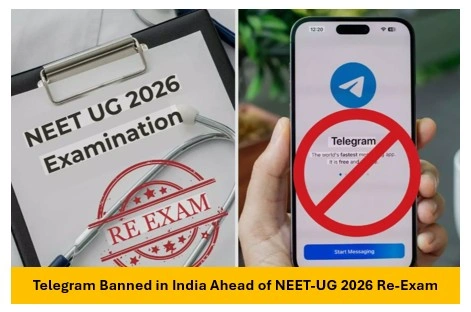
In an effort designed to ensure that all students taking the NEET-UG 2026 re-exam do so fairly, the Central Government has placed a temporary ban on the use of Telegram throughout India until June 22, 2026. This decision comes only days before the NEET-UG Re-Exam to be conducted on June 21, 2026, following concerns that Telegram is being used by organized groups to cheat on exams and/or defraud students. The Central Government is using Section 69A of the Information Technology Act, 2000, to place this ban, acting upon recommendations provided by the NTA.
Government Imposes Temporary Ban on Telegram
According to government officials, “Telegram has been identified as a method for distributing false question papers and creating an environment of indecision with regard to different examination-related fraud items.” The government charges that some groups are using Telegram to advertise fake question papers and/or answer keys for sale to students for money. The investigation has determined that there is a serious risk of compromising the integrity of one of India’s biggest entrance examinations.
As a preventative action for the purpose of preventing cheating organizations from utilizing this platform during the critical time period before the re-exam date, the Government will restrict access to use of Telegram for an unlimited period of time.
Read more: Lieutenant General Dhiraj Seth Appointed as India’s Next Army Chief
Background: NEET-UG 2026 Controversy
The re-examination was mandated as a result of the NEET-UG 2026 exam’s initial accusation of a leak in the question paper. This controversy created significant protest and doubt as to the validity of the examination process. Afterward, investigations were initiated by authorities concerning the allegations of the leak and a new examination was announced for all those adversely affected by the exam. An estimate of over 20 lakh students will be affected by the events related to the exam.
In the last few weeks, multiple news stories have appeared alleging that there are NEET Re-exam Question Papers being advertised as available for sale via various telegram channels. The NTA has stated many times that it has not yet received any official confirmation of a new leak; however, they have referred a number of complaints and viral claims to cybercrime authorities in order to investigate.
Read more: How much arrears will Central government pay under 8th pay commission?
The Reason for the Crackdown on Telegram and Its Message-Editing Feature
The major reason behind the crackdown on Telegram is the editing feature of the platform. During their investigation, investigators indicated that some persons may have edited messages and timestamps that suggest previous access to the examination papers. The circulation of these edited messages as proof of access to the examination papers assisted in fuelling speculation and anxiety amongst students.
In response, Law enforcement agencies restricted access to the Telegram app; they also took action to limit the use of certain features provided by the Telegram app. According to some reports, the restrictions on the editing function will be enforced for a longer time than the overall restrictions on the platform.
NTA Welcomes the Government’s Decision
According to the National Testing Agency, the government’s intervention of placing temporary restrictions on certain groups is essential for ensuring a just and transparent examination process. The Agency was previously unsuccessful in stopping the dissemination of fraudulent information through previous measures to eliminate false information and inaccurate submissions associated with examination processes. Therefore, it is necessary at this time to implement restrictive measures against the publication and/or distribution of false information, as they have been placed in the public interest, with the hope that these restrictions will deter the issuance of false information and thereby protect students from fraud and maintain the integrity of the examination process.
Cyber agencies intensify crackdown
Law enforcement and cyber agencies have increased enforcement efforts aimed at curtailing fraud associated with examinations over previous months. Efforts have focused on identifying and monitoring suspected individuals/organizations, as well as tracking suspicious Telegram channels related to examination fraud. Agencies involved in these coordinated enforcement efforts include the Indian Cyber Crime Coordination Centre (I4C), state police agencies, and local law enforcement cyber departments. Collectively, these “Coordinated Enforcers” have worked closely with all three organizations to identify, locate, and intercept groups involved in distributing counterfeit question papers, as well as groups engaged in misleading students with fictitious examination information.
In addition to the violations that are currently being tracked by law enforcement and cyber agencies, other types of violators are also being investigated for their role in the proliferation of fraudulent examination information. In addition, the government has begun coordinating with leading technology and social media companies in recent weeks to reduce the flow of fraudulent examination-related information, thereby restoring the public faith in the examination process.
Debate Over Digital Restrictions
Even though strict policies against cheating have been welcomed by many parents and students, it has created a heated debate among digital rights groups. Many digital rights advocates argue that banning one whole platform of communication will negatively impact millions of real users who use it for professional, educational and personal reasons. On the other hand, those who are for the ban believe that the ban is only temporary and that it is justifiable as a result of the extreme concerns regarding the re-examination of NEET-UG.
Next Steps
Currently, there are temporary restrictions in place until June 22nd, just after the re-examination on June 21st. There will be continued monitoring of online usage and examination fraud investigations. The outcome of this re-test will determine how successful these prevention measures have worked, and in turn, will have a significant impact on the future discussions regarding how to balance exam security with digital liberties in India.
